 Skagit County
 Windows in the Skagit Valley Take a Different Kind of Beating
Mount Vernon sits low in the Skagit River valley, close enough to the Salish Sea that salt-laden air is a regular visitor, and squarely in the path of the wind-driven rain that rolls off the water through fall and winter. Add in the long stretch of damp, low-light months that let moss and algae take hold on anything that stays wet, and you've got a climate that's harder on windows than most people realize until something starts to fail. A window that would be fine in a drier inland climate can start showing problems here years earlier — soft trim, fogged glass, swollen sashes that won't latch — simply because the install didn't account for how much moisture this valley pushes at a house.
None of that means you need exotic materials or an oversized budget. It means the installation details that get skipped on a rushed job — flashing, sealant choice, drainage — are the details that actually matter here. This page walks through what a correct window installation looks like for a Mount Vernon home, what to watch for in older windows, and how we approach the job.
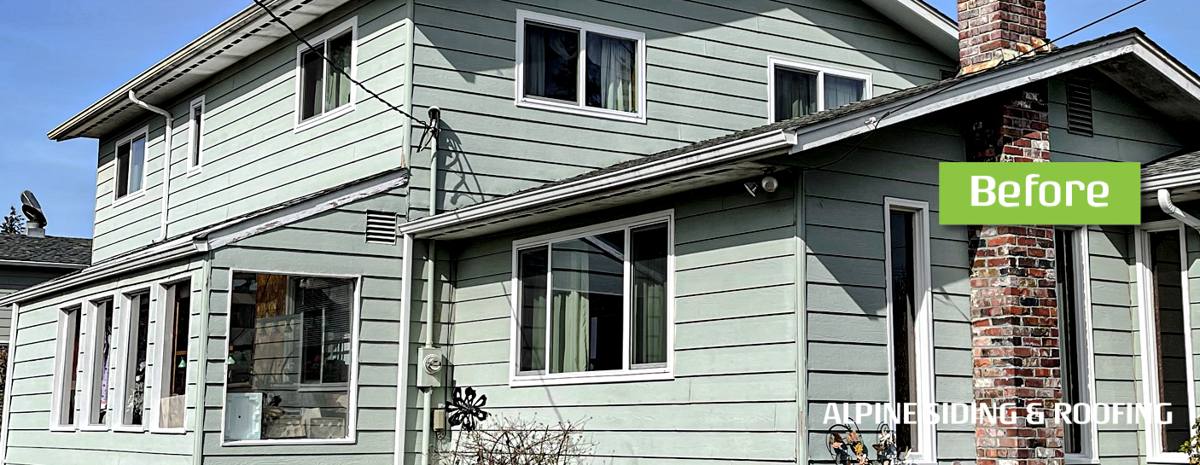
Signs Your Windows Are Ready to Be Replaced
Windows rarely fail all at once. They give you warning signs first, and in a climate like Skagit County's, those signs usually show up around moisture before anything else.
- Fog or moisture trapped between panes of double-pane glass — the seal has failed and the gas fill is gone
- Wood trim or sills that feel soft, spongy, or show dark staining, especially on the side of the house that takes the most weather
- Windows that are hard to open, close, or latch, or that have been painted shut to hide swelling
- Visible daylight or a noticeable draft around the frame when it's windy
- Green or black growth on the sill, frame, or exterior trim that keeps coming back no matter how often it's cleaned
- A noticeable jump in heating costs with no other explanation
- Condensation forming on the inside of the glass regularly, even when the house isn't unusually humid
One or two of these on their own might just mean a repair or a cleaning. Several at once, especially rot at the sill or frame, usually means the window and possibly some of the framing behind it needs to come out.
What a Correct Window Installation Actually Involves
The window unit itself is only part of the job. Most of the water damage we see in this area didn't come from a bad window — it came from a window that wasn't flashed or sealed correctly when it went in, so rain worked its way behind the frame and into the wall over several seasons.
Flashing and drainage come first
Before a new window ever goes into the opening, the rough opening needs a sill pan or sloped sill flashing so any water that gets past the window has somewhere to go besides your wall framing. Flashing tape or building paper needs to be integrated with the house's weather-resistant barrier in the correct shingle-lap order — top piece over the one below it — so water sheds outward instead of collecting behind the trim. This is the step that gets skipped most often on a fast, low-cost job, and it's the one that causes the slow rot that isn't visible until the trim is already soft.
Sealant is a system, not a caulk gun
Caulk alone isn't a moisture barrier — it's one part of a layered system that includes flashing, backer rod where gaps are too wide, and a sealant rated for exterior movement and UV exposure. In a climate that sees this much wind-driven rain, the exterior sealant joint has to be continuous with no gaps, and it needs to be redone as part of routine maintenance every several years, not treated as a one-time fix.
Fit and insulation around the frame
The gap between the window frame and the rough opening needs to be insulated — usually with low-expansion foam or fiberglass, not packed solid — so there's no thermal gap and no open cavity for moisture to sit in. A window that's slightly too small for its opening and shimmed with excess foam is a common shortcut that causes both drafts and long-term moisture problems.
Choosing Materials for This Climate
There's no single "best" window material — it depends on budget, the side of the house it's going on, and how much upkeep you want to take on. Here's how the common options hold up in Skagit County conditions specifically.
| Material | How it handles our climate | Maintenance | General cost position |
|---|---|---|---|
| Vinyl | Good moisture resistance, won't rot; performs well in salt air with no corrosion concerns on the frame itself | Low — occasional cleaning | Most affordable |
| Fiberglass | Excellent dimensional stability in temperature swings, very durable against wind-driven rain | Low | Mid to upper range |
| Wood (clad exterior) | Attractive, but the wood core is the most vulnerable to our damp winters if any seal fails | Higher — needs monitoring at joints and sills | Upper range |
| Aluminum | Prone to condensation and, without a thermal break, poor insulation; hardware can corrode faster in salt air | Moderate | Varies |
For most Mount Vernon homes we recommend vinyl or fiberglass for the bulk of the house, reserving wood-clad for situations where the look is a priority and the owner understands the added upkeep. Whatever the frame material, we also pay attention to hardware — hinges, locks, and cranks in corrosion-resistant finishes hold up noticeably better this close to the Salish Sea than standard hardware does.
Cost Factors Worth Understanding
Window installation pricing runs a wide range, and the honest answer is "it depends" — but it depends on specific, identifiable things, not guesswork.
| Factor | Why it moves the price |
|---|---|
| Number of windows | Per-window cost drops somewhat on larger jobs due to shared setup and labor efficiency |
| Frame material | Vinyl is typically the most affordable; fiberglass and wood-clad cost more |
| Glass package | Double-pane vs. triple-pane, and any low-E or gas-fill upgrades, change the price per unit |
| Condition behind the old window | If we find rot or water damage in the framing once the old unit is out, repair adds cost — this is common enough in older Skagit Valley homes that we build in an inspection step before quoting a firm number |
| Access and opening size | Larger or harder-to-reach openings take more time and materials |
Broadly speaking, standard vinyl replacement windows installed run from several hundred to a couple thousand dollars per window depending on size and glass package, with fiberglass and premium options running higher. We'll always give you a real number for your house, not a ballpark that changes once the crew shows up.
Our Installation Process
- Assessment. We look at your existing windows, note which sides of the house take the worst weather, and check for any visible signs of water intrusion around current frames.
- Product recommendation. We talk through material and glass options based on your budget and which openings need the most weather resistance, rather than pushing one product for every window.
- Careful removal. Old units come out without unnecessary damage to surrounding siding or trim, and we inspect the rough opening and sheathing for rot or moisture damage before anything new goes in.
- Repair if needed. If we find damaged framing or sheathing, we address it before installation — installing a new window over a compromised opening just hides the problem.
- Flashing and installation. Sill pan flashing, correctly lapped house wrap or flashing tape, and a level, properly shimmed and insulated fit.
- Sealing. A continuous, climate-rated exterior sealant joint with backer rod where needed, plus interior air sealing.
- Cleanup and walkthrough. We clear debris and walk you through operation and any care recommendations specific to the material you chose.
Common Problems We Run Into on Mount Vernon Homes
Because Skagit County has a real mix of older farmhouses, mid-century homes, and newer construction, we see a wide range of window conditions. The most common issue on older homes is original wood windows that were never re-caulked or maintained, leading to rot at the bottom rail and sill — often not visible from inside. On homes with a prior remodel, we sometimes find windows that were installed without proper flashing, where problems didn't show up until years later as staining or soft drywall near the opening. Persistent moss or algae growth on sills and exterior trim is also common here simply because of how many damp, low-sun months this valley gets each year — it's more a symptom of the local climate than of any one product failing.
Why It Matters to Hire a Crew That Already Works This Area
Window installation isn't a one-size-fits-all trade. A crew that mostly works drier inland climates may not think twice about flashing details that are non-negotiable here, or may default to hardware and sealants that aren't rated for salt air exposure. Working Mount Vernon and the rest of Skagit County regularly means we've seen how houses in this valley actually age — where rot tends to start, which exposures need the most attention, and what maintenance schedule actually holds up against our winters. It also means if a question comes up after the install, we're local and reachable, not a crew that finished the job and moved three counties away.
If your windows are drafty, fogged, hard to operate, or just old enough that you're wondering, we're happy to take a look and give you a straight answer — including telling you if repair makes more sense than replacement. Reach out for a free, no-pressure estimate using the form below.