 Skagit County
 Why Mount Vernon Homes Need Siding Built for This Climate
Mount Vernon sits in the Skagit Valley, close enough to Puget Sound and the tidal reaches of the Skagit River that homes here deal with a specific combination of weather stress: salt-tinged marine air, long stretches of driving rain off the water, and a moss and mildew season that can run most of the year in shaded, north-facing exposures. None of that is dramatic on any single day. It's the accumulation that wears siding down — moisture that never fully dries out between storms, organic growth that holds dampness against the wall, and salt-laden air that slowly degrades paint film and fasteners that aren't built for it.
Siding that works fine in a drier climate can fail here faster than the manufacturer's own literature would suggest, simply because Skagit County asks more of a wall system than most parts of the country do. That's the lens we use on every fiber cement siding job in Mount Vernon: not just "does this look good going up," but "what does this wall need to survive twenty years of this specific weather."
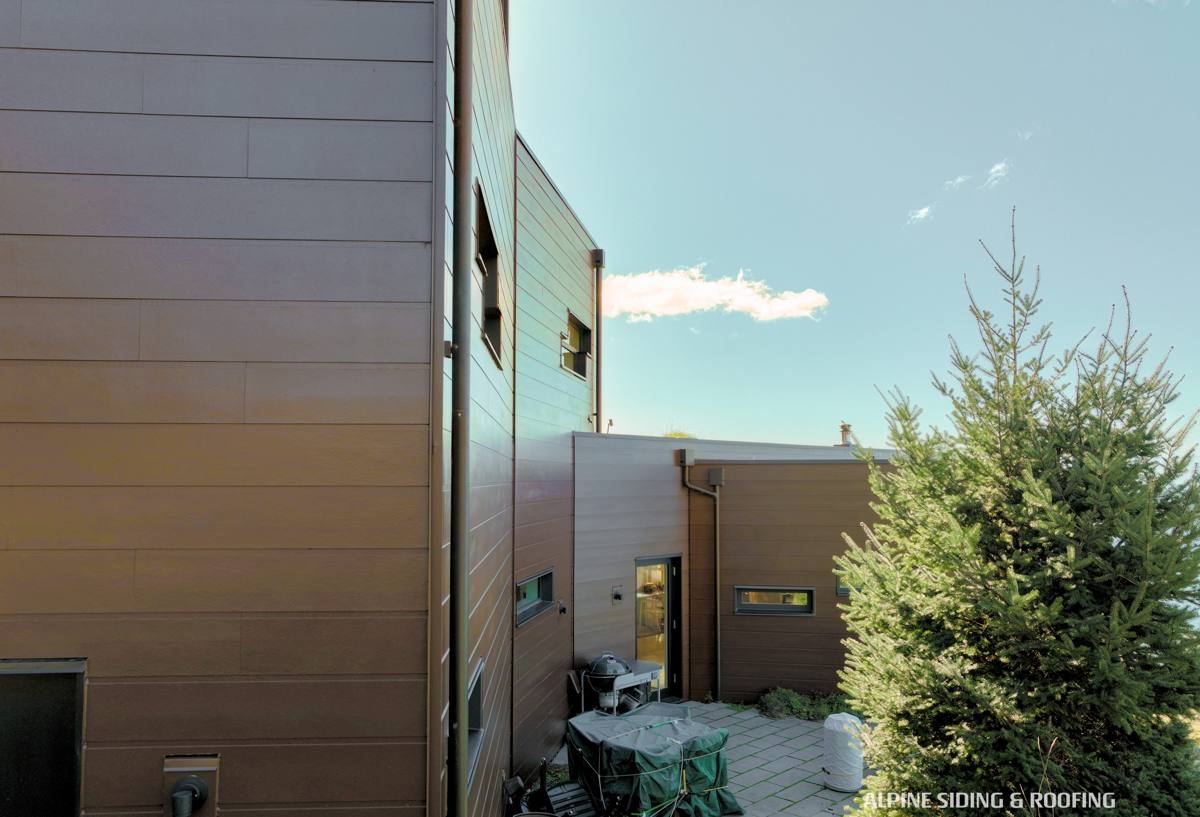
What Correct Fiber Cement Installation Involves
Fiber cement siding is only as good as the assembly it's installed into. The board itself is durable, but the water management system behind it is what actually determines whether a Mount Vernon home stays dry through decades of Pacific storms. A correct installation includes:
- A drainable weather-resistive barrier with a rain screen gap, so bulk water and incidental moisture behind the siding can drain and the wall can dry to the outside
- Properly flashed and back-caulked window and door openings, with head flashing that actually sheds water away from the framing
- Correct fastener placement and fastener type — siding nails or screws matched to the manufacturer's schedule, not just "close enough"
- Factory-primed or ColorPlus-finished cut edges sealed in the field, since an exposed raw edge is where moisture intrusion starts
- Proper clearance at grade, decks, and roof lines so siding never sits in standing water or under a splash zone
- Caulk joints sized and placed according to manufacturer spec, not just wherever a gap needs filling
Skip any one of these steps and the siding itself becomes almost irrelevant — water will find the weak point. This is true of any siding product, but it matters more here because Mount Vernon's rain volume and duration give water more opportunities to find that weak point than a drier region would.
Why We Only Install James Hardie
We install James Hardie fiber cement exclusively — not LP SmartSide, not vinyl, not Cemplank, Allura, primed spruce, or cedar. That's a professional standard, not a marketing line. Hardie's fiber cement is non-combustible, doesn't swell or rot the way wood-based products can when they take on moisture, and comes with a factory-applied ColorPlus finish that's baked on under controlled conditions rather than field-painted after installation. In a climate where field-applied paint is fighting salt air and near-constant humidity, a factory finish with a real coating warranty is a meaningful advantage, not a marketing footnote. We'd rather stand behind one product we trust completely than offer a menu of options with different failure modes we'd have to explain away later.
How Salt Air and Moss Season Specifically Affect Siding
Two things define exterior wear in Skagit County more than almost anywhere else on the west side of the state: proximity to saltwater air moving up the valley and Sound, and the long, damp shoulder seasons that let moss and algae get established on north- and west-facing walls.
Salt Air
Salt-laden air accelerates corrosion on unprotected metal fasteners, flashing, and trim. It also breaks down lower-quality paint films faster than inland exposure would. Fiber cement itself doesn't corrode, but everything that holds it up and seals it — fasteners, flashing, caulk — needs to be rated for that exposure, and the finish needs to be able to take UV and salt cycling without chalking or fading early.
Moss and Organic Growth
Shaded walls, tree cover, and consistent moisture give moss, lichen, and mildew a long runway in this area. Left unmanaged, organic growth holds moisture against the siding surface, which is exactly the condition that shortens the life of any wall assembly. A rain screen gap and correct grade clearance matter more here because they let the wall dry out between the wet stretches instead of staying damp indefinitely.
Our Process for a Mount Vernon Fiber Cement Job
The work follows the same sequence on every home, adjusted for the specific exposure, elevation, and existing wall condition:
- Inspection and assessment — we look at existing siding, sheathing condition, moisture staining, and any signs of past water intrusion before quoting anything
- Tear-off and sheathing check — old siding comes off and we evaluate what's underneath; damaged sheathing gets addressed before anything new goes up
- Weather barrier and rain screen installation — this is the step that determines long-term drainage performance
- Flashing at every penetration — windows, doors, hose bibs, vents, light fixtures
- Hardie board and trim installation — installed to manufacturer fastening and clearance specs
- Caulking and touch-up — cut edges sealed, joints finished per spec
- Final walk-through — we go over the finished job with the homeowner before calling it done
We don't shortcut the water management steps to save time, even though they're the least visible part of the job. They're also the part that determines whether the siding is still doing its job in fifteen years.
What Homes in This Area Typically Need
Mount Vernon's housing stock ranges from older farmhouse-style homes in and around town to newer construction on the valley's edges and in developing neighborhoods. Older homes often have wall assemblies with no real drainage plane behind the original siding, which means a full re-side is also an opportunity to correct decades-old moisture problems, not just refresh the exterior. Newer homes may already have better underlying assemblies but still benefit from the switch to a non-combustible, factory-finished product that won't need repainting on the same cycle as wood siding would.
| Home Condition | What It Typically Needs |
|---|---|
| Older home, original wood or T1-11 siding | Full tear-off, sheathing repair as needed, new drainage plane and rain screen, full Hardie install |
| Home with visible moss/algae staining | Assessment of shaded exposures, grade clearance correction, rain screen to improve drying |
| Newer home with vinyl or LP siding | Tear-off and inspection of existing barrier, upgrade to Hardie with proper flashing details |
| Home near water or open exposure | Extra attention to fastener and flashing material selection for salt exposure |
Cost Factors Specific to This Job
Every Mount Vernon fiber cement project prices out differently depending on a handful of real variables, not a flat per-square-foot number that ignores site conditions:
| Factor | Why It Matters Here |
|---|---|
| Existing wall condition | Rot or water damage under old siding adds sheathing repair before new siding can go on |
| Home height and access | Multi-story homes and tight lot lines affect scaffolding and staging time |
| Trim and detail complexity | Dormers, multiple gables, and trim-heavy elevations take longer than flat wall runs |
| Siding profile and color | Lap width, shake-style panels, and ColorPlus color selection affect material cost |
| Rain screen requirement | Adding a proper drainage gap where none existed is a worthwhile upgrade, not just an add-on cost |
We'll walk through these specifics on-site rather than quoting a number sight unseen — every home's exposure and existing condition changes the real scope.
Questions to Ask Before Hiring Anyone for This Job
Fiber cement installation is detail-sensitive work, and the mistakes aren't visible until years later when the wall is already wet. Before hiring any crew for a fiber cement job in Mount Vernon, it's worth asking:
- Do you install a rain screen or drainage gap behind the siding, or does it go directly over the weather barrier?
- How are you flashing window and door openings, specifically?
- Are you following the manufacturer's fastening schedule, and can you show it to me?
- What's your experience with homes in this specific area — salt exposure, moss, drainage issues?
- What warranty covers the installation labor, separate from the manufacturer's product warranty?
A crew that's worked in Mount Vernon and the broader Skagit County area regularly should be able to answer these without hesitation, because they've already run into the local conditions that make the answers matter.
Why Local Experience Matters on This Job
Fiber cement performs the same everywhere on paper, but the assembly behind it needs to respond to the specific conditions of the site. A crew that regularly works Mount Vernon and the surrounding Skagit County area already knows which elevations tend to hold moisture, which older neighborhoods have wall assemblies that need extra attention, and how much drainage capacity a wall needs to handle a wet Pacific Northwest winter without becoming a maintenance problem. That's not something you can fully account for from a generic install checklist — it comes from having done this work, on homes like this, in this specific place, repeatedly.
If you're weighing a siding replacement or new install in Mount Vernon, we're happy to walk the exterior with you, point out what we see, and put together a straightforward, no-pressure estimate — just fill out the form below to get started.