 Skagit County
 Building a Deck That Can Handle March Point's Weather
March Point sits out on the water in Skagit County, which means a deck here deals with a different set of stresses than one built inland. The combination of salt-laden marine air, driving rain off the water, and a long stretch of gray, damp months adds up to conditions that punish a poorly built deck fast. We've worked on enough decks in this part of Skagit County to know which shortcuts show up as problems within a year or two, and which details actually hold up.
A deck built for March Point isn't just a deck built to code — it's a deck built with the understanding that the wood, fasteners, and finishes will spend most of the year wet, occasionally salty, and shaded enough to grow moss. That changes material choices, fastener specs, and even how the framing is laid out.
Salt Air and Metal Fasteners
Salt air accelerates corrosion on anything metal — nails, screws, joist hangers, bolts, and railing hardware. On a deck close to the water, standard galvanized fasteners can start showing rust streaks and pitting well before the wood itself needs attention. Once a fastener starts to corrode, it weakens at exactly the point where it's doing structural work, which is a bigger deal on a deck than almost anywhere else on a house.
Standing Water and Moss on Decking
Skagit County's wet season is long, and March Point's exposure means decks here rarely get a full dry-out between storms. Any spot on a deck surface or substructure where water sits — a low board, a poorly sloped ledger connection, debris caught between boards — becomes a place where moss, algae, and eventually rot get a foothold. Moss on a deck isn't just cosmetic; it holds moisture against the wood and turns the surface slick and dangerous underfoot.
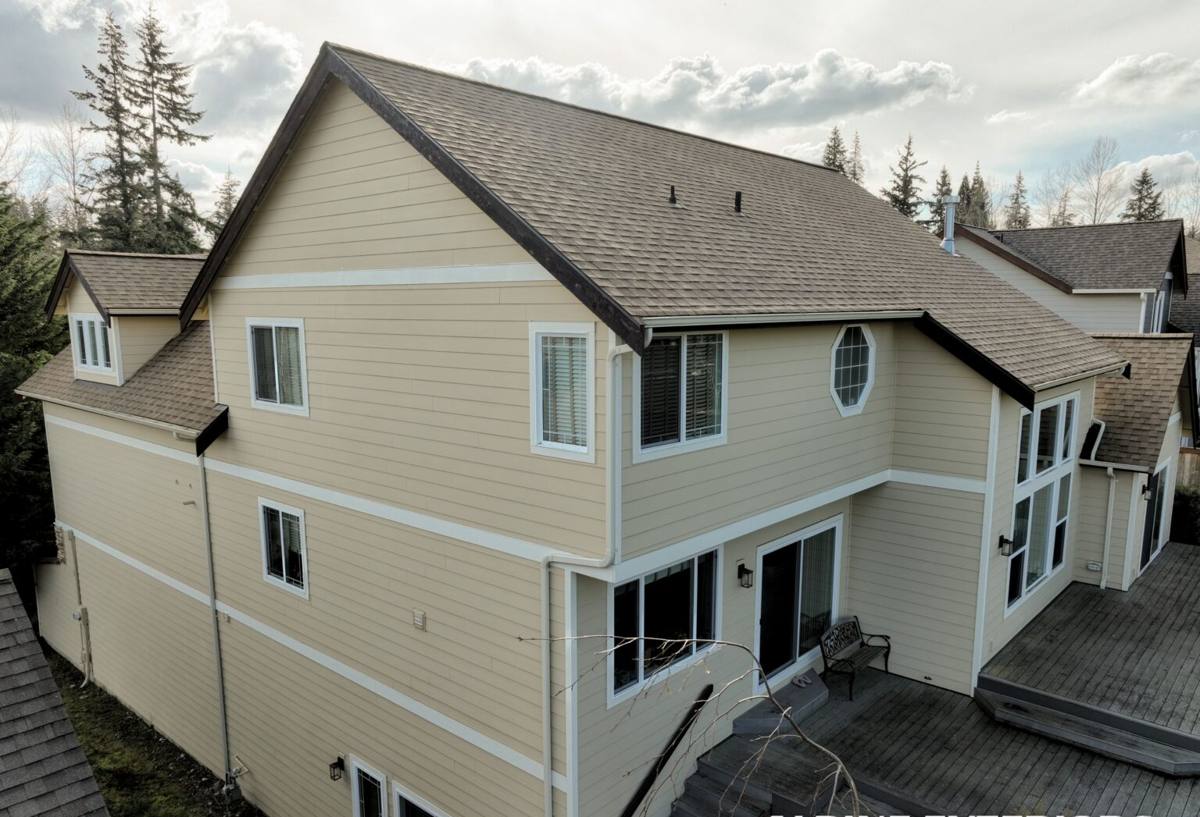
What a Correctly Built Deck Needs Here
A deck that's going to last in this climate needs the basics done right, plus a few adjustments specific to a marine environment.
Framing and Fasteners
We spec stainless steel or high-grade coated fasteners rated for coastal or marine use on framing connections, joist hangers, and structural screws — not because code always requires it, but because it's the difference between hardware that lasts and hardware that needs replacing. Framing lumber should be pressure-treated and rated for ground contact where it's near or below grade, and every ledger connection needs proper flashing so water can't get behind it and into the house framing.
Footings and Drainage
Footings need to go below frost depth and bear on stable soil — this matters everywhere, but a site with heavy seasonal rain can shift or saturate poorly compacted soil faster than a drier inland lot would. Just as important is what happens to water once it hits the deck: proper board spacing, slight slope away from the house, and clear drainage underneath so water isn't trapped against framing members.
Surface Material Choice
The decking surface itself takes the brunt of rain, salt air, and UV, and it's usually the first thing that shows wear. There's no single right answer here — it depends on budget, maintenance appetite, and how the deck will be used.
| Material | How It Handles This Climate | Maintenance |
|---|---|---|
| Pressure-treated wood | Affordable, but needs regular sealing to resist moisture and moss; can warp or check if neglected | Annual cleaning and re-sealing recommended |
| Cedar | Naturally more rot- and insect-resistant than treated pine, ages to a gray patina if left unfinished | Periodic cleaning; sealing extends life and color |
| Composite decking | Resists moisture absorption and won't rot; some early-generation boards can still grow surface mildew in shade | Occasional washing; no sealing or staining needed |
| PVC/capped composite | Fully moisture-resistant surface, holds up well to salt air and shaded, damp spots | Lowest maintenance; periodic washing only |
Wood costs less up front but asks for ongoing attention — skipping a season of sealing on a March Point deck shows up faster than it would somewhere drier. Composite and PVC cost more initially but trade that for lower upkeep, which matters if the deck sits in a shaded or damp corner of the lot where moss and mildew are already working against it.
Railings and Hardware for a Marine Environment
Railings get overlooked in a lot of deck quotes, but they're just as exposed as the decking surface — often more, since they're vertical and catch driving rain directly. Wood railings need the same fastener and sealing attention as the deck surface. Metal or cable railing systems need components rated for coastal exposure, since standard hardware can corrode and stain the surrounding wood or composite. Post bases and any hardware anchoring railings to the structure are a weak point if they're not rated for the environment — a rusted post base is a safety issue, not just an appearance one.
Common Problems We See on Existing March Point Decks
When we're called out to look at an older deck in this area, the same handful of issues show up again and again:
- Rusted or corroding fasteners and joist hangers, especially on decks facing open water or prevailing wind
- Moss buildup on shaded boards and in the gaps between decking, holding moisture against the wood
- Ledger boards without proper flashing, letting water track behind the siding and into the house framing
- Undersized or poorly spaced footings that have shifted slightly with seasonal ground saturation
- Railings with loose or corroded post connections
- Decking boards installed tight together with no drainage gap, trapping water and debris
Most of these aren't visible from a quick look at the deck's surface — they show up in the framing, the fastener condition, and how the structure has moved over a few wet seasons. That's part of why a fresh coat of stain on an old deck can hide problems rather than fix them.
How We Build a Deck
Our process for a new deck in March Point follows the same order every time, because skipping steps is where climate-related failures start:
- On-site assessment of the ground, drainage, sun/shade exposure, and how the deck ties into the house
- Design and material discussion, including honest trade-offs between wood and composite for the specific spot on the property
- Proper footing layout and installation below frost depth, sized for the deck's actual load
- Framing with treated lumber and coastal-rated fasteners, including correctly flashed ledger connections
- Decking installation with drainage gaps and attention to slope
- Railing and hardware installation using components rated for salt air exposure
- Final walkthrough covering maintenance expectations specific to the material chosen
We don't shortcut the flashing or fastener steps to hit a lower number on a quote. Those are exactly the details that separate a deck that needs rework in three years from one that doesn't.
What Deck Projects Typically Cost
Cost depends heavily on size, framing complexity, decking material, and railing choice, so we won't pretend there's one number that fits every project. In broad terms, a modest wood deck with basic railings tends to run in the lower range of deck projects, while a larger deck with composite or PVC decking, upgraded railings, and features like built-in seating or multiple levels moves into the higher range. The honest way to get a real number is a site visit, since ground conditions, slope, and how the deck connects to the house all affect labor and materials.
Maintaining a Deck Through Skagit County's Wet Season
Even a well-built deck needs some seasonal attention in this climate. A yearly cleaning to clear moss, algae, and debris from between boards keeps moisture from getting trapped. Wood decks need their sealer or stain checked and reapplied on a regular schedule — how often depends on sun exposure and how much direct rain and wind the deck takes. Composite and PVC decks need far less, but periodic washing still keeps mildew from taking hold in shaded corners. Checking railing hardware and fastener heads for early rust once a year is a quick way to catch a problem before it becomes a repair.
Why Hire a Crew That Already Works in March Point
A deck contractor who mostly builds inland, in drier parts of the state, doesn't always spec fasteners, flashing, or drainage details for what this stretch of Skagit County actually does to a structure over time. Working in and around March Point regularly means we've already seen how salt air, standing water, and moss behave on decks here, and we build accordingly from the first framing member rather than learning it from a callback. That local track record is worth more than a lower bid from a crew unfamiliar with the area's marine exposure.
If you're planning a new deck or want an honest look at an existing one, we're happy to come take a look. There's a free, no-pressure estimate form below — reach out and we'll walk the site with you.