 Skagit County
 Roofing in Lyman Faces a Specific Kind of Wear
Lyman sits in the Skagit Valley, where the roofing conditions are more demanding than they look from the ground. The combination of salt-tinged marine air moving up from Puget Sound, driving rain that comes in sideways during fall and winter storms, and long stretches of overcast, damp weather adds up to a roofing environment that punishes shortcuts. A roof that would last two decades in a dry inland climate can fail early here if it wasn't built for what Skagit County actually throws at it.
We replace roofs for homeowners throughout this part of the county, and the failures we see in Lyman follow a pattern: moss working its way under shingle tabs, fascia and sheathing rot at the eaves where water sits longest, and flashing that was never properly integrated with the roofing material in the first place. None of that is exotic. It's ordinary wear, accelerated by ordinary weather, on a roof that wasn't detailed for it.
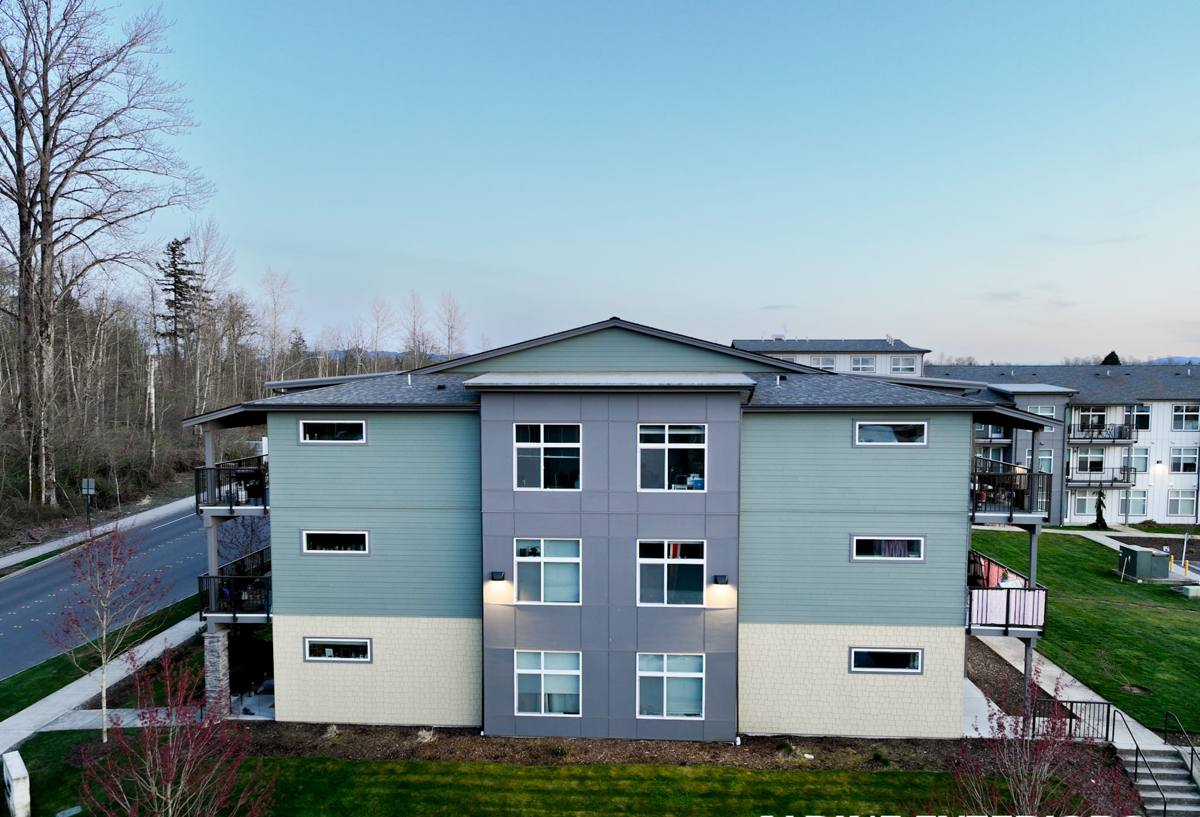
Signs a Roof in Lyman Needs Replacement, Not Another Repair
Not every roof problem calls for a full tear-off. Plenty of homes just need a repair. But there's a point where patching stops being the honest recommendation, and knowing where that line is saves you money in the long run.
Repair usually makes sense when:
- The damage is isolated to one area — a single storm-lifted section, a chimney flashing leak, a handful of cracked shingles
- The roof is less than roughly 12-15 years old and the rest of the field is in solid shape
- There's no sign of widespread moss undermining shingle tabs or soft, spongy decking
Replacement is the right call when:
- Shingles are curling, cupping, or losing granules across large sections, not just one spot
- Moss has spread broadly and is lifting tabs rather than just staining the surface
- You can see daylight through the attic decking, or find soft spots when walking the roof
- Multiple past repairs haven't stopped recurring leaks in the same general area
- The roof is past its expected service life for its material and has never been fully re-roofed
A straight answer about which category your roof falls into is worth more than a sales pitch either way — sometimes the right recommendation for a Lyman homeowner really is "you've got a few more years, here's what to watch."
What a Correct Roof Replacement Actually Involves
A roof replacement is not just stripping old shingles and nailing down new ones. In a climate like Skagit County's, most of the long-term performance comes from the layers homeowners never see once the job is done.
Tear-off and deck inspection
Every layer of old roofing comes off down to the sheathing. This is the point where rot, delaminated plywood, or soft spots from years of trapped moisture get found and replaced — not covered over. Skipping this step is the single most common shortcut in cheap re-roofs, and it's invisible until the new roof starts leaking from underneath.
Underlayment and ice/water protection
A synthetic or self-adhering underlayment goes down as the water-resistant layer beneath the roofing material. In areas prone to wind-driven rain, we pay particular attention to eaves, valleys, and any low-slope transitions, where a self-adhered membrane gives real protection against water that gets pushed backward under the shingle edge — a common failure point in coastal Washington storms.
Flashing at every penetration and transition
Chimneys, skylights, vent pipes, wall-to-roof transitions, and valleys are where roofs actually leak — not the open field of shingles. Properly step-flashed walls and correctly lapped valley metal matter more to a roof's lifespan than the shingle brand on the box.
Attic ventilation
Balanced intake at the eaves and exhaust at the ridge keeps moist attic air moving. Without it, humidity condenses on the underside of the deck, feeding rot and, in this region, moss growth from the inside out. Ventilation is cheap to get right during a replacement and expensive to fix afterward.
Fastening and material installation
Correct nail placement, proper exposure, and manufacturer-spec fastening patterns matter for wind resistance — a real consideration during winter storm season here. Under-nailed or over-driven fasteners are a leading cause of shingle blow-off in coastal wind events.
Choosing a Roofing Material for Skagit County Conditions
There isn't a single "best" roofing material — there's a best fit for your home, your budget, and how much long-term maintenance you're willing to take on. Here's how the common options actually compare for a moss-prone, high-rainfall climate like Lyman's.
| Material | Typical Lifespan | Moss & Moisture Behavior | Maintenance Burden |
|---|---|---|---|
| Architectural asphalt shingle | 25-30 years | Moss-resistant granule options available; still needs periodic cleaning | Low to moderate |
| Standard 3-tab asphalt | 15-20 years | More vulnerable to moss lifting tabs over time | Moderate |
| Standing seam metal | 40-50+ years | Sheds moss and moisture readily; minimal organic buildup | Low |
| Cedar shake | 20-30 years with upkeep | Absorbs moisture, needs active moss and treatment maintenance | High |
We install architectural asphalt and metal roofing as our standard recommendations for this region because both hold up to sustained moisture without the ongoing upkeep that wood shake demands here. We're upfront that shake can look great, but in a climate this wet, its maintenance requirements are a real cost most homeowners underestimate — that's a trade-off worth knowing before you commit, not a knock on the material itself.
Cost Factors for a Lyman Roof Replacement
Every roof is priced on its own specifics, but the variables that move the number are consistent. Broadly, a straightforward asphalt shingle replacement on an average-size home in this region runs in the moderate five figures, with metal roofing typically landing higher upfront in exchange for a much longer service life.
- Roof size and number of stories — more square footage and steeper access both add labor time
- Roof pitch and complexity — multiple valleys, dormers, and hips take more flashing work than a simple gable
- Deck condition — hidden rot found during tear-off adds material and labor that couldn't be quoted sight unseen
- Material choice — asphalt, metal, and specialty materials carry different material and installation costs
- Ventilation upgrades — adding proper intake/exhaust venting where none existed is a worthwhile add, not a hidden markup
- Tear-off layers — removing two or three layers of old roofing costs more than removing one
Any contractor should be able to walk you through exactly which of these apply to your home before work starts, not after.
How Our Roof Replacement Process Works
- On-site inspection — we walk the roof and attic, check the deck condition where accessible, and photograph problem areas so you can see what we see
- Written estimate — a clear scope of work and price, with material options laid out honestly, including trade-offs
- Scheduling around weather — in Skagit County, timing a tear-off to avoid leaving a home exposed to rain overnight matters, and we plan around the forecast
- Tear-off and deck repair — full removal down to sheathing, with any rot or damage addressed and documented before covering it
- Underlayment, flashing, and ventilation installed to spec — the parts that determine whether the roof lasts
- Final installation — shingles or metal panels installed to manufacturer specifications for wind and moisture performance
- Final walkthrough — we go over the completed roof with you, including care and what to watch for going forward
Moss and Long-Term Roof Care in Skagit County
Even a correctly installed roof needs some ongoing attention in this climate. A long moss season is simply part of living in the Skagit Valley, and how a homeowner manages it makes a real difference in roof lifespan.
- Keep overhanging branches trimmed back to reduce shade and debris buildup on the roof surface
- Clear gutters and valleys of needles and leaf litter before fall rains set in, so water has a clear path off the roof
- Have moss growth treated before it spreads under shingle tabs, not after it's already lifting them
- Watch for granule buildup in gutters, which signals shingle wear worth having checked
- Schedule a periodic roof check rather than waiting for a visible leak inside the house
Why a Crew That Already Works in Lyman Makes a Difference
Roofing crews who work regularly in Skagit County understand which details matter here versus in a drier climate — how much ice-and-water membrane to run at eaves and valleys, how aggressive the ventilation needs to be given the moisture load, and how local wind patterns during winter storms affect fastening and material choice. That's not a marketing point; it's the difference between a roof detailed for this region and one built to a generic spec sheet.
It also means straightforward accountability. A local crew is easy to reach if a question comes up after the job, and has a reputation in the area worth protecting — that tends to show up in the quality of the work itself, long before it shows up in anything you'd read about a company.
Get a Free Estimate for Your Lyman Roof
If your roof is showing moss, wear, or age, or you just want a straight answer about how much longer it has, we're happy to take a look. The estimate is free, there's no pressure, and you'll get a clear explanation of what we see and what it would take to fix it right. Use the form below to get started.