 Skagit County
 Composite Decking Built for Lyman's River Valley Climate
Lyman sits down in the Skagit River valley, tucked between wooded hillsides and farmland, and that location shapes what a deck has to survive here. The valley holds moisture longer than open areas closer to the water — fog settles in low spots, humidity lingers under tree cover, and the growing season for moss and algae runs nearly year-round. A deck built without that in mind will look tired within a few seasons, no matter what material it's made from. Composite decking, installed correctly for this specific setting, is one of the more reliable ways to get a deck that still looks and performs well five, ten, fifteen years out.
This page is about composite decking specifically for Lyman properties — what the local conditions demand, what a correct installation actually involves, and what to expect when you hire a crew that already understands this stretch of Skagit County.
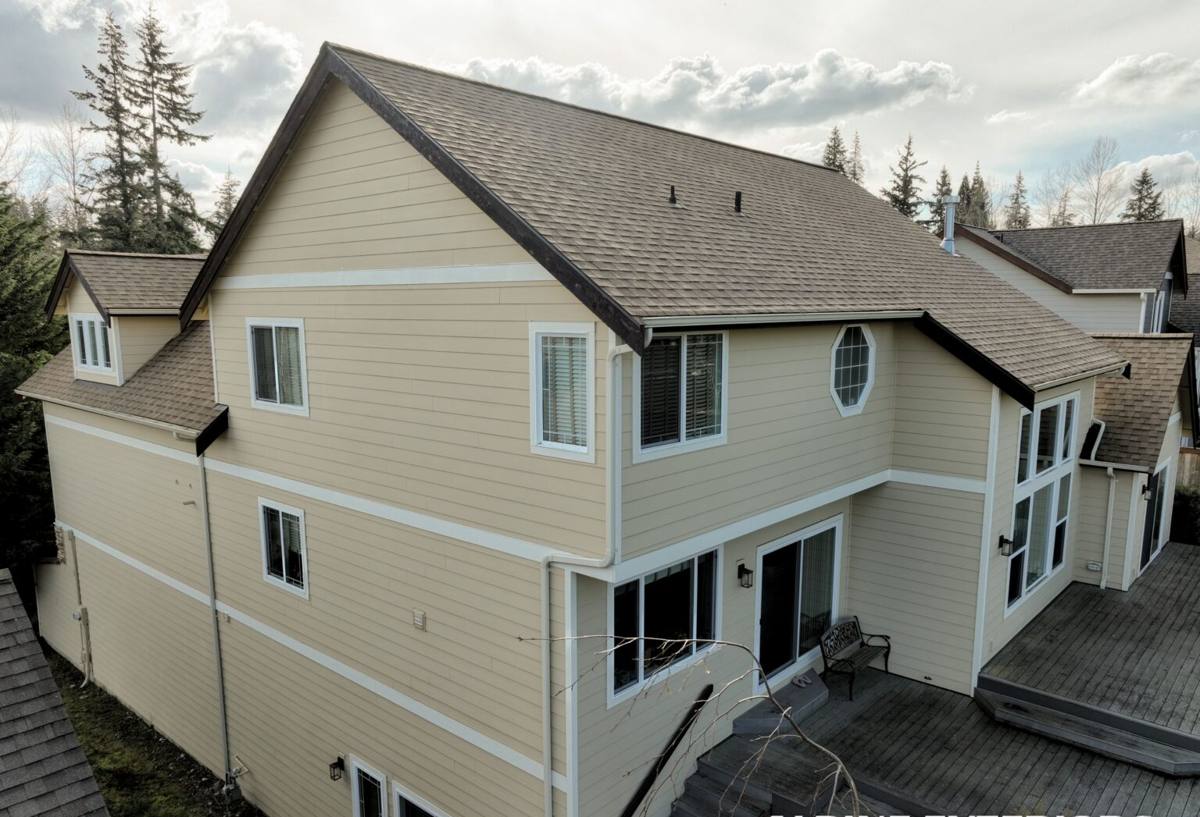
What Lyman's Climate Does to a Deck
Skagit County overall deals with driving rain and a long wet season, but Lyman's river-valley setting adds a few wrinkles that matter for decking:
- Extended dampness — valley fog and shade from surrounding trees mean deck boards can stay damp longer after a rain than they would on an open, sun-exposed lot.
- Moss and algae pressure — the same dampness that's good for the surrounding forest is exactly what moss and algae need to take hold on horizontal wood or composite surfaces.
- Organic debris — needles, leaves, and seed litter from nearby trees collect in deck gaps and on ledger boards, holding moisture against the structure if it isn't cleared.
- Seasonal temperature swings — cold snaps followed by wet thaw cycles stress fasteners, framing connections, and any material that isn't dimensionally stable.
None of this makes a deck in Lyman a bad idea — it just means the material choice and the build details need to actually account for the conditions instead of following a generic install.
Why Composite Makes Sense Here
Wood decking isn't disqualified by this climate, but it demands a maintenance schedule most homeowners don't keep up with — annual cleaning, periodic sealing, and vigilance about moss before it stains or rots the surface. Composite decking shifts that burden. It doesn't absorb water the way wood fibers do, it won't splinter or cup from repeated wet-dry cycles, and most modern composite boards resist moss staining far better than untreated wood.
That said, composite isn't maintenance-free — it's maintenance-light. Moss and algae can still grow on the surface of any decking material if moisture sits on it long enough, composite included. The difference is that composite doesn't rot or structurally degrade from that growth the way wood can, and a seasonal rinse and scrub keeps it looking right.
Where Composite Falls Short (Being Honest About It)
We won't oversell it. Composite decking costs more upfront than pressure-treated wood, and if the substructure or drainage details are done poorly, composite won't fix that — it'll just hide the problem for a while before it shows up as sagging, staining, or a soft feel underfoot. It's also heavier than wood in some product lines, which matters for framing spans. A correct install accounts for all of this; a rushed one doesn't.
What a Correct Composite Deck Install Involves in This Area
For a deck that's going to hold up in Lyman's damp, tree-shaded conditions, a few details matter more here than they would in a drier part of the county:
Framing and Substructure
Joists and beams need to be rated and spaced for the specific composite product being installed — composite boards often have different span requirements than wood decking, and using wood-decking spacing under composite is a common shortcut that leads to bounce and premature wear. We use fasteners and hardware rated for ground contact and moisture exposure, since valley humidity puts more demand on connectors than a dry site would.
Drainage and Airflow
This is the detail that matters most in a place like Lyman. Standing water and trapped moisture under a deck are what invite rot in the framing and mold underneath the boards, even when the composite surface itself is holding up fine. That means proper ledger flashing where the deck meets the house, a slight slope away from the structure, and enough clearance underneath for air to actually move and dry things out between rain events. Skipping this is the single biggest reason decks in wet, shaded settings fail early — not the decking material itself.
Board Spacing and Fastening
Gaps between boards need to be sized to let debris wash through rather than collect — too tight, and needles and leaf litter pack in and hold moisture against the board edges. Hidden fastener systems keep the surface clean and reduce the number of penetration points where water could otherwise work its way in over time.
Railing and Edge Details
Post bases and any point where a rail or stair stringer meets the deck frame are common weak points for water intrusion. These get sealed and flashed properly rather than just caulked over, since caulk alone tends to fail faster in a climate with this much seasonal moisture cycling.
Composite Decking Options: A Practical Comparison
There isn't one "best" composite product for every situation — the right choice depends on budget, how much sun or shade the deck gets, and how much upkeep you actually want to do. Here's how the general categories stack up for a property like this:
| Decking Type | Moisture Resistance | Moss/Algae Resistance | Upfront Cost | Ongoing Upkeep |
|---|---|---|---|---|
| Pressure-treated wood | Fair — absorbs water, needs sealing | Low — stains and grows moss without regular cleaning | Lowest | Highest — annual cleaning/sealing |
| Capped composite (typical) | Good — cap layer sheds most surface moisture | Good — resists staining, still needs occasional rinse | Mid to high | Low — periodic wash |
| Uncapped/basic composite | Fair — more prone to surface moisture absorption | Moderate — can stain over time in shaded areas | Mid | Moderate |
| Cedar or other natural wood | Fair — requires diligent sealing | Low without treatment | Higher (material) | High |
For a shaded, damp lot in the Lyman area, capped composite is generally the strongest match between performance and the amount of upkeep a homeowner actually wants to do. We'll talk through the trade-offs for your specific lot and sun exposure rather than pushing one product line.
Our Process for Lyman Composite Decking Projects
- On-site assessment — we look at sun/shade exposure, existing drainage, tree cover, and the condition of any existing structure before recommending a product or approach.
- Honest scope and pricing — you get a clear breakdown of framing work, decking material, railing, and any drainage or flashing corrections needed, with no surprise add-ons mid-project.
- Framing and structural work — including any repairs to ledger attachment, joist spacing corrections, or footing issues found during assessment.
- Composite installation — proper spacing, hidden fastening where applicable, and attention to every edge and post-base detail.
- Final walkthrough — we go over basic seasonal care with you so the deck stays looking right without a heavy maintenance routine.
Maintenance Checklist for a Composite Deck in a Damp, Shaded Lot
Composite is low-maintenance, not no-maintenance. In a setting like Lyman's, a short seasonal routine goes a long way:
- Sweep off needles, leaves, and seed debris regularly, especially in fall and after windy weather.
- Rinse the deck surface a few times a year to prevent moss and algae from getting established, more often in heavily shaded spots.
- Check that gaps between boards stay clear so water and debris can pass through instead of pooling.
- Confirm under-deck airflow isn't blocked by stored items, overgrown vegetation, or accumulated debris.
- Inspect railing posts and stair connections yearly for any sign of movement or water staining at the base.
- Clear gutters and downspouts near the deck so roof runoff isn't dumping extra water onto or under the structure.
Why Local Experience Matters for This Job
A deck built to a generic spec sheet can pass inspection and still underperform in a spot like Lyman. Crews who haven't worked river-valley or heavily wooded Skagit County lots before sometimes underbuild drainage, use standard board spacing regardless of debris exposure, or skip the flashing details that matter most where moisture lingers. Working regularly in Skagit County, including areas like Lyman with heavier tree cover and valley dampness, means we've already seen where decks in this kind of setting tend to fail — and we build to avoid those specific problems from the start, not fix them later.
Get a Straight Answer for Your Property
Every lot in the Lyman area has its own mix of sun exposure, tree cover, and drainage conditions, so the right composite decking approach for your home may look different from your neighbor's. If you'd like a straightforward, no-pressure estimate on a new composite deck or a replacement of an aging one, use the form below and we'll walk the site with you and talk through what actually makes sense for your property.