 Skagit County
 Asphalt Shingle Roofing Built for La Conner's Waterfront Climate
La Conner sits right on the Swinomish Channel, which means every roof in town lives with salt-laden air, near-constant marine humidity, and heavy tree cover on top of it. That combination is harder on asphalt shingles than most homeowners realize. Salt air accelerates corrosion on exposed metal fasteners and flashing. Driving rain off the water finds every weak seam in an underlayment or flashing detail. And the shade from mature trees, paired with our long wet season, gives moss and algae months at a time to take root on north-facing slopes. A shingle roof that's installed correctly for this environment will handle all of it for decades. One that's installed the way it might be in a drier inland climate usually starts showing problems inside the first five to eight years.
This page is about asphalt shingle roofing specifically for La Conner homes — what the climate demands, what a correct installation actually involves, and how we approach the job differently because we already work roofs in this exact environment.
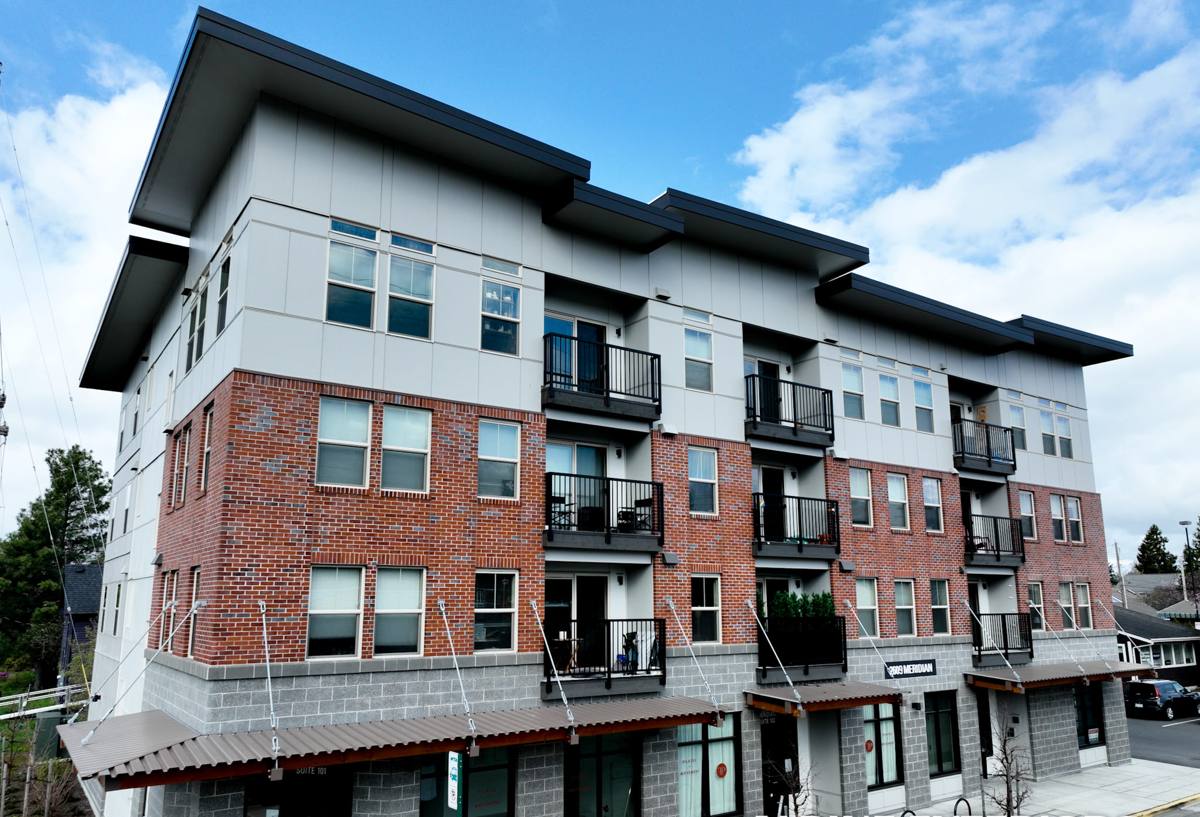
What Skagit County's Coastal Climate Does to a Shingle Roof
Salt Air and Metal Fatigue
Homes closer to the channel see salt carried in on the wind, which speeds up corrosion on nails, flashing, vent stacks, and any exposed metal drip edge. Cheaper or under-spec'd fasteners and flashing are the first things to fail, and once flashing corrodes or a nail head rusts through, water finds a path underneath the shingle field even though the shingles themselves look fine from the ground.
Driving Rain and Wind-Driven Moisture
Storms coming off the water don't just fall straight down — wind pushes rain sideways and up under shingle tabs, valleys, and roof-to-wall transitions. A roof built for this needs stronger sealing at every penetration and valley, not just standard shingle overlap.
Moss, Algae, and Shade
Skagit County's long wet season, combined with tree cover common around La Conner properties, gives moss and algae an extended window to establish on shaded or north-facing slopes. Left unchecked, moss lifts shingle edges, holds moisture against the roof deck, and shortens the life of the whole system — not just the spots where it's growing.
What a Correctly Installed Shingle Roof Needs Here
- A synthetic or high-quality underlayment rated for extended wet exposure, not the minimum builder-grade felt
- Ice-and-water shield or self-adhered membrane at eaves, valleys, and any low-slope transition, since these are where wind-driven rain concentrates
- Corrosion-resistant flashing and fasteners at every penetration — vent stacks, chimneys, skylights, and wall step flashing
- Balanced intake and exhaust ventilation so trapped moisture doesn't condense inside the attic and rot the deck from underneath
- Algae-resistant (AR) shingles on shaded or north-facing slopes, which use copper or zinc granules to slow biological growth
- Proper nailing pattern and fastener count for our wind exposure — under-nailed shingles are one of the most common failure points we find on older La Conner roofs
None of this is exotic. It's standard best practice for a marine climate, applied consistently instead of skipped to save time or material cost. The difference between a roof that lasts 25 years here and one that fails at 12 is almost always in these details, not in the shingle brand printed on the wrapper.
Choosing the Right Shingle for This Environment
Asphalt shingles come in a few performance tiers, and the right choice depends on the roof's exposure, slope, and how long you plan to own the home. We walk through these trade-offs honestly rather than upselling the most expensive option by default.
| Shingle Tier | Typical Lifespan | Best Fit For | Trade-Offs |
|---|---|---|---|
| 3-tab / standard | 15–20 years | Budget-conscious re-roofs, secondary structures | Lower wind rating, less algae resistance without AR upgrade |
| Architectural / laminate | 25–30 years | Most La Conner homes — good balance of durability and cost | Slightly higher material cost, still needs AR granules for shaded slopes |
| Premium / designer laminate | 30+ years | Steeper, more visible rooflines; homeowners staying long-term | Highest upfront cost; installation quality matters even more at this tier |
Regardless of tier, we specify algae-resistant granules on any slope with shade or northern exposure — the upgrade cost is small compared to the cleaning and premature wear it prevents.
Our Installation Process
- On-site inspection and measurement — we check deck condition, existing ventilation, flashing points, and slope exposure before quoting anything
- Tear-off and deck assessment — old roofing comes off down to the deck so we can catch rot or soft spots before they're covered up again
- Deck repair as needed — any compromised sheathing gets replaced, never shingled over
- Underlayment and ice-and-water membrane — installed to marine-climate spec at eaves, valleys, and penetrations
- Flashing — new corrosion-resistant flashing at chimneys, walls, vents, and valleys rather than reusing old, weakened flashing
- Shingle installation — correct nailing pattern and fastener count for our wind exposure, with attention to valley and hip detailing
- Ventilation check — intake and exhaust balanced for the attic volume, not just whatever vents were already there
- Final walkthrough — we go over the finished roof and the maintenance basics with the homeowner before we leave
Common Problems We Find on La Conner Roofs
Moss and Algae Buildup
By far the most common call we get. Moss on a north-facing slope isn't just cosmetic — it holds moisture against the shingles and deck, and over a few seasons that shortens the roof's effective life. Removal has to be done carefully; pressure washing or scraping moss off asphalt shingles damages the granule surface and does more harm than the moss itself.
Nail Pops and Under-Fastening
Wind exposure off the water means under-nailed shingles work loose faster here than they would inland. This shows up as lifted or missing tabs after a storm season.
Flashing Failures
Corroded or improperly lapped flashing around chimneys and wall transitions is one of the most common sources of hidden leaks we find — often well before the shingles themselves show any wear.
Trapped Attic Moisture
Poor ventilation combined with our humid climate leads to condensation inside the attic, which can rot the deck from below while the shingles above look completely fine.
Maintenance That Actually Extends Roof Life Here
- Have moss and debris cleared from valleys and shaded slopes at least once a year, using methods that don't strip granules
- Keep gutters clear so water isn't backing up under the eave edge during heavy rain
- Trim overhanging branches to reduce shade and debris buildup on north-facing slopes
- Check flashing and sealant at penetrations every couple of years, especially after major storms
- Have the attic checked for proper airflow and any signs of trapped moisture
- Address small issues — a lifted tab, a small moss patch — before the next wet season, not after
What Affects the Cost of a Shingle Roof in Skagit County
| Factor | Why It Matters |
|---|---|
| Roof size and pitch | Steeper roofs take longer and require more safety setup, which affects labor cost |
| Deck condition | Rotted or soft sheathing found during tear-off adds repair cost but prevents a bigger problem later |
| Shingle tier chosen | Standard, architectural, and premium laminate shingles carry different material costs |
| Number of penetrations | Chimneys, skylights, and multiple vents each need individual flashing work |
| Ventilation upgrades | Adding or correcting intake/exhaust vents is a small added cost that protects the whole roof system |
| Access and site conditions | Tree cover, tight lots, or difficult staging near the water can affect labor time |
We give straightforward, itemized quotes so you can see exactly what you're paying for — no vague lump sums, and no pressure to upgrade beyond what your roof actually needs.
Why Hire a Crew That Already Works in La Conner
Asphalt shingle installation isn't fundamentally different from one town to the next, but the details that make a roof last are climate-specific — and those details come from experience, not a manufacturer's spec sheet alone. A crew that regularly works Skagit County roofs already knows which slopes in this area tend to hold moss, how much wind exposure to plan for near the channel, and which flashing and ventilation shortcuts cause the callbacks we get asked to fix on other companies' work. That local pattern recognition is the difference between a roof that's technically up to code and one that's actually built for La Conner's salt air, driving rain, and moss season.
We also stand behind our work locally — if something needs attention after the install, we're not driving in from out of the area to handle it.
Get a Straightforward Roofing Estimate
If your La Conner home needs a new asphalt shingle roof, a repair, or just an honest look at what condition your current roof is really in, we're glad to come take a look. The estimate is free, there's no pressure, and you'll get a clear explanation of what your roof needs and why — use the form below to get started.