 Skagit County
 Siding Built for the Hamilton Stretch of the Skagit Valley
Hamilton sits up the Skagit River corridor, tucked between forested hillsides and river bottomland east of Sedro-Woolley. It's a different exposure than the open coastline, but it's not an easy exposure either. Homes here deal with heavy tree canopy, river humidity that lingers into the afternoon, and the marine-influenced weather that rolls up the valley off the Salish Sea most of the year. That combination — shade, moisture, and driving rain during fall and winter storms — is exactly the kind of environment that separates siding that holds up for decades from siding that starts failing in year eight or ten.
We install James Hardie fiber cement siding exclusively, and we've worked homes throughout Skagit County long enough to know what this particular stretch of the valley does to a house. This page covers what a Hamilton home actually needs from its siding, what a correct installation looks like here, and how our process works from first look to final walk-through.
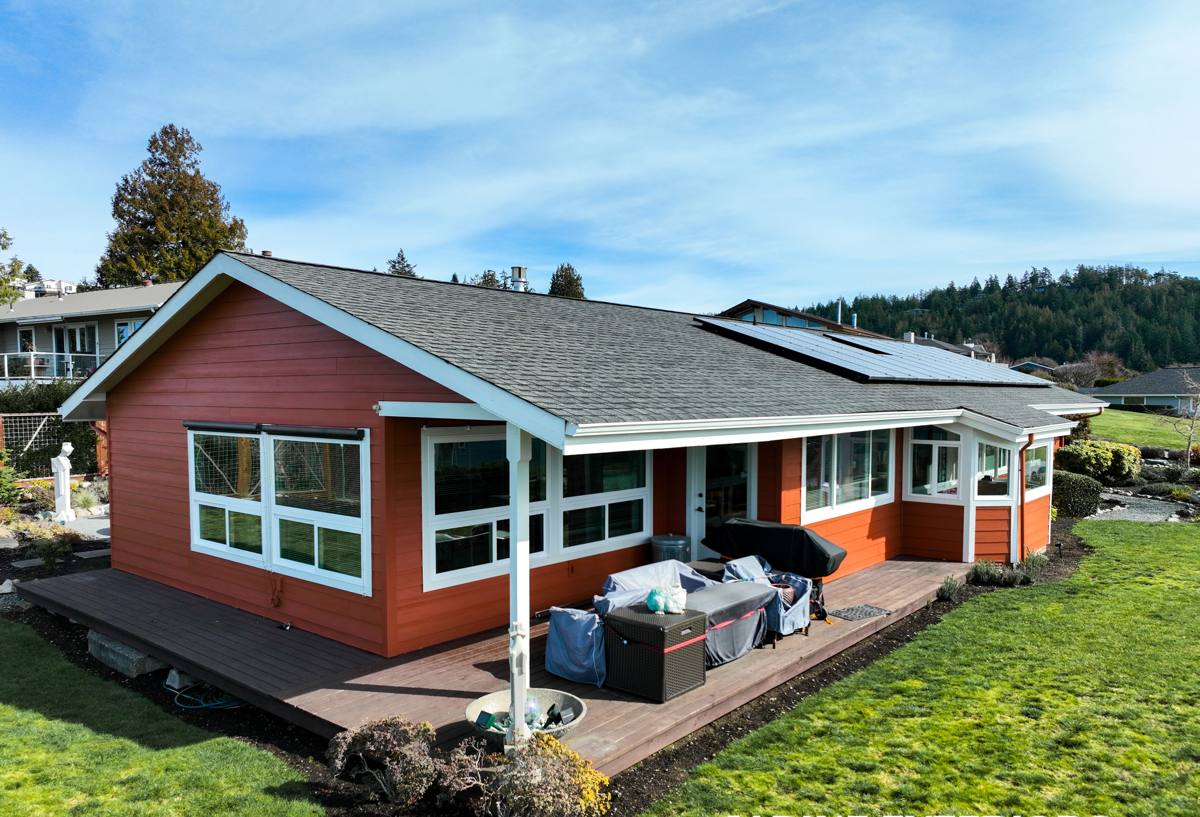
What Skagit County's Climate Does to a House Over Time
Driving Rain and Wind-Driven Moisture
Western Washington doesn't just get rain — it gets rain pushed sideways by wind, especially during the fall and winter storm systems that funnel up the Skagit Valley. Wind-driven rain finds every gap, every under-caulked seam, and every place where flashing was skipped to save time. Siding that isn't installed with the right clearances and flashing details will let water behind the cladding, and once that happens, the damage is happening where you can't see it.
Shade, Humidity, and a Long Moss Season
Hamilton's tree cover is part of what makes the area attractive, but it also means siding here spends a lot of the year in shade with slow-drying surfaces. That's the setup for moss and algae growth, and moss season in this part of the county runs long — often from early fall through spring. Moss holds moisture against a wall system, and on the wrong siding product that moisture exposure translates directly into swelling, rot, or paint failure. On correctly installed fiber cement it's a surface maintenance issue, not a structural one.
Marine Air Reaching Up the Valley
Even this far inland, the marine layer off the Salish Sea influences Skagit County's weather patterns — cool, damp, and slow to dry compared to drier climates. Materials that perform fine in Eastern Washington or the Southwest often don't hold up the same way here, because the drying window between rain events is shorter and the humidity baseline is higher.
Why We Only Install James Hardie Here
We don't install vinyl, LP SmartSide, Cemplank, Allura, primed spruce, or cedar. That's not a marketing position — it's a standard we hold because of what this climate does to those materials over a 15-20 year timeline. Wood-based products (including engineered wood like LP SmartSide and traditional cedar) rely on maintaining an intact factory coating to keep moisture out; once that coating is compromised at a cut edge, a fastener hole, or a joint, moisture wicks into the substrate and the clock starts on swelling and rot. In a shaded, damp, moss-prone environment like Hamilton, that clock runs faster than it would in a drier climate.
James Hardie fiber cement is cement, sand, and cellulose fiber — it doesn't rot, it isn't a food source for moss or fungus the way wood-based products can be, and it holds paint and factory finish far longer because it doesn't expand and contract with moisture the way wood does. The ColorPlus factory finish is baked on and warrantied separately from the substrate, which matters in a climate where the finish is what takes the daily beating from rain and UV.
What Hamilton Homes Need From a Siding System
- Full weather-resistive barrier and rainscreen or proper drainage plane behind the siding, not just house wrap and hope
- Correct flashing at every window, door, and roof-to-wall transition — this is where wind-driven rain actually gets in
- Minimum manufacturer-specified clearance from grade, decks, patios, and roof lines so moisture and moss have somewhere to go instead of sitting on the siding
- Factory-primed and factory-finished panels (ColorPlus) rather than field-painted siding, so the finish isn't dependent on job-site weather conditions during install
- Stainless or hot-dip galvanized fasteners rated for the moisture exposure, not standard fasteners that will corrode and streak the siding over time
- Proper caulking and sealant only where Hardie's install specs call for it — over-caulking traps moisture just as badly as under-caulking lets it in
James Hardie Product Lines That Fit This Setting
| Product | Best Use on a Hamilton Home | Why It Fits |
|---|---|---|
| HardiePlank lap siding | Primary wall cladding | The workhorse siding for this climate; HZ10 formulation is engineered for the Pacific Northwest's wet, temperate conditions |
| HardieShingle | Accent gables, dormers | Gives the cedar-shake look homeowners want in this area without the moisture and moss vulnerability of real cedar shingle |
| HardieTrim | Corners, window/door trim, fascia | Matches the siding's moisture resistance so trim isn't the weak point where wood trim would otherwise rot first |
| HardiePanel | Modern vertical sections, accent walls | Clean look for contemporary or mixed-material exteriors, same substrate durability |
Colors That Hold Up Under Tree Cover
Shaded homes show moss and grime differently than homes in full sun — lighter colors can show green streaking sooner, darker colors show less staining but more visible fade over decades of exposure. We'll walk through the ColorPlus palette with your specific lot in mind, factoring in how much direct sun the walls actually get and which elevations face the prevailing wind and rain.
Our Process for a Hamilton Installation
1. On-Site Assessment
We walk the property, check the current siding for signs of moisture intrusion (soft spots, staining, moss buildup at seams), and assess drainage, grading, and roof-to-wall details specific to your home. This is also where we check for shaded, slow-drying wall sections that need extra attention to clearance and flashing.
2. Tear-Off and Substrate Check
Once old siding is off, we inspect the sheathing and framing underneath for any hidden rot or moisture damage — common on older homes in this area where the previous siding wasn't properly flashed. Anything compromised gets repaired before a single new panel goes up; covering damaged substrate with new siding just hides the problem.
3. Weather Barrier and Drainage Plane
We install a full weather-resistive barrier with a drainage gap behind the siding, so any moisture that does get past the cladding has a path to drain and dry instead of sitting against the wall.
4. Installation to Manufacturer Spec
Panels, fasteners, clearances, and flashing all follow James Hardie's published installation specifications — this is what keeps the manufacturer's warranty valid and what actually determines how the siding performs over the next 20-30 years.
5. Final Walk-Through
We go over the finished job with you, point out maintenance basics for this climate (mainly keeping moss and debris from building up at seams and lower courses), and make sure you know what's covered under warranty.
Why a Crew That Already Works Skagit County Matters
Installation quality is what determines whether siding lasts 10 years or 40, regardless of the product. A crew unfamiliar with this area's rain patterns, humidity, and moss exposure can make the same mistakes on a Hamilton home that would be fine in a drier climate — skipping a rainscreen gap, under-flashing a window, or using standard fasteners that streak within a couple of years. We've installed and repaired siding throughout Skagit County long enough to know exactly where those failures show up first and how to avoid them from the start.
Cost Factors for a Hamilton Siding Project
| Factor | Why It Affects Cost |
|---|---|
| Tear-off and disposal of existing siding | Depends on material type and how many layers are on the wall |
| Substrate repair | Hidden rot or moisture damage found during tear-off adds scope |
| Home size and wall complexity | Dormers, multiple gables, and cut-up elevations take more labor and trim work |
| Product mix | Lap siding alone costs less than lap plus shingle accents and custom trim details |
| Access and site conditions | Tree-covered lots and sloped sites (common around Hamilton) can affect staging and scaffolding |
Maintenance Checklist for This Climate
- Rinse siding annually, focusing on shaded and north-facing walls where moss and algae build up fastest
- Keep gutters clear so overflow doesn't run directly down wall sections
- Trim back vegetation and tree branches that keep siding sections damp and shaded longer than necessary
- Check caulking at trim and penetrations every couple of years — sealant failure is usually the first sign of trouble, not the siding itself
- Address any soft spots, staining, or paint failure quickly rather than waiting for it to spread
If you're in Hamilton or anywhere else in Skagit County and thinking about re-siding, we're happy to take a look at your home, walk you through what we'd actually recommend for your specific exposure, and give you a clear, no-pressure estimate. There's a form below to get started.