 Skagit County
 What Anacortes' Marine Climate Does to Siding
Anacortes sits right up against Rosario Strait and the Salish Sea, which means homes here deal with a combination of stresses most siding products were never really engineered for: salt-laden air off the water, driving rain that comes in sideways during winter storms, and a shaded, damp shoulder season that lets moss and algae take hold on north-facing walls. Add in the freeze-thaw swings Skagit County sees between fall and spring, and you've got a climate that will find every weak point in a siding system within a few years, not a few decades.
Salt air is corrosive to unprotected fasteners and can accelerate the breakdown of certain paint films and composite materials faster than inland exposure would. Driving rain tests every seam, joint, and piece of flashing on a home's exterior — water doesn't have to fall straight down to get behind siding, it just has to find a gap. And moss doesn't just look bad; a sustained moss or algae mat holds moisture against the wall assembly, which is exactly the condition that causes rot, delamination, and paint failure over time.
Why Fiber Cement Is the Right Material for This Area
James Hardie fiber cement siding is made from cement, sand, and cellulose fiber, which gives it a fundamentally different relationship with moisture than wood-based or vinyl products. It doesn't rot, it isn't a food source for moss or insects, and it holds paint and factory finish far more consistently in damp, salt-exposed conditions than wood siding or wood-based composites. That combination is a big part of why we install it exclusively on Anacortes homes rather than offering a menu of siding types.
Fiber cement is also non-combustible, which matters less for coastal moisture but is still a real advantage anywhere in Skagit County given the region's wildfire seasons in recent years. It's a material that's dimensionally stable — it doesn't expand and contract with humidity the way wood does, so seams and caulk lines stay tighter for longer, which matters directly for keeping wind-driven rain out.
The Hardie Product Lines We Use
James Hardie makes climate-engineered product lines, and for a marine, high-moisture environment like Anacortes, we generally spec HZ5 products, which are formulated for cold and wet climates. Depending on the home and the look the owner wants, that can mean:
- HardiePlank lap siding — the most common choice, available in several exposure widths and textures (smooth or cedarmill)
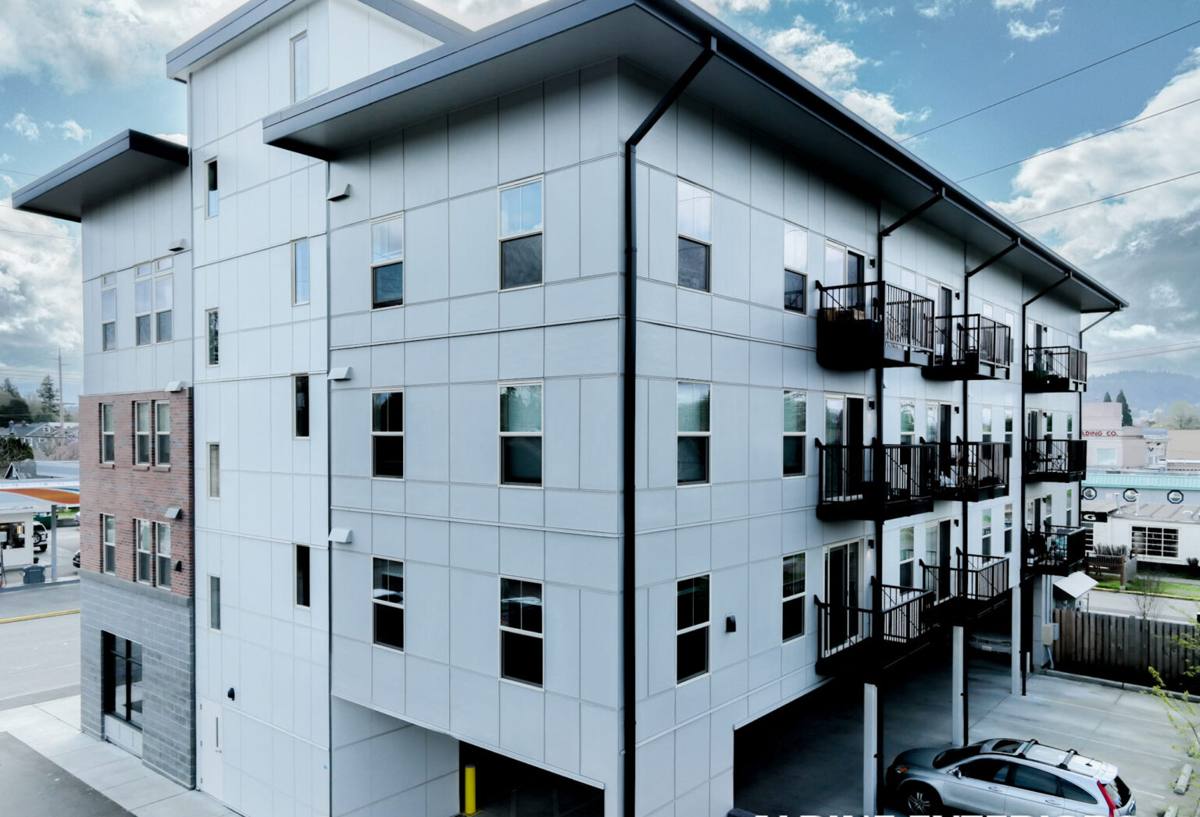
- HardiePanel vertical siding — often used for accent gables, shed dormers, or a modern board-and-batten look
- HardieTrim boards — for corners, window and door casings, and fascia, matched to the field siding
- HardieShingle — for homes going for a more traditional Northwest shingle-style look, without the maintenance of real cedar shingles
All of these come with the ColorPlus factory finish option, which is a baked-on, UV-cured coating applied under controlled conditions — a more durable and consistent finish than job-site painting, and one that matters when a home is going to spend years absorbing salt spray and sun off the water.
What Correct Installation Involves Here
Fiber cement siding performs the way it's designed to only when it's installed correctly, and in a climate like Anacortes' the margin for error is smaller than it would be somewhere dry and sheltered. A few things we treat as non-negotiable on every job:
Flashing and Water Management First
Before a single piece of siding goes up, the water-resistive barrier and flashing details around windows, doors, and roof-to-wall transitions need to be right. Fiber cement siding is not a waterproof membrane by itself — it's a rain screen and cladding layer that sheds the bulk of the water, while the barrier behind it handles what gets past the seams. On a coastal property taking direct weather off the strait, we pay close attention to head flashing above windows and any horizontal trim, since that's where driving rain finds its way in first.
Gaps, Fastening, and Caulking
James Hardie's install specs call for specific gaps at butt joints and around penetrations, and for those gaps to be treated with the right sealant — not just caulked shut everywhere, which can actually trap moisture instead of letting the assembly dry. Fasteners need to be corrosion-resistant and set to the manufacturer's depth and spacing, especially given the corrosive potential of salt air on lower-grade hardware. Field-cut edges need to be sealed or back-primed per spec so the cut cement doesn't wick moisture.
Starter Strips and Clearances
Proper starter strip installation and maintaining clearance from grade, decks, and roof lines keeps the bottom edge of the siding from sitting in standing water or snow-melt runoff — a common failure point on homes where siding was run too close to hardscaping or soil.
Fiber Cement vs. Other Siding Options in a Coastal Climate
| Factor | James Hardie Fiber Cement | Vinyl | Wood / LP-Style Composite |
|---|---|---|---|
| Moisture resistance | Does not rot; holds up to salt air and driving rain when installed to spec | Won't rot itself, but seams and panels can warp or crack, letting water behind the wall | Vulnerable to moisture intrusion, swelling, and rot over time |
| Moss/algae resistance | Not an organic food source; factory finish resists staining | Can stain and hold algae in shaded, damp areas | More prone to moss growth and surface breakdown |
| Finish durability | ColorPlus factory finish is baked-on and UV-cured | Color is through-body but can fade and chalk over time | Requires repainting on a recurring cycle |
| Fire resistance | Non-combustible | Combustible, can melt or warp near heat sources | Combustible |
| Typical lifespan (installed correctly) | Multiple decades, backed by a strong transferable warranty | Varies widely, often shorter in harsh coastal exposure | Shorter, especially without diligent maintenance |
We don't install vinyl or wood-based composites like LP SmartSide, and this is exactly why: in a climate that combines salt air, sustained damp shade, and hard-driving winter rain, the trade-offs on those products show up faster here than they would somewhere drier. That's a professional standard we apply company-wide, not a knock on every job those products are used on elsewhere.
Our Process for Anacortes Projects
- On-site assessment — we walk the exterior, check the current siding and any signs of moisture intrusion, and look at exposure direction (which walls take the worst weather off the water).
- Moisture and substrate check — before quoting the job, we want to know what's actually happening behind the existing siding, especially on north- and west-facing walls.
- Tear-off and prep — removing old siding, repairing any damaged sheathing, and correcting the water-resistive barrier and flashing details before new siding goes up.
- Installation to Hardie spec — proper gaps, fastening, flashing, and starter strip work as described above.
- Final walkthrough — checking seams, trim, and caulking with the homeowner before calling the job complete.
Maintenance for Skagit County's Salt Air and Moss Season
Fiber cement is low-maintenance compared to wood, but "low-maintenance" doesn't mean "no maintenance" — especially this close to the water. A few habits go a long way toward protecting the investment:
- Rinse the exterior (a garden hose is usually enough) once or twice a year to clear salt residue and organic buildup before it sets in
- Keep gutters clear so overflow doesn't run down the siding face during heavy rain events
- Trim back vegetation and tree cover on shaded walls to cut down on the moisture and shade that feed moss growth
- Inspect caulking at trim joints and penetrations every year or two, and have any cracked or missing sealant redone promptly
- Address any paint chips or damage on ColorPlus finish quickly, since exposed cut edges are the one place moisture can get into the material
Cost Factors for Anacortes Homes
| Factor | Why It Matters Locally |
|---|---|
| Home exposure | Walls facing open water or prevailing storm direction may need more flashing detail and labor |
| Existing wall condition | Homes with hidden moisture damage from prior siding need repair before new siding goes up |
| Siding profile and trim | Board-and-batten, shingle-style accents, and custom trim add labor beyond a straightforward lap job |
| Access and site conditions | Steep lots, waterfront setbacks, or tight access common in some Anacortes neighborhoods can affect staging and labor time |
| Color and finish | Factory ColorPlus finish costs more upfront than field-primed siding but avoids a repainting cycle |
Why Hiring a Crew That Already Works Anacortes Matters
A siding installer who mostly works inland or in drier parts of the state can still do a technically correct install and still end up with a home that struggles here, because the details that matter most — flashing sequencing, fastener choice, gap and caulk practices — are the ones that get treated as optional when the climate isn't punishing enough to expose the shortcut. A crew that regularly works Anacortes and the rest of Skagit County's coastal edge has already seen what happens when those details are skipped, and builds every job around not repeating it.
That local experience also means a more accurate read on your specific property during the estimate — which walls take the worst of the weather, what the existing siding and sheathing are likely to look like once torn off, and what level of flashing and trim detail your home actually needs versus a generic recommendation.
If you're weighing a siding replacement in Anacortes, we're happy to come take a look and give you a straightforward, no-pressure estimate — what we'd recommend, why, and what it would involve for your specific home.