 Skagit County
 Decks Around Big Lake Take a Different Kind of Beating
Big Lake sits in a pocket of Skagit County where two things stack on top of each other: the general Pacific Northwest weather pattern of long, wet winters and short, humid summers, and the specific microclimate that comes from being right next to open water and heavy tree cover. That combination is hard on a deck in ways a deck built in a dry, open subdivision never has to deal with.
The rest of Skagit County deals with driving rain, moss, and marine-influenced air moving in off Puget Sound. Around Big Lake, that same moisture gets trapped closer to the ground. Evening fog off the water, shade from mature evergreens, and slower air movement all mean deck boards, joists, and ledger connections stay damp longer after a storm than they would just a few miles away on higher, more exposed ground. Moss and algae get a longer season to establish themselves, and any wood that isn't properly flashed or ventilated underneath starts to hold moisture instead of shedding it.
None of this means a deck at Big Lake can't last. It means it has to be built and replaced with that moisture load in mind from the framing up, not just patched at the surface.
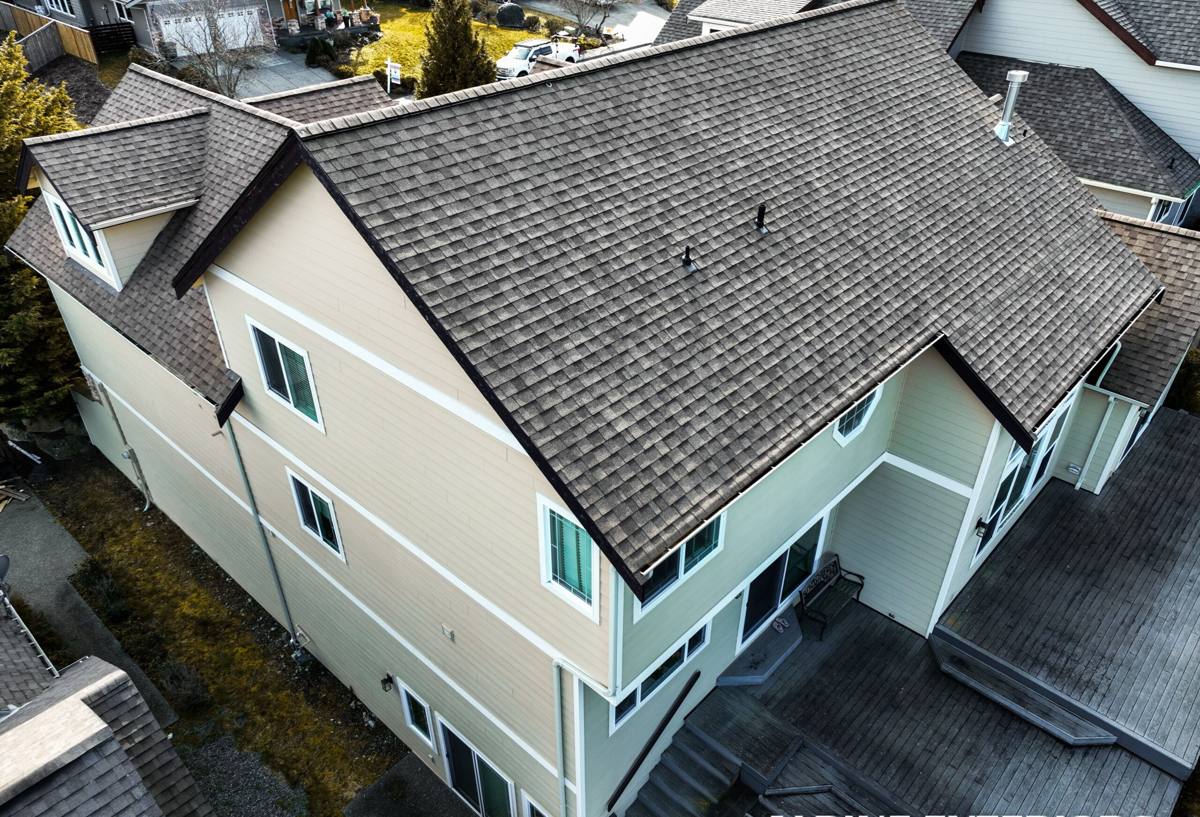
Signs a Big Lake Deck Needs Replacement, Not Just Repair
Homeowners often call us wanting a few boards swapped, and sometimes that's genuinely all that's needed. But on lake-adjacent property, surface problems are frequently a signal of something worse happening underneath, out of sight. Here's how we tell the difference during an inspection:
- Soft or spongy spots when you walk the deck, especially near the house or in shaded corners
- Persistent black or green staining on boards that comes back within weeks of cleaning
- Visible gaps, rust streaks, or staining where the ledger board meets the house
- Wobble or movement in the railing posts when you push on them
- Fasteners that are rusted, popped up, or leaving dark halos in the wood around them
- Any sign of rot, insect damage, or crumbling wood in a support post or joist you can reach
- A deck older than 15-20 years that has never had the substructure opened up and inspected
If it's just weathering on the surface of otherwise sound wood, a repair or refinish can buy you more years. If the framing, ledger connection, or footings are compromised, repair is a short-term fix on a structure that's already failing where you can't see it.
What an Honest Deck Replacement Actually Involves
The Ledger Connection
The single most common failure point on decks in this climate is the ledger board — the piece that attaches the deck to the house. If it wasn't flashed correctly when the original deck was built, water has likely been getting behind it for years, rotting the rim joist and sometimes the framing inside the wall. A correct replacement means removing the ledger, inspecting and repairing whatever is behind it, and installing proper flashing before anything new goes back up. Skipping this step is the single biggest reason decks fail early around here.
Footings and Frost
Footings need to be set below the local frost line and sized correctly for the deck's load. On older Big Lake properties we sometimes find footings that are undersized, too shallow, or resting on soil that's shifted over the years from seasonal saturation near the lake. We check this before assuming the existing footings can be reused.
Framing and Hardware
Joists, beams, and posts should be rated for exterior/ground-contact use where applicable, with joist tape or a moisture barrier on top of the joists to keep water from wicking into the end grain — a detail that matters more here than in a drier climate because the wood simply doesn't get the same drying-out window between rain events. Fasteners and structural connectors should be hot-dip galvanized or stainless steel; standard coated screws corrode faster in the humid, shaded conditions common near the lake.
Drainage and Airflow
Proper board spacing, and keeping vegetation and debris from choking off airflow underneath the deck, both matter more here than they would on a sunnier, more open lot. A deck that can't dry out between rains is a deck that's already aging faster than it should.
Choosing Decking Material for a Lake Property
There's no single "best" decking material — there's the right one for your budget, your maintenance appetite, and how much shade and moisture your specific spot gets. Here's how the common options actually perform in Big Lake conditions:
| Material | Upfront Cost | Maintenance | How It Handles Lake Humidity |
|---|---|---|---|
| Pressure-treated wood | Lowest | Annual cleaning, re-stain/seal every 1-2 years | Good if sealed and maintained on schedule; neglect shortens life fast in shade |
| Cedar | Mid-range | Regular sealing to hold color and resist moisture | Naturally moisture- and insect-resistant, but still needs upkeep near shaded, damp areas |
| Composite/PVC | Highest | Occasional washing, no staining or sealing | Won't rot, but can develop surface mold/algae in shade — needs periodic cleaning like anything else |
We won't tell you composite is automatically "better" than wood, or the other way around. Composite trades a higher upfront cost for far less ongoing maintenance, which appeals to a lot of lake-house owners who don't want to re-stain a deck every couple of years. Wood costs less to install but asks for more attention on a schedule, especially in a shaded, humid spot. The honest answer depends on how the deck sits relative to the lake, tree cover, and sun exposure, and how much maintenance you actually want to keep up with — we'll walk your specific site with you before recommending one.
Cost Factors Homeowners Should Know Going In
Every deck is different, so we won't quote a number without seeing the site, but these are the factors that move the price up or down on most Big Lake projects:
| Factor | Why It Matters |
|---|---|
| Ledger/framing condition | Hidden rot behind the ledger or in the rim joist adds repair scope you can't see until demo starts |
| Footing count and access | Sloped or wooded lake lots can make footing work slower and more labor-intensive |
| Deck size and height | Elevated decks and multi-level layouts need more structural framing and railing |
| Material choice | Composite and PVC systems cost more upfront than pressure-treated wood |
| Permit requirements | Height, proximity to the shoreline, and structural scope can all affect what permitting applies |
Our Process for a Big Lake Deck Replacement
- On-site inspection: We walk the existing deck, check the ledger, framing, and footings, and tell you honestly what's repairable versus what needs full replacement.
- Written estimate: A clear scope of work and material options, no pressure to upsell to a product you don't need.
- Permitting: We handle the paperwork with the county where required, based on your project's size and location relative to the lake.
- Demo and framing repair: Old decking and framing come out, and anything hidden behind the ledger or in the substructure gets addressed before new material goes on.
- Build and finish: New footings, framing, decking, and railing installed to hold up to the moisture and shade conditions on your specific lot.
- Final walkthrough: We go over the finished deck with you, including what maintenance schedule makes sense for the material you chose.
Why Local Experience at Big Lake Actually Matters
A deck crew that mostly works dry, sunny neighborhoods elsewhere in the county doesn't always think to check for the things that matter most right at the lake — the ledger flashing behind stucco or siding that's stayed damp for years, the footing that's shifted in saturated soil near the shoreline, the shaded corner where moss has been quietly breaking down a board from underneath. We work Skagit County regularly, including the lake communities, and we build with this specific moisture and shade pattern in mind rather than treating every deck the same way.
Keeping a New Deck in Good Shape
Whatever material you choose, a few habits go a long way in this climate:
- Sweep leaves and debris off the deck surface regularly, especially in fall
- Keep gutters clear so runoff isn't dumping extra water onto or near the deck
- Trim back vegetation that's shading the deck and slowing airflow underneath
- Wash the surface periodically to knock back algae and moss before it takes hold
- Re-seal wood decking on schedule rather than waiting until it looks obviously weathered
- Have the substructure checked every few years, since ledger and framing issues don't always show on the surface
If your deck at Big Lake is showing its age, or you just want an honest opinion on whether it needs repair or full replacement, we're happy to come take a look. The estimate is free, there's no pressure, and you'll get a straight answer about what your deck actually needs.