 Skagit County
 Decks in Edison Deal With Weather Most Builders Don't Plan For
Edison sits in the flat, low-lying farmland and tidal country of the Skagit Valley, close enough to saltwater that homes here get a steady dose of salt-laden air on top of the region's normal rain load. That combination is harder on an exposed deck than most people expect. A deck in a drier inland climate can get away with basic fasteners and a coat of stain every few years. A deck in Edison can't — the salt air accelerates corrosion on anything less than the right grade of hardware, the rain load keeps wood and composite surfaces wet for long stretches, and the shoulder seasons bring enough shade and moisture to grow moss on almost any horizontal surface that isn't detailed to shed water and dry out.
None of that means a deck here has to be high-maintenance or short-lived. It means the build has to account for those conditions from the footings up, not just at the finish coat. That's the difference between a deck that looks good for one summer and one that's still solid and safe in fifteen years.
What Actually Fails on Decks in This Area
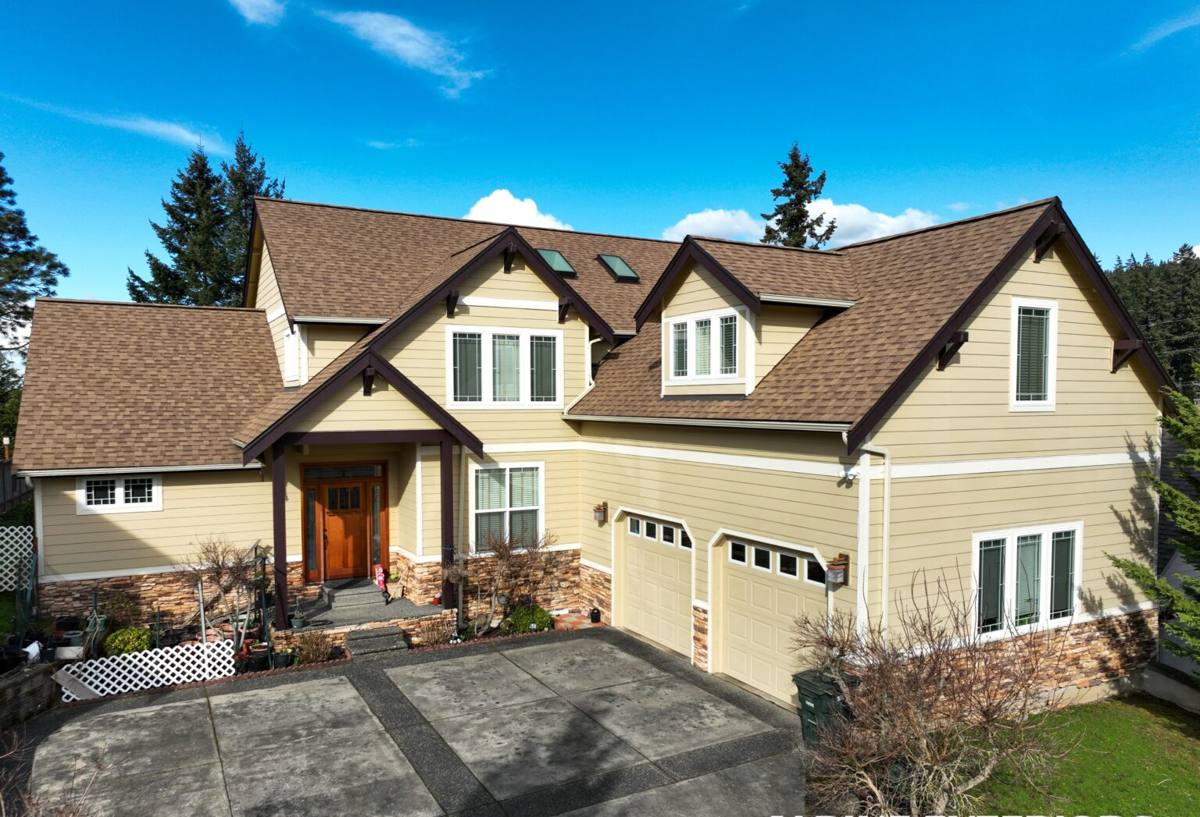
We get called out to look at plenty of older decks around Skagit County, and the failure patterns are consistent:
- Fasteners and joist hangers that were never rated for coastal exposure, rusting and staining the wood around them within a few years
- Ledger boards attached to the house without proper flashing, letting water track behind the siding and rot the rim joist
- Decking boards laid tight together with no gap for drainage, trapping moisture and growing moss and algae on the walking surface
- Low clearance underneath the deck with poor airflow, keeping the framing damp long after a storm has passed
- Railing posts and hardware corroding faster than the decking itself, becoming a safety issue before the deck looks "old"
Almost all of these are avoidable with the right materials and details at the time of construction. They're expensive and disruptive to fix later.
Building for the Climate: Framing, Fasteners, and Flashing
Fasteners and Hardware
In a salt-air environment, the grade of fastener matters as much as the decking material on top of it. We use stainless steel or hot-dip galvanized hardware rated for coastal and ground-contact exposure — not the standard coated screws that are fine further inland but corrode visibly within a few seasons this close to the water. The same goes for joist hangers, structural screws, and post bases.
Ledger Attachment and Flashing
Where a deck attaches to the house, the ledger board gets proper flashing and a water-resistant barrier behind it, so rain doesn't find its way behind your siding at the one place the deck touches the building. This is the single most common source of hidden rot we find on older decks, and it's also one of the cheapest details to get right the first time.
Footings and Ground Clearance
Footings are set below frost depth and sized for the soil conditions on your lot — Skagit Valley soil varies a lot from one property to the next, from well-drained upland ground to heavier, wetter low-lying soil closer to the tidal flats. We build in enough clearance and airflow under the deck so the framing can actually dry out between rain events instead of staying damp all winter.
Choosing Decking Material for an Edison Home
There's no single "correct" decking material for every project — it depends on your budget, how much upkeep you want to do, and how close your lot is to open water or heavy shade. Here's how the common options stack up in this climate:
| Material | Moisture & Moss Resistance | Maintenance | Typical Lifespan | Relative Cost |
|---|---|---|---|---|
| Pressure-treated fir/hem-fir | Fair — needs sealing to perform well | Annual cleaning and re-sealing recommended | 10-15 years with upkeep | Lowest |
| Cedar | Good natural rot resistance, still needs finish upkeep | Periodic cleaning and re-staining | 15-20 years with upkeep | Mid |
| Capped composite | Very good — resists moisture absorption | Occasional washing, no staining | 25+ years | Higher |
| PVC decking | Excellent — doesn't absorb moisture | Occasional washing, no staining | 25+ years | Highest |
Composite and PVC decking have become popular around Skagit County specifically because they hold up better to sustained damp weather without the sanding-and-staining cycle wood needs. That said, well-built and well-maintained wood decks still perform fine here — the trade-off is honest maintenance time versus upfront cost, not one material being "right" and the others being wrong.
A Note on Product Selection
We're selective about which composite and PVC lines we install. Some budget composite products are more sensitive to installation details — gapping, fastening pattern, ventilation — and if those details are off, moisture can get trapped inside the board core over time. We stick with lines that have a track record for this kind of climate and install them to the manufacturer's spec, because that's what actually protects the warranty and the performance, not just the label on the board.
Railings and Hardware That Won't Corrode First
It's common for a deck's railing hardware to fail before the decking does, especially this close to salt air. We spec railing posts, brackets, and fasteners rated for the same coastal exposure as the structural hardware underneath. If you're considering metal or cable railing for the look, that's worth discussing up front — some cable and metal systems need a higher-grade stainless spec near open water to avoid surface rust and staining within just a few years.
Designing Against Moss From the Start
Moss and algae growth on deck surfaces is mostly a drainage and light problem, not just a cleaning problem. A few build details make a real difference over the life of the deck:
- Proper board spacing so water drains through instead of pooling on the surface
- Decking run in the direction that sheds water fastest off the structure
- Trimming back overhanging vegetation where practical to let sun and air reach the deck surface
- Adequate under-deck ventilation so the framing and underside of the boards can dry between storms
- A surface texture or finish that doesn't hold a film of standing moisture
Design solves most of the problem before it starts. Cleaning and re-sealing on a normal schedule handles the rest.
Our Process for a Custom Deck Build in Edison
We keep the process straightforward and specific to your property rather than a one-size-fits-all package:
- On-site assessment — we look at your home's ledger connection point, the slope and soil on your lot, sun/shade exposure, and how the deck will actually be used before we talk materials.
- Design and material selection — sizing, layout, railing style, and decking material chosen for your budget and how much upkeep you want to take on.
- Permitting — most new decks in unincorporated Skagit County require a building permit depending on height and attachment to the structure; we handle that paperwork as part of the job.
- Footings and framing — footings set to proper depth, framing built with coastal-rated hardware and correct ledger flashing.
- Decking and railing installation — installed to manufacturer spec with attention to drainage, spacing, and fastening.
- Final walkthrough — we go over the finished deck with you, including a realistic maintenance schedule for your specific material choice.
Keeping a Deck Sound Through Skagit County's Wet Season
Whatever material you choose, a little regular attention goes a long way in this climate:
- Clear leaves, needles, and debris off the deck surface before the fall rains settle in
- Rinse off surface moss or algae early, before it has a chance to stain or get slick
- Check railing hardware annually for early corrosion, especially on properties closer to open water
- Re-seal wood decking on the schedule recommended for your specific product, not just "when it looks dry"
- Confirm gutters and downspouts near the deck are directing water away from the structure, not onto it
Why It Matters to Hire a Crew That Already Works in Edison
A deck built to a generic national spec sheet doesn't always hold up the way it should in this specific stretch of Skagit County. We already know which fastener grades actually hold up to the salt air here, how the local soil behaves at footing depth, and what the county's permitting process looks like for a project like yours — because we're doing this work in this area, not driving in from somewhere with different weather. As a crew that handles siding and exterior work across Skagit County, we also look at how your deck ties into your home's existing siding and flashing, not just the deck in isolation — which matters more than people expect when the two systems meet at the house.
If you're thinking about a new deck or replacing one that's showing its age, we're happy to come take a look and give you a straightforward, no-pressure estimate — just fill out the form below.