 Skagit County
 Building Decks for Conway's Low-Lying, Coastal Conditions
Conway sits down in the Skagit River delta, close enough to the water that the ground stays soft and the air carries a faint edge of salt most of the year. That combination — low elevation, a high water table, and marine air moving in off Skagit Bay — puts real stress on outdoor structures that homeowners a few miles inland don't have to think about as much. A deck built to a generic spec sheet might look fine the first summer and start showing problems by the second or third winter: soft framing, corroding hardware, and a slick green coating of moss that never fully goes away.
We build custom decks specifically with Conway's ground and weather in mind — not as an afterthought, but as the starting point for every material and framing decision. That means thinking about drainage before we think about design, and picking hardware rated for salt exposure before we pick a railing style.
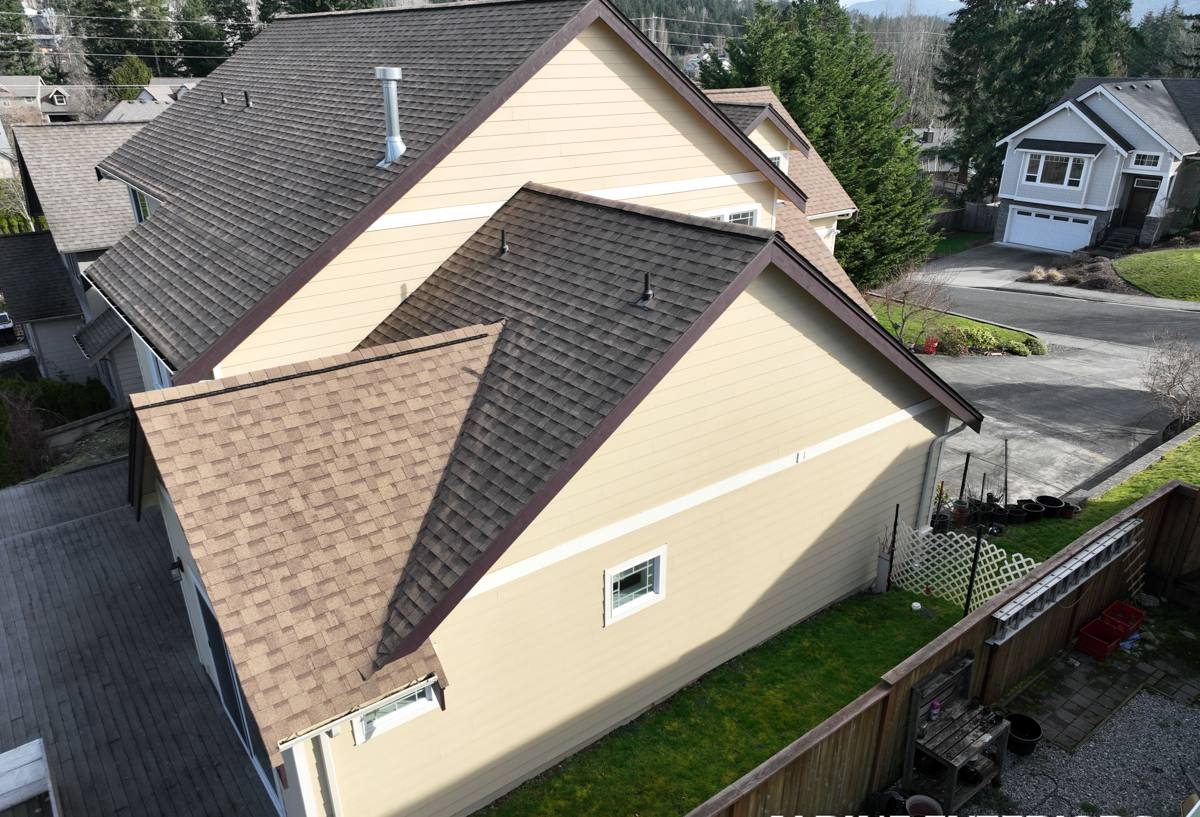
What Salt Air, Driving Rain, and Moss Season Do to an Unprotected Deck
Three things wear down decks in this part of Skagit County faster than they wear down decks elsewhere:
Salt Air
Proximity to Skagit Bay means airborne salt settles on exposed metal — fasteners, joist hangers, railing brackets — and speeds up corrosion. Standard interior-grade or lightly coated screws can start rusting and staining decking boards within a couple of seasons.
Driving Rain
Storms here don't just fall straight down; wind pushes rain sideways into ledger boards, under railing posts, and into any gap in the flashing. Water that gets behind a ledger board and can't escape is one of the most common causes of hidden rot we find when we're asked to repair or rebuild an older deck.
A Long Moss Season
Between the shade many Conway lots get from surrounding trees and the number of damp, low-light months in a typical year, moss and algae have a long window to take hold. On a deck surface, that's not just cosmetic — it's a slip hazard, and moss that's allowed to sit traps moisture against the wood underneath it.
None of this means a deck can't hold up well in Conway. It means the build has to account for these conditions from the ground up, not rely on the decking material alone to do all the work.
Choosing the Right Decking Material
There's no single "best" decking material for every home — it depends on budget, how much upkeep you want to do, and how much shade and moisture the deck will sit in. Here's how the common options actually compare under Conway's conditions:
| Material | Moisture Behavior | Maintenance | Typical Lifespan |
|---|---|---|---|
| Pressure-treated wood | Absorbs and releases moisture; needs sealing to resist swelling and checking | Annual cleaning and re-sealing recommended | 15-20 years with upkeep |
| Cedar | Naturally rot-resistant but still needs sealing in a wet climate | Regular cleaning; re-oil or re-stain every 1-2 years | 15-25 years with upkeep |
| Capped composite | Resists moisture absorption; won't swell or splinter | Periodic washing to prevent surface algae/moss buildup | 25-30+ years, manufacturer-warrantied |
| PVC decking | Fully moisture-resistant, no wood fiber to absorb water | Lowest upkeep; occasional washing | 25-30+ years, manufacturer-warrantied |
For shaded, damp lots — which describes a fair number of properties around Conway — we lean toward recommending capped composite or PVC for the decking surface itself, simply because they don't give moss and mildew the same foothold that raw wood grain does. That's a maintenance and moisture-behavior call, not a knock on wood; a well-built and consistently maintained cedar or treated-wood deck still performs well here, it just asks more of the homeowner over time.
Framing and Footings: Building for Wet, Low Ground
The framing and footings matter more than the decking surface when it comes to long-term structural health, especially on low-lying lots. A few things we treat as non-negotiable on Conway builds:
Footing Depth and Drainage
Footings need to be sized and set for local soil and frost conditions, with attention to how well the surrounding ground drains. On lots where water tends to sit or the water table runs high, we grade and prep around footings so standing water isn't left working against the concrete and posts season after season.
Elevated, Ventilated Framing
Where a deck sits low to the ground, we make sure there's enough clearance and airflow underneath so the framing can actually dry out between rain events instead of staying damp continuously. A deck framed too tight to wet ground is one of the fastest paths to hidden rot.
Ledger Board Flashing
Where the deck attaches to the house, proper flashing is what keeps driving rain from working its way behind the ledger board and into the rim joist or sheathing. This is a small detail that's easy to shortcut and expensive to fix later — we treat it as one of the most important steps on any attached deck.
Fasteners and Hardware Built for Salt Exposure
Given how close Conway sits to salt water, we use fasteners, joist hangers, and structural connectors rated for coastal or marine exposure — typically stainless steel or heavy hot-dip galvanized hardware — rather than standard-grade coated screws. It costs a bit more up front. It also means the hardware holding your deck together isn't the first thing to fail.
- Stainless steel or marine-grade coated deck screws, matched to the decking material manufacturer's specifications
- Hot-dip galvanized or stainless joist hangers and structural connectors
- Corrosion-resistant post bases that keep wood posts off direct concrete contact
- Flashing tape on ledger boards and exposed joist tops to block moisture intrusion
- Fastener spacing and placement that follows the decking manufacturer's warranty requirements
Our Custom Deck Process, Start to Finish
1. On-Site Assessment
We walk the site, check grading and drainage, note sun and shade exposure, and talk through how you actually plan to use the space — entertaining, grilling, a quiet spot off the kitchen, whatever it is.
2. Design and Material Selection
We put together a layout and material plan based on that assessment, with honest trade-offs explained for each option rather than pushing whatever has the best margin.
3. Permitting
Most new decks and significant deck rebuilds in Skagit County require a building permit, and low-lying areas near the Skagit River delta can carry additional review depending on flood zone designation. We handle the permitting process as part of the job so you're not left guessing what's required.
4. Framing and Footings
This is where the structural decisions covered above get built in — footings sized and placed correctly, framing set for drainage and airflow, ledger flashing done right.
5. Decking, Railing, and Finish Work
Surface material goes down, railing is installed to current code, and we finish edges and fastening details so the deck looks as good as it performs.
6. Final Walkthrough
We walk the finished deck with you, point out any care and maintenance items specific to the material you chose, and make sure everything meets what we agreed on at the start.
Keeping Moss and Mildew Off a Conway Deck
Even a well-built deck needs some seasonal attention in this climate. A simple maintenance routine goes a long way toward preventing the slick, green buildup that's common on shaded PNW decks:
- Sweep debris (leaves, needles, moss spores) off the deck surface regularly, especially in fall
- Wash the deck surface at least once or twice a year with a deck-safe cleaner to remove early algae and mildew growth
- Keep gutters and downspouts near the deck clear so runoff isn't dumping extra water onto the surface
- Trim back overhanging branches where practical to let more light and air reach the deck
- For wood decking, re-seal or re-stain on the schedule recommended for that species — don't wait until it's visibly weathered
- Check railing posts and stair connections yearly for any looseness, which can be an early sign of moisture getting into the framing
Why Hire a Crew That Already Works Conway
A deck contractor who mostly works drier, inland areas can still build a deck that looks right — but they may not automatically account for a high water table, salt-air hardware corrosion, or how much shade and moisture a particular lot near the river delta actually holds through the winter. Those aren't things you can tell from a set of plans; they come from having actually worked the ground in this part of Skagit County.
We've built and repaired decks throughout the Conway area and understand which shortcuts show up as problems in year two or three, not year one. That local knowledge shapes footing decisions, material recommendations, and hardware choices before the first post ever goes in the ground.
Get a Free, No-Pressure Estimate
If you're planning a new deck or replacing one that hasn't held up to Conway's weather, we're happy to take a look and give you a straightforward assessment — no pressure, no upsell. Fill out the form below to get started.