 Skagit County
 Building a Deck That Actually Holds Up in Cedardale
Cedardale sits close enough to Skagit Bay and the Sound that homes here deal with a mix of weather most inland decks never see: salt-laden air, long stretches of driving rain, and a moss season that can run from October clear through April. A deck built to a generic spec sheet might look fine the first summer. By year three, if the framing wasn't detailed for this climate, you're looking at soft spots near the ledger, black streaking on the boards, and hardware that's already starting to bleed rust into the wood. A deck built correctly for Cedardale is a different project from the start — the framing, fasteners, and drainage all get treated as part of the design, not an afterthought.
This page covers what a custom deck build in Cedardale actually requires, what separates a deck that lasts from one that doesn't, and how our process works from first call to final walkthrough.
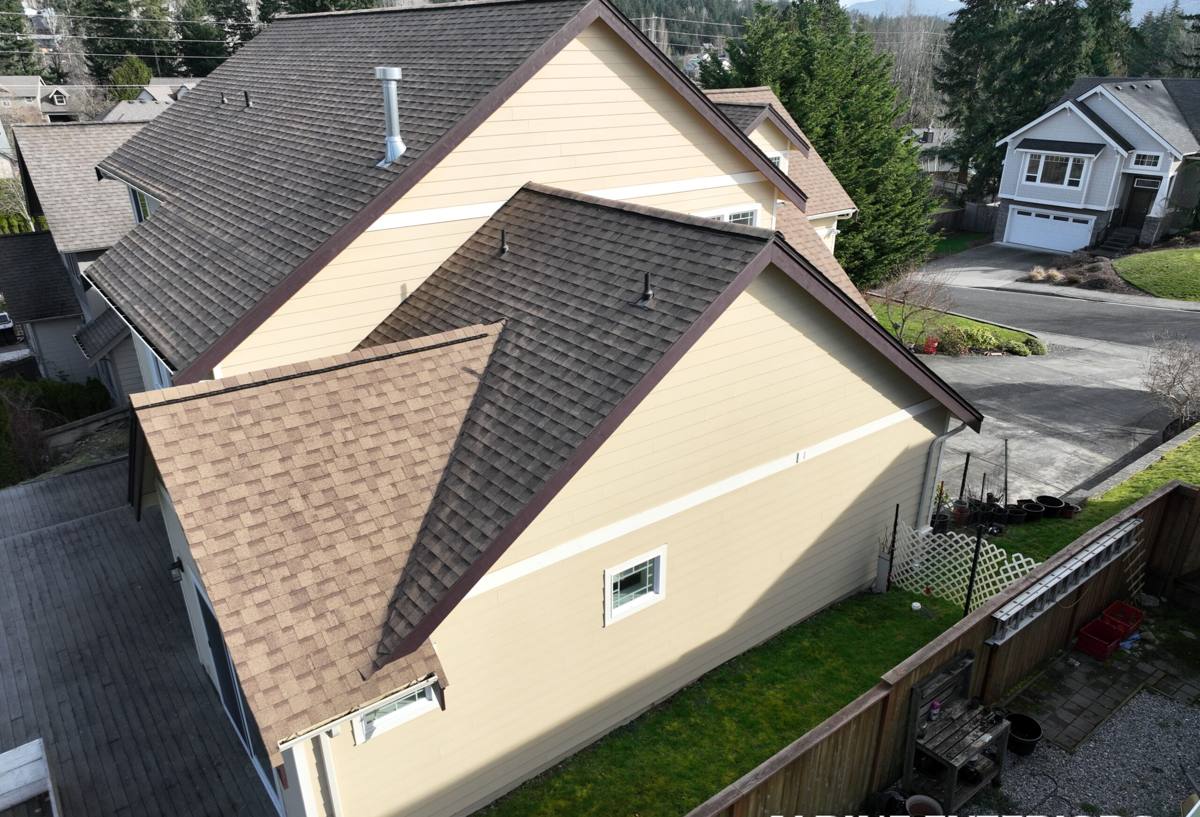
What Skagit County Weather Does to a Deck Over Time
None of this is dramatic — it's slow, and that's exactly why it catches homeowners off guard. A few things happen consistently to decks in this part of Skagit County if they aren't built for the conditions:
- Moisture gets trapped, not shed. Long rainy stretches mean any spot where water can pool or wick into wood — under boards, around posts, at the ledger connection — stays wet far longer than it would in a drier climate.
- Moss and algae take hold on horizontal surfaces. Anything shaded, north-facing, or under tree cover in Cedardale grows moss fast. On a deck surface it's a slip hazard as much as a cosmetic one.
- Salt air accelerates corrosion. Standard galvanized fasteners and hardware corrode noticeably faster this close to the water. Once a fastener starts to rust, it weakens the connection it's holding and can stain the wood around it.
- Freeze-thaw cycling stresses footings. Skagit County doesn't get deep freezes often, but the cycling that does happen works on footings that weren't poured to proper depth or that sit in poorly drained soil.
None of these are reasons to avoid building a deck here — they're just the design inputs. A deck built with these conditions in mind will genuinely outlast one that wasn't, often by a decade or more.
Choosing the Right Decking Material for a Cedardale Home
There's no single "best" decking material — it depends on your budget, how much upkeep you want to do, and how exposed the deck is to rain and shade. Here's how the main options actually compare for a home in this climate:
| Material | Moisture Behavior | Moss/Algae Resistance | Maintenance | Typical Lifespan |
|---|---|---|---|---|
| Pressure-treated wood | Absorbs and releases moisture; prone to cupping if not sealed | Low — needs regular cleaning and sealing to resist growth | Annual cleaning, re-sealing every 1-2 years | 10-15 years with upkeep |
| Cedar | Naturally moisture-resistant but still needs sealing here | Moderate — better than pressure-treated but not immune | Sealing every 1-2 years, occasional cleaning | 15-20 years with upkeep |
| Capped composite | Doesn't absorb moisture; won't rot or splinter | Higher — smooth cap resists staining, still needs occasional wash | Periodic washing, no sealing or staining | 25-30+ years |
| PVC decking | Fully moisture-proof; no wood fiber to absorb water | Highest — least hospitable surface for moss and algae | Lowest — occasional wash | 30+ years |
For homes in Cedardale with a lot of tree cover or a north-facing deck that doesn't get much sun, we usually steer people toward capped composite or PVC — the maintenance savings add up fast when moss is a yearly fight. For a deck that gets good sun exposure and where the homeowner doesn't mind sealing it on a schedule, cedar still holds up well and gives a look that composite can't quite match. Pressure-treated wood remains the lowest up-front cost, but it's the material that punishes neglect the fastest in this climate — if it's not going to get sealed on schedule, it's not the right choice here.
A Note on Fasteners and Hardware
Whatever decking material you choose, the hardware underneath matters just as much, especially this close to salt air. We use stainless steel or heavy coated fasteners rated for coastal exposure rather than standard galvanized hardware — the cost difference is small relative to the whole project, but it's the difference between hardware that lasts the life of the deck and hardware that's rusting and staining the boards within a few years.
The Structural Details That Actually Matter
A deck's long-term durability is decided in the framing stage, before a single deck board goes down. In a climate like Cedardale's, a few details get extra attention:
Ledger Board Flashing
The ledger — where the deck attaches to the house — is the single most common failure point on decks in wet climates. Water that gets behind an improperly flashed ledger doesn't just rot the ledger itself; it can migrate into the house's rim joist and wall framing. We flash this connection properly with a self-adhering membrane and metal flashing, not just caulk, which is a shortcut that fails quietly over years.
Joist Protection
Joist tape over the top of every joist keeps standing water from soaking into the end grain and top face of the framing lumber — the spots most prone to rot. It's a small material cost that meaningfully extends the life of the substructure.
Footings and Drainage
Footings get poured below frost depth and sized for the soil conditions on your lot, which can vary block to block in this area. Where the ground doesn't drain well on its own, we grade and, when needed, add drainage around footings so water isn't sitting against concrete and posts through the wet season.
Airflow Underneath
Elevated decks need enough clearance and ventilation underneath to let framing dry out between rain events. A deck built too low to the ground, with no airflow, stays damp far longer after a storm — exactly the setup that shortens a deck's life in this climate.
Permits and Code Requirements in Skagit County
Most custom deck builds in unincorporated Skagit County — which includes Cedardale — require a building permit, particularly for elevated decks or anything attached to the house. Permit requirements typically cover footing depth and spacing, ledger attachment, guardrail height and baluster spacing for decks above a certain height, and stair geometry. We handle the permit application and inspections as part of the build so you're not tracking down county requirements yourself — it's one less thing to manage, and it protects you if you ever sell the home and a buyer's inspector checks for permitted work.
Our Process, Start to Finish
- Free on-site estimate. We walk your property, look at sun exposure, drainage, and how the deck will tie into the house, and talk through what you actually want to use the space for.
- Design and material selection. We go over decking material options, layout, railing style, and any features like built-in seating or a lower patio grade, with real cost trade-offs for each.
- Permitting. We prepare and submit the permit package to Skagit County and schedule the required inspections.
- Framing and structural work. Footings, ledger flashing, joist protection, and framing go in first, inspected at the appropriate stages.
- Decking, railing, and finish work. Surface material, railings, stairs, and any trim or lighting go in last.
- Final walkthrough. We go over the finished deck with you, including how to care for whatever material you chose.
Deck Maintenance Checklist for the Pacific Northwest
Whatever material you choose, a little seasonal upkeep goes a long way in this climate:
- Sweep leaves and debris off the deck regularly in fall — trapped organic matter is what feeds moss growth
- Wash the surface at least once a year with a deck cleaner appropriate to your material (avoid high pressure on wood, which can damage the grain)
- Check and re-seal wood decking every 1-2 years, or sooner if water stops beading on the surface
- Inspect fasteners and hardware annually for early rust staining
- Keep gutters and downspouts near the deck clear so runoff isn't dumping directly onto or under it
- Check the ledger flashing area periodically for any signs of moisture intrusion at the house connection
Why Hire a Crew That Already Works in Cedardale
A deck contractor who works this specific area already knows which hardware holds up against the salt air near the bay, which lots tend to have drainage issues, and what Skagit County's inspectors expect to see at each stage. That's not something you get from a crew that mostly builds decks somewhere drier or inland — the details that matter here aren't universal, they're regional. We've built and repaired enough decks around Skagit County to know where the shortcuts show up years later, and we build to avoid them from the start rather than fixing them after the fact.
If you're planning a new deck or replacing one that's showing its age, we're happy to come take a look and give you a straightforward, no-pressure estimate. Use the form below to get started.