 Skagit County
 Metal Roofing Built for Conway's Weather, Not Around It
Conway sits low in the Skagit River delta, close enough to Skagit Bay and the Sound that salt-tinged air is just part of daily life, and close enough to the water table and surrounding farmland that shade, standing moisture, and slow-drying rooflines are common too. A roof here isn't just shedding water for a few storms a year — it's holding up against near-constant damp, wind-driven rain off the water, and a moss season that can run eight or nine months if a roof never gets a break from shade and moisture. Metal roofing, installed correctly for this specific environment, handles all three of those pressures better than most alternatives. Installed incorrectly, it can trap moisture, corrode at the wrong points, or fail at flashing details years before it should. The difference almost always comes down to whether the crew understood what Conway's climate actually does to a roof before they ever set a panel.
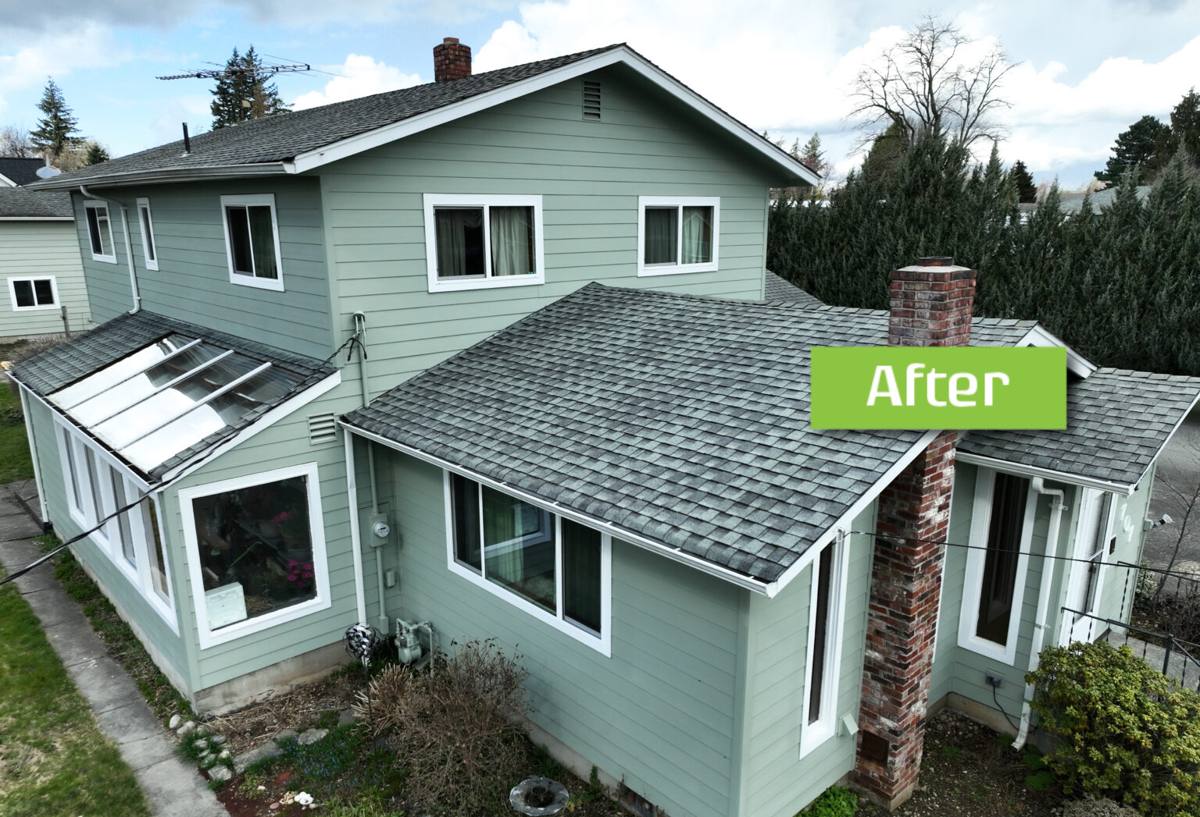
What Skagit County's Coastal Climate Actually Does to a Roof
Homeowners in Conway deal with a specific combination of stressors that a roofing crew from a drier inland area won't be tuned to. Understanding these is the first step in specifying the right materials and details.
Salt Air and Corrosion
Proximity to Skagit Bay and Puget Sound means airborne salt is a real factor, even a few miles inland. Salt-laden moisture accelerates corrosion on unprotected steel, on cheap fasteners, and on cut edges where a protective coating has been ground or sheared away. This is less about a dramatic failure and more about a slow one — a roof that looks fine for years and then starts showing rust streaks at fastener heads, flashing seams, and panel ends first, because that's where the coating was compromised during installation.
Driving Rain
Storms coming off the water tend to arrive with real wind behind them, which pushes rain sideways and up under laps, flashing, and fastener heads rather than letting it run straight down and off. A roof detailed for calm, vertical rainfall will leak here. One detailed for wind-driven rain — with proper lap direction, sealed penetrations, and correctly lapped flashing — won't.
A Long Moss Season
Between the tree cover common around Conway's rural lots and the extended damp stretches typical of western Skagit County, moss and algae get a long runway to establish themselves on any roof surface that holds moisture or stays shaded. On some roofing materials that means gradual surface degradation. On a correctly installed metal roof it's mostly a maintenance and appearance issue rather than a structural one — but only if the panel profile and detailing don't give moss anywhere to gain a foothold in the first place.
What a Correct Metal Roof Installation Involves
Metal roofing looks straightforward from the ground, which is part of why it gets installed poorly more often than it should. A correct job for a home in this climate has several details that aren't optional:
- Underlayment built for prolonged moisture exposure — a high-temp synthetic or self-adhered membrane at eaves, valleys, and penetrations, not a basic felt that degrades under sustained damp.
- Fasteners and flashing matched to the panel metal — mixing incompatible metals invites galvanic corrosion, which shows up faster in salt air than it would inland.
- Proper panel lap direction and sealed seams — oriented and sealed to resist wind-driven rain, not just gravity-fed runoff.
- Ventilation that actually moves air — intake and exhaust balanced so condensation doesn't form on the underside of the panels, which is a common cause of hidden rust on metal roofs in wet climates.
- Clean, sealed penetrations — every pipe boot, vent, and chimney flashing detailed so wind-driven rain can't find a way in around it.
- Cut-edge treatment — factory-coated panel edges that get cut on site need touch-up coating or careful placement so bare steel isn't left exposed to salt air.
Skip any one of these and the roof may still look fine going up. The problems show up two, five, or ten years later, usually at the exact spot the corner was cut.
Choosing a Metal Roofing System for a Conway Property
Not all metal roofing is the same product wearing a different color. The two systems homeowners in Skagit County usually choose between behave differently in this climate, and the right one depends on the home, the budget, and how the roof is shaded.
| Factor | Standing Seam (Concealed Fastener) | Exposed Fastener Panel |
|---|---|---|
| How it's attached | Hidden clips under raised seams — no exposed screws | Screws driven through the panel face, gasketed |
| Salt-air durability | Very good — fewer penetration points for moisture and salt to reach bare metal | Good, but exposed fastener gaskets age and need occasional re-torquing or replacement |
| Moss resistance | Excellent — smooth, fastener-free surface gives moss little to grip | Good — ribbed profile can hold a bit more debris at panel laps |
| Upfront cost | Higher | More budget-friendly |
| Best fit | Homes wanting the longest maintenance-light lifespan, especially on shaded or heavily wooded lots | Outbuildings, shops, and homeowners prioritizing lower upfront cost with a maintenance plan in place |
Both systems can perform well in Conway when installed correctly. Standing seam tends to be the better long-term choice on lots with a lot of tree cover or closer proximity to the water, simply because it gives salt air and moss fewer places to start working on the roof.
How Our Process Works
The work happens in a set order, and we don't skip steps to save a day on the schedule — not on a roof that has to hold up to this much moisture for decades.
- On-site assessment. We look at the existing roof deck, ventilation, flashing details, and how much shade and moss exposure the roof actually gets, not just its age.
- System and color selection. We walk through panel profile, gauge, and finish options based on the home's exposure — a heavily shaded roof near the river gets a different recommendation than an open, sunnier lot.
- Tear-off and deck inspection. Old roofing comes off and the deck gets checked for rot or soft spots before anything new goes down — a common finding on older Skagit County homes that have carried moss and moisture for years without attention.
- Underlayment and flashing installation. High-moisture-rated underlayment goes down first, followed by properly lapped flashing at every valley, wall, and penetration.
- Panel installation. Panels go on with fasteners and clips matched to the metal, laid out to shed wind-driven rain rather than just vertical runoff.
- Ventilation check and adjustment. We confirm intake and exhaust are balanced so the underside of the new roof isn't set up for condensation from day one.
- Final walkthrough. We go over the finished roof, the maintenance it does and doesn't need, and what to watch for given the specific shade and exposure of the property.
Maintenance in a Moss-Prone, Salt-Air Environment
A correctly installed metal roof needs far less upkeep than most materials common around Skagit County, but "far less" isn't "none." A short annual routine keeps it performing the way it's supposed to for the long run.
- Clear needles, leaves, and debris from valleys and gutters before fall rains set in — trapped debris is what actually holds moisture against the panel long enough for moss to start.
- Do a visual check for any rust streaking at fastener heads, cut edges, or flashing seams, especially after the first year or two.
- Keep overhanging branches trimmed back where practical — less shade means faster drying and a shorter moss season for that section of roof.
- Never pressure-wash a metal roof directly — it can drive water under laps and seams. A soft brush or low-pressure rinse handles moss without creating the leak it's meant to prevent.
- Have flashing and sealant at penetrations checked periodically, since these are the first places wind-driven rain will exploit if a sealant bead has aged or shrunk.
What Affects Cost on a Conway Metal Roof
Every roof is priced around its own specifics, but the factors that move the number up or down are consistent. Getting real ranges instead of a single flat number helps you compare quotes honestly.
| Factor | Why It Matters Here |
|---|---|
| Panel system chosen | Standing seam runs higher upfront than exposed fastener panels but needs less long-term attention in this climate |
| Roof pitch and complexity | Valleys, dormers, and steep pitches all mean more flashing work, which is where wind-driven rain gets stopped or gets in |
| Deck condition underneath | Older roofs with a history of moss and trapped moisture sometimes need deck repair before new roofing goes on |
| Ventilation upgrades | Bringing intake/exhaust up to a proper balance adds some cost but prevents underside condensation later |
| Tear-off vs. overlay | A full tear-off costs more upfront but lets us actually inspect and fix what's under the old roofing |
We'd rather walk a property and give a number based on what's actually there than quote a generic per-square rate that doesn't hold up once we're on the roof.
Why Local Experience in Conway Actually Matters
A lot of roofing goes wrong not because the crew didn't know how to install a panel, but because they didn't know what this specific stretch of Skagit County does to a roof over time. A crew that's worked properties around Conway already knows which lots sit low enough to hold extra moisture, which tree lines mean a longer moss season on the north-facing slopes, and which flashing details tend to get exploited by wind coming off the water. That's the kind of judgment that shows up ten years later as a roof that's still tight, not five years later as a warranty call.
There's also a permitting and code angle — Skagit County has its own requirements around roofing work, and knowing them ahead of time keeps a project on schedule instead of stalled waiting on a correction. None of this replaces sound installation fundamentals, but it's the difference between a crew that installs metal roofs and a crew that installs metal roofs that hold up in Conway specifically.
Get a Straight Answer on Your Roof
If you're weighing a metal roof for a home in or around Conway, we're glad to come take a look, walk the roof, and give you a straightforward, no-pressure estimate based on what your property actually needs — not a generic quote. Use the form below to get started.