 Skagit County
 Why Board & Batten Fits Conway
Conway sits low in the Skagit River delta, close enough to saltwater that homes here deal with a different set of pressures than siding contractors face inland. It's an agricultural, wide-open corner of Skagit County, and a lot of the homes reflect that — farmhouses, barns-turned-residences, and newer builds that lean into that same clean, vertical-line look. Board and batten is the profile that fits this area's architecture best, and it's one of the siding styles we get asked about most when we're out working in Conway.
But board and batten isn't just a look. It's a specific way of building a wall assembly, and it has to be built correctly or it becomes the first thing that fails when the weather Conway is known for shows up. This page is about what that means in practice — what the climate does to this siding style, what a correct installation actually involves, and why we install it in one material only.
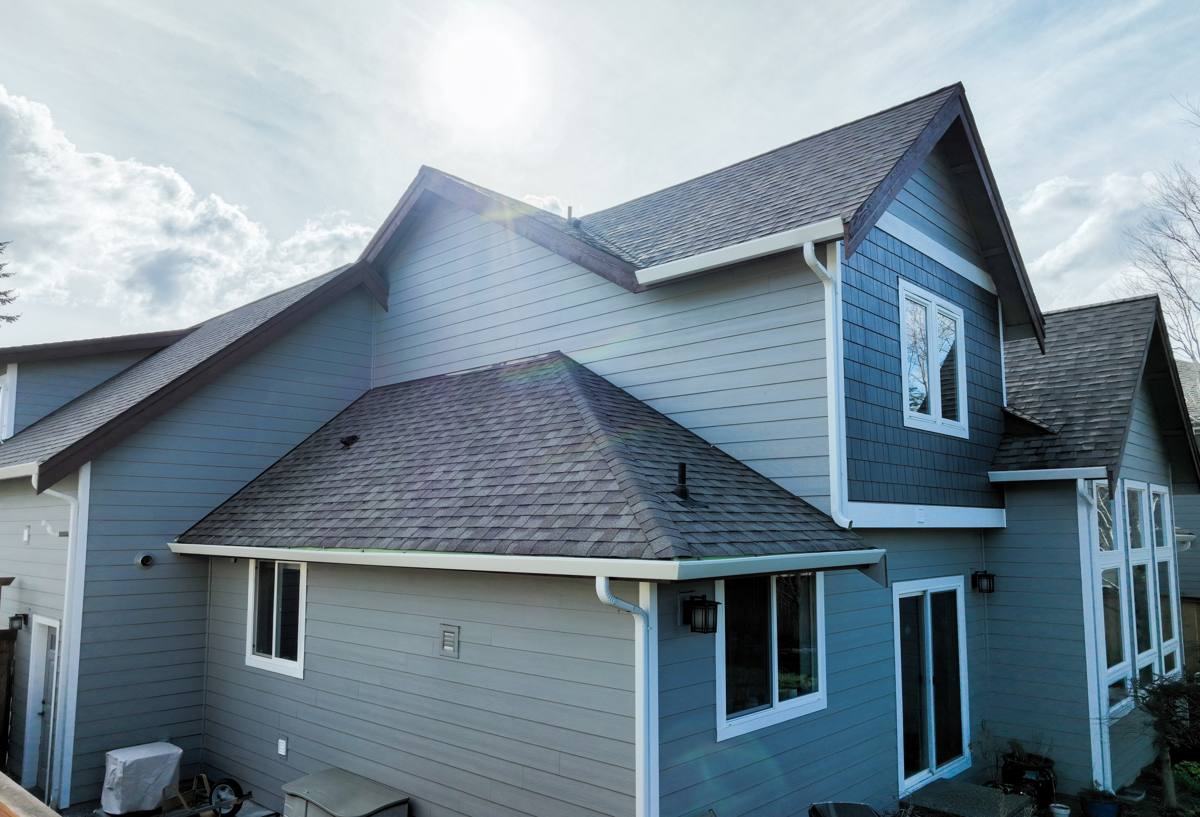
What Skagit County's Climate Does to Vertical Siding
Every siding profile has a weak point. For board and batten, that weak point is the vertical seam where the batten strip overlaps the gap between boards. Water doesn't fall straight down on a wall — wind pushes it sideways, and in the delta and near-shore areas around Conway, that wind carries salt and moisture that most siding materials were never designed to handle long-term.
Salt Air
Being close to Skagit Bay and the saltwater reaches of the river system means airborne salt settles on exterior surfaces year-round. Salt is corrosive to exposed fasteners and hardware, and it accelerates the breakdown of finishes that aren't formulated to resist it. On board and batten specifically, the battens themselves and their fasteners are directly exposed — there's no lap to shield them the way there is on horizontal lap siding.
Driving Rain
Storms coming off the water don't just drop rain, they drive it horizontally into the wall. On a board and batten wall, that means water gets forced against the seams under the battens, not just onto the face of the boards. If there's no drainage path behind the siding, that water has nowhere to go, and it sits against the sheathing.
A Long Moss Season
Skagit County's wet season runs long, and the shaded, low-lying character of Conway keeps surfaces damp for extended stretches. Moss and algae need exactly that — shade and moisture — and they'll colonize any siding surface that stays damp, including primed wood, cedar, and lower-grade composites. Once moss takes hold on a batten strip, it holds moisture against the board underneath it, which turns a cosmetic problem into a structural one over time.
Board & Batten Done Right vs. Board & Batten Done Fast
Board and batten looks simple — vertical boards, a strip covering each seam — but that simplicity is deceptive. The batten strip is doing real structural work: it's the only thing standing between the wall cavity and every drop of wind-driven rain that hits that seam. A batten installed flat against wet-prone sheathing, with no drainage gap and inconsistent fastening, will trap moisture behind it. A batten installed over a proper rainscreen, fastened into framing at the correct spacing, will shed that same water and let anything that gets behind it dry out.
The visual result of both jobs can look identical on install day. The difference only shows up two, five, or ten winters later — which is exactly why homeowners in Conway need to know what to ask a contractor before signing a contract, not after the siding starts failing.
What a Correct Installation Actually Involves
A board and batten job done to spec in this climate includes several steps that are easy to skip and hard to notice once the siding is up:
- A drainage gap behind the boards. Furring strips or a rainscreen mat create a gap so any moisture that gets past the siding face can drain and the wall can dry.
- Correct flashing at every penetration. Windows, doors, hose bibs, and light fixtures all need flashing details that direct water out and away from the seams, not into them.
- Consistent batten spacing and fastening. Battens need to land over solid backing with fasteners spaced and set to manufacturer specification — not just tacked wherever is convenient.
- Factory-finished boards, not field-primed. A finish applied at the factory under controlled conditions holds up to salt air and UV far longer than paint or primer applied on site.
- Proper caulking strategy at joints. Some seams should be sealed; others need to breathe. Sealing the wrong seam traps water instead of keeping it out.
Why We Only Install This in James Hardie Fiber Cement
Board and batten is one of the least forgiving profiles for material choice, because the battens are exposed to weather on both faces and both edges. That's why we don't offer it in vinyl, LP SmartSide, cedar, or primed spruce.
Vinyl board and batten looks the part from a distance, but it's a thin material relying on plastic locking channels, and it expands and contracts more than fiber cement in temperature swings — over years that movement telegraphs through the seams the profile depends on looking crisp. LP SmartSide and primed spruce are wood-based products; wood-based battens sitting in a wet, shaded, salt-air environment like Conway's are exactly the conditions that shorten their service life, even with factory treatment. Cedar board and batten is a beautiful traditional choice, but it requires an ongoing maintenance commitment — refinishing, sealing, and moisture monitoring — that most homeowners don't want to sign up for indefinitely, especially with a moss season this long.
James Hardie's fiber cement board and batten holds its dimension in wet and dry conditions, it's non-combustible, and it comes with a factory ColorPlus finish engineered to resist fading and hold up in coastal, salt-exposed climates. That combination is why it's the only material we put behind our name on this profile.
Comparing the Options
| Material | Behavior in Salt Air & Driving Rain | Moss Resistance | Long-Term Maintenance |
|---|---|---|---|
| James Hardie Fiber Cement | Dimensionally stable, factory finish resists salt and UV | Non-organic surface, doesn't feed moss the way wood does | Occasional wash; no repainting on ColorPlus finish |
| Cedar | Natural but absorbs moisture without upkeep | Organic surface, prone to moss/algae without treatment | Regular sealing, refinishing, moisture checks |
| Vinyl | Expands/contracts with temperature; seams can loosen over time | Doesn't feed moss but traps moisture behind panels if installed poorly | Low, but panels can crack or fade and aren't repairable in sections easily |
| LP SmartSide / Primed Spruce | Wood-based; engineered treatment helps but still moisture-sensitive at cut edges | Organic substrate, needs sealed edges to resist moss and rot | Field-applied finishes need monitoring and touch-up over time |
Our Process for a Conway Board & Batten Project
Every project starts the same way: an on-site walk-through, not a phone estimate. We look at wall orientation relative to prevailing wind and rain, existing moisture damage, and where moss and shade patterns are already showing on the current siding — that tells us a lot about which walls need the most attention to drainage detail.
- Assessment and moisture check. We check sheathing condition once old siding is off, since a board and batten job is only as good as what's underneath it.
- Rainscreen and flashing plan. We map out drainage gap, window and door flashing, and any transition details before boards go up.
- Installation to manufacturer spec. Boards and battens are fastened at correct spacing into solid backing, with attention to consistent reveal and clean corners.
- Trim, caulk, and finish check. We seal only the joints that should be sealed and confirm the factory finish is intact and undamaged from handling.
- Final walk-through. We walk the finished job with the homeowner before calling it done.
What Drives Cost on a Board & Batten Job
| Factor | Why It Matters in Conway |
|---|---|
| Existing wall condition | Moisture-damaged sheathing found during tear-off adds repair scope before new siding can go on |
| Amount of trim and detail work | Board and batten's clean lines depend on corner and window trim being done carefully, which takes more labor than a plain lap job |
| Wall exposure | Walls facing prevailing wind and rain off the water may need extra flashing attention, adding time |
| Rainscreen system chosen | Furring strips vs. a manufactured rainscreen mat affects both material cost and installation time |
| Color and finish selection | Factory ColorPlus finishes come at a range of price points depending on color depth and line |
Maintenance: What Conway Homeowners Should Actually Do
- Rinse siding with a garden hose once or twice a year, more often on shaded walls prone to moss
- Check caulked joints annually for cracking or separation, especially after a hard winter
- Keep vegetation and sprinklers from spraying directly against the wall, which speeds up moss growth
- Watch for any soft spots or discoloration near ground level, a common sign of moisture wicking up from grade
- Have gutters and downspouts checked so runoff isn't dumping directly onto siding below rooflines
Why a Crew That Already Works in Conway Matters
Board and batten installed to spec in a dry inland climate and board and batten installed to spec for a home exposed to Skagit Bay's salt air and driving rain are not the same job, even though the materials list looks similar. A crew that already works throughout Skagit County knows which wall orientations in this area take the worst weather, how long the moss season actually runs here, and what a rainscreen detail needs to look like to hold up to it. That's knowledge that only comes from doing the work locally, year after year, not from a generic installation manual.
If you're weighing board and batten for a home in Conway, we're happy to walk the property, look at what your walls are dealing with, and give you a straightforward estimate — no pressure, no upsell, just what the job actually needs. Use the form below to get started.