 Skagit County
 Storm Damage in Cedardale Isn't Like Storm Damage Everywhere Else
Cedardale sits in a stretch of Skagit County where wooded lots, open farmland, and proximity to the water all combine to put roofs through a specific kind of stress. It's not one big dramatic event that wrecks most roofs out here — it's the accumulation of driving rain off the Sound and Skagit Bay, salt-laden air that works on fasteners and flashing year after year, and a moss season that runs longer than most homeowners realize. When a windstorm finally does hit, it's usually exploiting damage that's been building quietly for seasons.
That's the frame we bring to every storm repair call in this area. A roof that fails during a storm in Cedardale often had help — loose flashing, moss-lifted shingles, or a soft spot in the decking that just needed one hard gust to turn into a leak. Fixing the visible storm damage without addressing what let it happen means you're back on the roof again next winter.
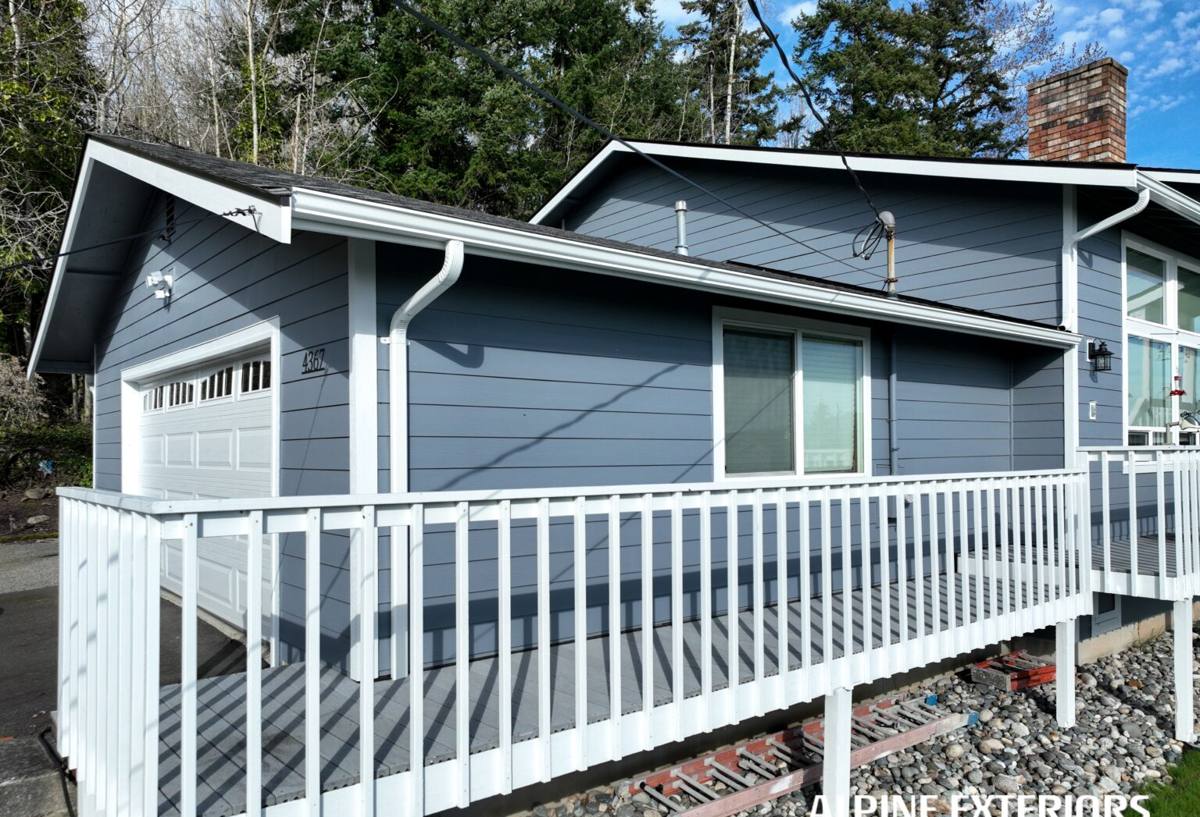
Common Storm Damage We See on Cedardale Roofs
Every roof and every storm is a little different, but a few patterns show up again and again in this part of Skagit County:
- Wind-lifted or missing shingles — especially on roof edges and ridges where wind uplift is strongest, and especially on older shingles whose sealant strips have already broken down from age or moss.
- Flashing failures — around chimneys, skylights, and roof-to-wall transitions, where driving rain finds the smallest gap and pushes water sideways and upward instead of just running off.
- Tree limb and debris strikes — Cedardale's tree cover is part of what makes it a nice place to live, but it also means branches, cones, and occasionally full limbs come down in wind events. Impact damage can punch through shingles and decking or just crack and weaken them without an obvious hole.
- Moss-related lifting and rot — moss doesn't just sit on top of a roof looking bad. It holds moisture against the shingle surface and works under tabs and edges, which weakens the roof's grip long before a storm ever arrives.
- Granule loss and accelerated aging — heavy, repeated rain events wash granules off asphalt shingles faster than manufacturers plan for, thinning out UV and weather protection over time.
Salt air compounds nearly all of these. It accelerates corrosion on exposed nails, flashing, and metal roof-vents, which is often the quiet reason a repair that should have held for years instead fails after one bad storm.
What a Correct Storm Repair Actually Involves
A lot of storm repair work gets done fast and shallow — tarp it, slap a patch over the obvious hole, collect payment, move on. That approach might stop water for a season, but it rarely holds up to the next round of Skagit County weather. A correct repair goes through a few non-negotiable steps.
Immediate Protection First
If there's active water intrusion, the first job is stopping it — proper tarping or emergency sealing that's actually secured against wind, not just draped over the damage. This buys time to do the real repair correctly rather than rushing it in bad weather.
Full Damage Assessment, Not Just the Obvious Spot
Wind and impact damage rarely stays contained to one shingle. We check the surrounding field, the decking underneath for soft spots or rot, the flashing at nearby penetrations, and the attic side for signs the leak has already been traveling before it showed up as a stain on the ceiling.
Matching Materials and Technique, Not Just Color
A patch that looks close in color but doesn't match the shingle's profile, weight, or fastening pattern creates a weak point that shows up as the next failure point. We match not just appearance but the actual product line where possible, and where an exact match isn't available, we use a compatible product installed to the same standard as the surrounding roof — not a shortcut version of it.
Flashing and Detail Work
Most repeat leaks trace back to flashing, not field shingles. Any storm repair worth doing includes checking and, if needed, replacing flashing at the repair site rather than just shingling over old, compromised metal.
Temporary Protection vs. Permanent Repair
Homeowners sometimes ask why we don't just do the tarp-and-patch and call it done. The honest answer is that temporary protection and permanent repair solve different problems, and mixing them up costs more in the long run.
| Factor | Temporary Protection | Permanent Repair |
|---|---|---|
| Purpose | Stop active water intrusion immediately | Restore the roof's actual weather resistance |
| Materials | Tarps, sealant, temporary flashing | Matched shingles, proper flashing, correct fasteners |
| Expected lifespan | Days to a few weeks | Matches the remaining life of the roof section |
| Best used when | Storm just hit, materials or scheduling delay a full repair | Damage is assessed and a proper repair can be scheduled |
| Risk if left as-is | High — tarps fail, especially in sustained wind | Low, if installed to standard |
Our Process for Cedardale Storm Repairs
We keep this straightforward on purpose. Storm damage is stressful enough without a confusing process layered on top.
- Call and initial triage. We ask what happened, what you're seeing (water inside, visible damage outside, debris on the roof), and whether it's an active leak that needs same-window attention.
- On-site inspection. We walk the roof and check the attic where accessible, looking beyond the obvious damage point.
- Clear explanation and written estimate. You get a plain-English rundown of what's damaged, what caused it, what needs to happen, and what it costs — before any work starts.
- Documentation for insurance, if needed. Photos and a written scope of damage that you can hand to your insurance adjuster.
- Repair. Done to match the existing roof's materials and detailing, not just the fastest fix available.
- Follow-up. We check our own work rather than assuming it held.
Storm Damage and Insurance Claims
Not every storm repair needs to go through insurance — smaller repairs are often cheaper to just pay for directly once you account for deductibles. But when the damage is significant, having a contractor who documents thoroughly and explains the scope clearly makes the claims process go a lot smoother. We'll give you an honest read on whether a claim makes sense for your situation rather than pushing you toward filing regardless of the numbers.
Moss, Salt Air, and the Long Game for Cedardale Roofs
Storm damage repair fixes what already broke. But in a climate like Skagit County's, with its long wet season and salt air off the Sound and bay, the roofs that hold up best are the ones getting regular attention between storms. A few things worth checking on your own roof, or asking a contractor to check during any repair visit:
- Moss buildup on north-facing slopes and shaded areas under tree cover
- Granule accumulation in gutters, which signals accelerated shingle wear
- Rust or corrosion on exposed metal flashing, vents, or fasteners
- Soft or spongy spots when walking the roof, which can indicate decking rot
- Gaps or lifted edges around chimneys, skylights, and vent boots
- Overhanging limbs close enough to strike the roof in high wind
Addressing these during a repair visit, rather than treating storm damage as an isolated event, is usually the difference between a roof that needs another emergency call next winter and one that doesn't.
Why Hiring a Crew That Already Works Cedardale Matters
Storm damage repair isn't a job where generic experience is quite the same as local experience. A crew that regularly works Cedardale and the surrounding parts of Skagit County has a feel for which roof types and ages are showing up with recurring moss and flashing issues, how the local wind patterns tend to hit roofs relative to tree lines, and how salt air is affecting metal components differently than it would further inland. That local pattern recognition means a faster, more accurate diagnosis instead of a generalized repair that treats every storm-damaged roof the same way.
It also means realistic response times. When a storm comes through Skagit County, it usually affects more than one property at once. A contractor who already has a presence in the area can typically get to Cedardale homes faster and coordinate follow-up work more reliably than a crew traveling in from far outside the county.
Get a Free, No-Pressure Estimate
If your roof took a hit in a recent storm — or you're just not sure whether that spot near the chimney is storm damage or ongoing moss and moisture wear — we're happy to take a look and give you a straight answer. Fill out the form below for a free estimate on your Cedardale storm damage roof repair, no pressure and no obligation.