 Skagit County
 Building Decks That Actually Hold Up in Burlington
Burlington sits in a stretch of Skagit County where the weather does real work on an outdoor structure. You get driving rain off the water for much of the year, a humid marine air mass that never fully dries out even in summer, and a moss season that can stretch from October clear into May. A deck built the way it might be built in a dry inland climate will show problems here within a few years — soft spots, green film on the boards, rust bleeding from fasteners, railings that wobble because a post base never had a chance to drain. A deck built for Skagit County conditions is a different animal, and the difference shows up in the framing you never see as much as the decking you walk on.
This page covers what we think a Burlington deck needs to get right, how we approach the build, and why local experience matters more than it might seem for a project that's mostly boards and posts.
What Local Homes Need From a Deck in This Climate
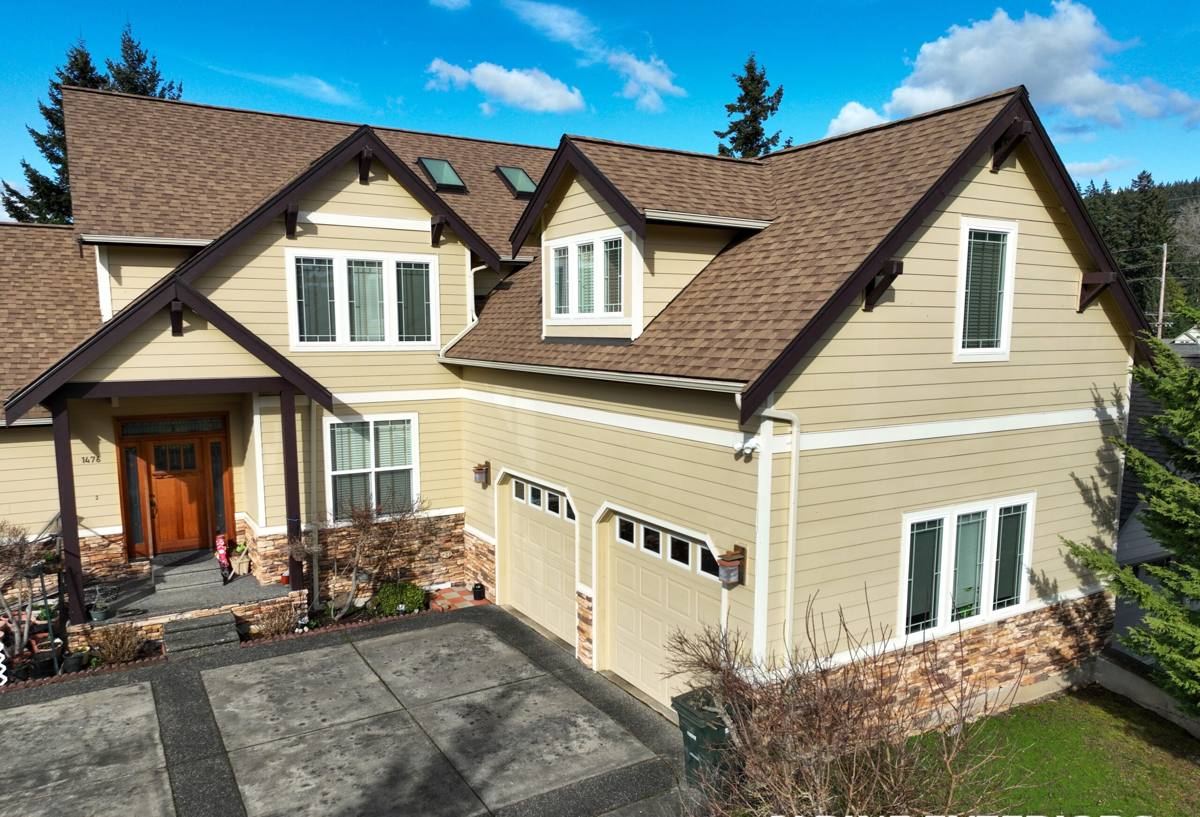
The core challenges for any deck in the Burlington area come down to moisture management and airflow. Salt-laden air moves in off Puget Sound and the surrounding waterways, which accelerates corrosion on any hardware that isn't rated for it. Long stretches of steady rain mean a deck's job isn't just to look good in July — it has to shed water efficiently for eight or nine months of the year without trapping it against wood or framing. And the moss and algae that thrive in our shoulder seasons will colonize any surface that stays damp and shaded, which includes the underside of poorly ventilated decking and the north side of nearly every structure in the county.
None of this means a Burlington deck has to look different from a deck anywhere else. It means the details underneath — flashing, fastener grade, board spacing, footing depth — have to be treated as load-bearing decisions, not afterthoughts.
What a Correctly Built Deck Involves
Ledger Board Flashing and Attachment
Where a deck attaches to the house is the single most common failure point we see on older decks in this area, and it's almost always a water problem, not a structural one. Rain gets behind an improperly flashed ledger board and sits there, and over a few wet seasons it rots the rim joist or sheathing behind it without ever being visible from outside. A correct ledger installation uses proper flashing that directs water out and away from the house, stainless or hot-dip galvanized lag bolts or structural screws rated for exterior use, and a gap or membrane that keeps the ledger from sitting flush against wet siding.
Footings and Frost Depth
Skagit County's building codes specify minimum footing depths to get below the frost line and onto stable bearing soil, and post-frame decks need footings sized to the load they're carrying, not a one-size-fits-all pour. Given how much of the low-lying ground around Burlington holds moisture, we also pay attention to drainage around footings so they aren't sitting in standing water for months at a time.
Joist Spacing and Framing Grade
Joist spacing needs to match the decking material you're putting on top of it — composite and PVC boards generally want tighter spacing than solid wood to avoid flexing over time. Framing lumber should be pressure-treated and rated for ground contact where it's close to grade, with cut ends field-treated before they go into the structure.
Choosing a Decking Material for Burlington's Weather
There's no single "best" decking material — there's a best fit for your budget, how much upkeep you want to do, and how the deck will be used. Here's how the common options actually perform in a wet, moss-prone climate like ours.
| Material | Moisture & Moss Behavior | Maintenance | Typical Lifespan Here | Relative Cost |
|---|---|---|---|---|
| Pressure-treated fir/pine | Absorbs water, prone to surface mildew and moss if not cleaned | Annual cleaning, re-sealing every 1-2 years | 10-15 years | $ |
| Cedar | Naturally rot-resistant but still needs sealing to resist graying and moss | Sealing every 1-2 years, periodic cleaning | 15-20 years | $$ |
| Composite decking | Won't rot, but caps can still grow surface algae/moss without cleaning | Occasional wash, no sealing or staining | 25-30 years | $$$ |
| PVC/capstock decking | Fully moisture-resistant surface, low organic growth | Occasional wash, no sealing | 25-30+ years | $$$$ |
We're honest with clients that wood decking, properly maintained, is still a perfectly good choice for a lot of budgets — it just requires that maintenance actually happen. If you know a deck won't get sealed every year or two, composite or PVC will hold up better over time in this climate with far less work on your part.
Railings, Fasteners, and Hardware
Salt air corrodes standard hardware faster than most homeowners expect, especially anything closer to open water or exposed to prevailing weather. We use stainless steel or hot-dip galvanized fasteners and connectors rated for exterior, coastal-adjacent use rather than standard zinc-coated hardware that can start showing rust streaks within a couple of years. For railings, post attachment matters as much as the railing style itself — a railing system is only as strong as the connection between the post and the frame, and that connection needs to be engineered to meet code for guard rail loads, not just screwed on.
Designing for Drainage, Airflow, and Moss
A lot of what keeps a Burlington deck looking clean year over year comes down to decisions made before a single board is installed:
- Board spacing that allows water to drain through rather than pool on the surface
- Ventilation gaps or skirting with airflow so the underside of the deck can dry out between rain events
- Grading and drainage beneath the deck so water isn't collecting and staying damp under the structure
- Positioning and any overhead coverage that accounts for how much shade the deck will sit in through fall and winter
- Material choice that matches how much cleaning and sealing you're realistically going to do
Shaded, north-facing, or low-airflow decks are where we see the worst moss buildup in the county, and often the fix isn't a harsher cleaner — it's better airflow designed in from the start.
Permits and Local Code Requirements
Most deck projects in Burlington and unincorporated Skagit County require a building permit, particularly once you're above a certain height off grade or attaching structurally to the house. Permitted work means an inspector verifies footings, framing, and ledger attachment before it's covered up, which is exactly the part of a deck you can't easily check later. We handle the permitting process as part of the job rather than leaving homeowners to navigate it, and we build to the current code requirements for guard rail height, baluster spacing, and stair geometry rather than to whatever an older deck happened to have.
Our Process
We start with an on-site visit to look at the house's ledger attachment point, the grade and drainage around where the deck will sit, and how the space will actually be used, since a deck for entertaining and a deck for a quiet morning coffee spot get designed differently. From there we put together a design and material plan with real numbers, not a vague estimate, pull the necessary permits, and schedule the build around Skagit County's weather rather than fighting it — footings and framing go in during drier windows where possible. Inspections happen at the stages the code requires, and we walk the finished deck with the homeowner before calling the job done.
What to Expect for Maintenance After the Build
Even a well-built deck needs some seasonal attention in this climate. Wood and cedar decks should be cleaned of debris and checked for moss growth heading into fall, with sealing on the schedule the material calls for. Composite and PVC decks need far less, but an occasional wash keeps organic buildup from getting a foothold in shaded corners. Gutters and downspouts near the deck should be kept clear so runoff isn't dumping extra water onto or under the structure. We go over a maintenance schedule specific to the material you choose so there are no surprises a few years in.
Why Hire a Crew That Already Works in Burlington
A deck built by a crew that hasn't dealt with this region's rain patterns, soil, and moss cycles can look identical to one built by a local crew on installation day — the difference shows up two or three winters later. We've built and repaired decks throughout Skagit County long enough to know which details actually matter here: the flashing details that keep water out of a ledger board, the hardware that won't rust out in five years near salt air, and the drainage decisions that keep moss from taking over a shaded deck by its second fall. That local track record is also why we can give straight answers about what a project should cost and how long it should take, instead of guessing.
If you're planning a new deck or replacing one that's past its prime, we're happy to take a look and put together a straightforward, no-pressure estimate using the form below.