 Skagit County
 Siding Built for Bow's Particular Kind of Weather
Bow sits close enough to Samish Bay and the Skagit County shoreline that homes here deal with a different mix of punishment than siding further inland. Salt-laden air moves through on a regular basis, driving rain comes in sideways off the water during fall and winter storms, and the shaded, damp stretches of the year give moss and algae plenty of time to take hold on north-facing walls and anything under tree cover. None of that is unusual for this part of Skagit County, but it does mean siding installed here has to do more work than siding on a dry-climate home, and it has to be installed correctly the first time. A product or installation that's merely "fine" in a drier region can fail early in a place like Bow.
This page is about one thing: what a correct siding installation looks like for a Bow home, and why the details matter more here than they would somewhere with a gentler climate.
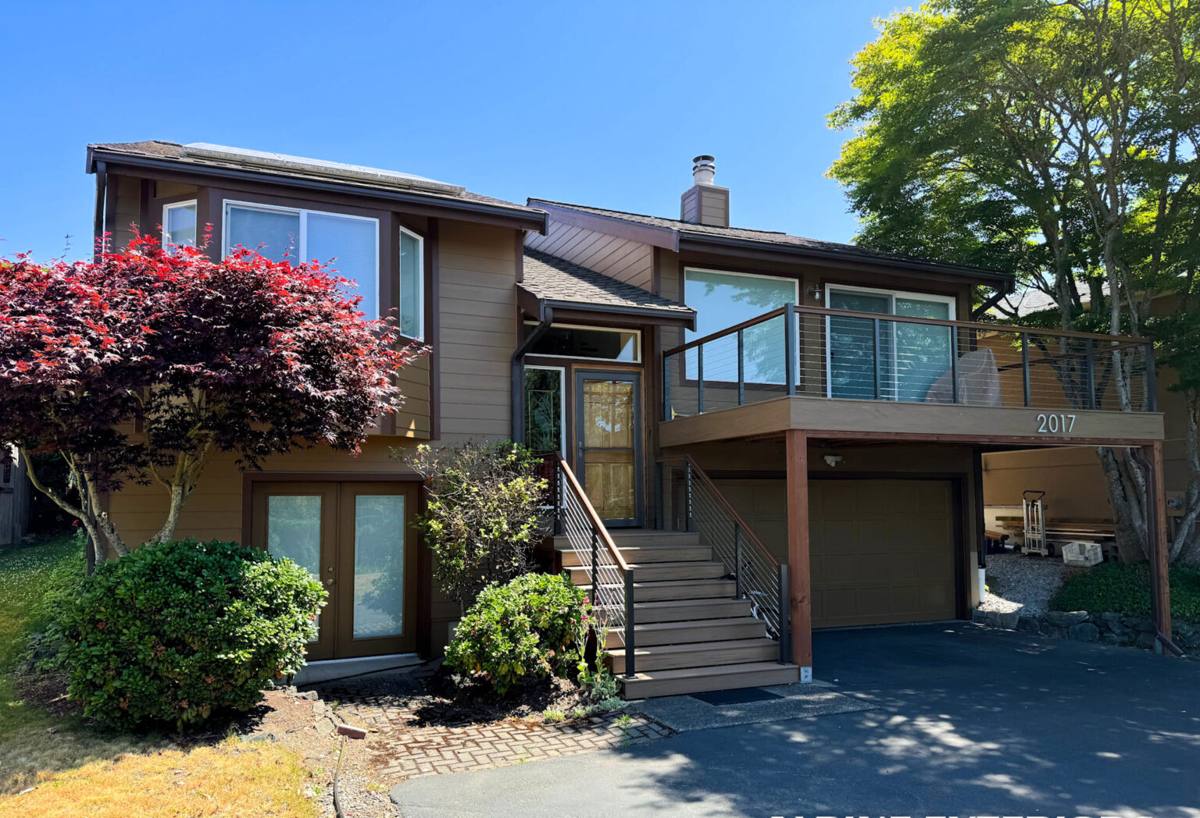
What Salt Air and Driving Rain Actually Do to Siding
It helps to be specific about the mechanisms, because "coastal exposure" is often used as a vague catch-all when it's really a few distinct problems:
- Salt air accelerates corrosion of exposed metal fasteners, flashing, and hardware, and it can degrade lower-grade paint finishes faster than inland exposure would.
- Driving rain pushes water sideways into laps, seams, and butt joints that would stay dry in a straight-down rainstorm. This is a water-intrusion problem, not just a cosmetic one — water that gets behind siding and can't get back out is what leads to rot and sheathing damage.
- Moss and algae thrive in the shaded, slow-to-dry areas that are common around Bow's tree cover and close-set lots. Left alone, moss holds moisture against the siding surface for extended periods, which shortens the life of anything not built to resist it.
Any siding installation in this area needs to answer all three of these, not just look good on install day.
Why We Install Only James Hardie Fiber Cement
We don't install vinyl, LP SmartSide, primed wood, cedar, or other fiber cement brands like Cemplank or Allura. That's a deliberate standard, not a sales pitch, and it's worth explaining honestly:
What Rules Out the Alternatives Here
- Vinyl can warp and become brittle with age and temperature swings, and its seams and butt joints give driving rain more opportunities to work moisture behind the panel over time.
- Engineered wood products (LP SmartSide) use wood strand substrates that are more sensitive to sustained moisture exposure than fiber cement — a real concern in a climate that includes long stretches of damp, low-sun weather.
- Untreated or primed cedar and spruce require an ongoing maintenance commitment (repainting, sealing, moss treatment) that most homeowners don't want to keep up with year after year, and the wood itself is a food source for the moss and algae that thrive in this climate.
- Other fiber cement brands are a fair product category, but James Hardie's HZ5 formulation and factory-applied ColorPlus finish are specifically engineered for this Pacific Northwest moisture profile, and the company backs it with a warranty structure we've found to be the most straightforward to stand behind.
James Hardie fiber cement is non-combustible, dimensionally stable in wet conditions, and its ColorPlus finish is baked on at the factory rather than field-applied — which matters directly for moss and algae resistance and long-term color retention in a climate that doesn't give paint much of a chance to fully cure between rain events.
What a Correct Installation Involves in Bow
The siding product is only part of the equation. A huge share of siding failures we get called out to inspect aren't product failures — they're installation shortcuts that let water in behind a perfectly good material. For a Bow home, that means paying close attention to a few specific things:
Water Management Before the First Board Goes Up
- A properly lapped weather-resistant barrier (housewrap) installed with correct shingle-style overlaps so water sheds outward, not inward.
- Flashing at every window, door, and roof-to-wall intersection — the spots where driving rain finds the path of least resistance.
- A rainscreen or drainage gap where conditions call for it, giving any moisture that does get behind the siding a way to drain and dry rather than sit against the sheathing.
Fastening and Fit
- Corrosion-resistant fasteners driven to Hardie's specified pattern and depth — over-driven nails crack the board's edge and create a wick point for water.
- Correct gaps at butt joints and trim, caulked and sealed per manufacturer specification rather than tight-butted, which cracks with seasonal movement.
- Proper clearance from grade, roof lines, and decks, so splashback and roof runoff don't sit against the bottom course of siding.
Finish Details That Matter Long-Term
- Factory-cut and factory-primed edges kept intact wherever possible; any field cuts sealed per Hardie's guidelines.
- Touch-up paint matched to the ColorPlus finish only where required, since factory finish is the more durable and consistent option.
Our Process for a Bow Job
- Walk-through and assessment. We look at existing siding condition, moisture points, moss/algae staining patterns, and any signs of past water intrusion around windows, trim, and the foundation line.
- Scope and product selection. We recommend the Hardie product line and profile (lap, shingle, or panel) that fits the home's design and exposure, and walk through color options in the ColorPlus lineup.
- Tear-off and substrate check. Old siding comes off and we inspect the sheathing underneath for rot or damage before anything new goes up — this is often where hidden problems from a prior installation surface.
- Water barrier and flashing installation. This is the step that determines whether the siding lasts 10 years or 40, and it's not visible once the job is done, which is exactly why it can't be rushed.
- Siding installation to manufacturer spec. Fastening, gapping, and sealing done to Hardie's published installation requirements — not "close enough."
- Final inspection and walk-through with the homeowner before we consider the job complete.
Why a Crew That Already Works Bow Matters
Skagit County covers a lot of ground and a lot of different microclimates — Bow's proximity to the water is different from the exposure profile of a home further inland or up in elevation. A crew that regularly works this specific area already understands:
- Which sides of a home typically take the worst of the driving rain given the prevailing weather patterns off the bay.
- Where moss tends to establish first on homes with similar tree cover and orientation.
- Realistic timelines around the wetter months, since fiber cement installation has weather windows that matter for proper curing and sealing.
That local familiarity doesn't replace doing the installation correctly — it just means fewer surprises and fewer callbacks.
Cost Factors for a Bow Siding Project
Every home is different, but the factors that move the price are consistent. We give firm numbers only after a walk-through, but this is the honest shape of what drives cost:
| Factor | Why It Matters |
|---|---|
| Tear-off scope | Full removal of old siding versus a simpler substrate takes more labor and may uncover repair work |
| Sheathing condition | Rot or water damage found during tear-off needs to be repaired before new siding goes on |
| Product line and profile | HardiePlank, HardieShingle, and HardiePanel differ in material and labor cost |
| Home complexity | Dormers, multiple stories, and cut-up wall lines add labor time and material waste |
| Trim and flashing scope | Full trim replacement alongside siding adds cost but improves long-term water management |
| Access and site conditions | Tree cover, slope, and setback affect scaffolding and staging needs |
A Homeowner's Pre-Project Checklist
- Ask any contractor for their specific fastening and flashing approach — not just "we install Hardie board."
- Check whether tear-off and sheathing inspection are included or treated as a change order later.
- Confirm the ColorPlus color and profile match what's actually being installed, in writing.
- Ask how the crew handles the wetter months — installation timing affects sealant cure and long-term performance.
- Get the manufacturer warranty terms in writing, including what's required to keep it valid.
What to Expect After Installation
A correctly installed James Hardie system in a Bow home should need very little from you beyond normal upkeep — periodic gentle washing to keep moss and algae from establishing, and an eye kept on caulking at trim joints over the years. It should not need repainting on the schedule that primed wood or older vinyl typically demands. If you ever notice staining, bubbling paint, or soft spots near the base of a wall, those are worth having looked at early, since they're usually signs of a water path rather than a siding defect.
If you're weighing a siding project for a home in Bow, we're happy to walk the property, look at what your current siding is telling us, and put together a straightforward, no-pressure estimate for a James Hardie installation done right. Use the form below to get started.