 Skagit County
 Building New in Bow: What the Window Package Has to Get Right
Putting windows into a new-construction home in Bow is a different job than swapping out old units in a remodel. There's no existing frame to work around, no old flashing to inspect and decide whether to trust. You're building the water management system from scratch, in the rough opening, before siding ever goes up. That's an advantage if it's done correctly — and a recurring source of callbacks if it isn't. Because Bow sits in the marine-influenced part of Skagit County, with salt-laden air off Samish Bay and Padilla Bay, long stretches of driving rain, and a moss season that can run most of the year on shaded elevations, the margin for error on a new build's window installation is smaller than it looks on a dry framing day.
This page focuses specifically on new-construction window installation for homes going up in and around Bow — what the climate demands, what a correct install actually involves, and what to look for when you're choosing who does the work.
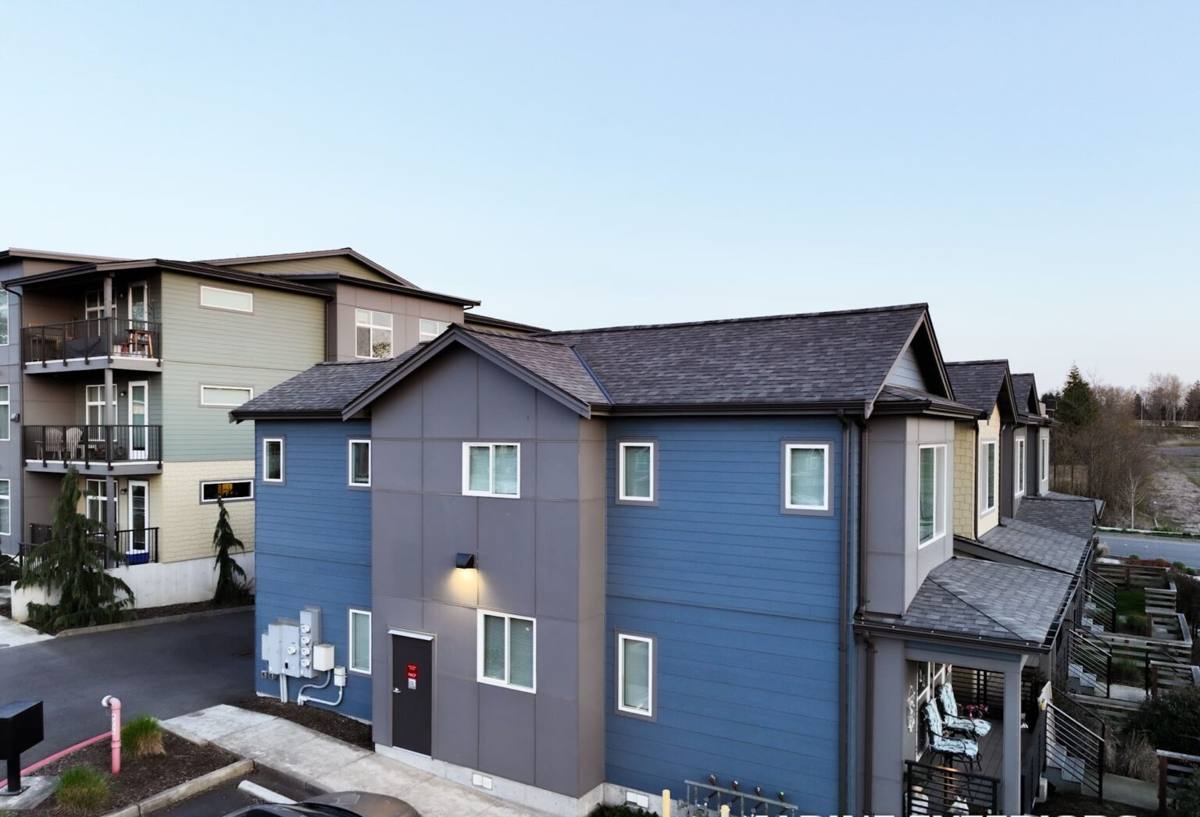
Skagit County's Marine Climate and What Bow's New Builds Are Up Against
Bow's location near the water means homes here deal with a specific combination of stressors that inland Skagit County properties don't face to the same degree:
- Salt-bearing air that accelerates corrosion on unprotected fasteners, hinges, and some lower-grade window hardware over the life of the home.
- Wind-driven rain that doesn't just fall on a window — it gets pushed sideways and upward under sills and around trim, which is exactly where a rushed flashing job fails first.
- Extended damp, low-light seasons that keep siding, trim, and window perimeters wet for days at a stretch, giving moss, algae, and slow rot more time to establish than in a drier climate.
None of this makes new-construction window work exotic. It just means the standard installation sequence — proper flashing laps, correctly bedded sills, sealed but ventilated cladding — isn't optional trim work. It's the difference between a window system that sheds water for decades and one that quietly lets it into the wall cavity for years before anyone notices.
New Construction vs. Replacement: Why the Distinction Matters
A lot of window marketing lumps everything together, but a new-construction window and a replacement (pocket) window are built and installed differently, and the job site conditions are different too.
In new construction, we're working with an open rough opening and full access to the wall's water-resistive barrier (WRB), sheathing, and framing before any finish materials go on. That's the best possible condition for getting flashing right — there's nothing hiding a mistake. New-construction windows typically have a nailing fin that gets integrated directly into the WRB and flashing sequence, which, done correctly, is a more robust long-term water seal than a retrofit frame sealed against existing siding.
The trade-off is that new construction gives you exactly one chance to get the sequence right before it's buried behind siding and trim. There's no "we'll catch it during the next remodel." That's why the installation process matters as much as the window product itself.
Choosing Window Products for Bow's Conditions
We don't push one brand as the only acceptable option — several manufacturers make solid new-construction window lines. What we do care about is matching frame material, glazing package, and hardware grade to a marine climate, and being upfront about the trade-offs of each.
| Frame Material | Strengths in This Climate | Trade-Offs |
|---|---|---|
| Fiberglass | Very stable dimensionally, holds paint/finish well, resists moisture-driven warping | Higher upfront cost than vinyl |
| Vinyl | Cost-effective, no corrosion concern, good energy performance | Can expand/contract more with temperature swings; quality varies widely by manufacturer |
| Wood (clad exterior) | Classic look, good interior performance | Exposed or poorly clad wood is high-maintenance in a damp, salt-air environment |
| Aluminum | Strong, slim sightlines | Poor thermal performance and higher corrosion exposure near saltwater unless properly coated |
For hardware — hinges, locks, cranks, fasteners — we specify corrosion-resistant options rather than standard-grade hardware on any Bow-area build, given the proximity to Samish and Padilla Bays. It's a small line-item cost difference that avoids stuck cranks and rust streaks a few years in. On glazing, we talk through low-E coatings and gas fill options based on the home's orientation — a west-facing wall catching afternoon sun needs a different glass package than a shaded north wall that stays damp longer.
Flashing and Water Management: Where New Construction Wins or Loses
This is the part of the job that never shows up in a finished photo and matters more than anything else. A correct new-construction window installation follows a specific shingle-lap sequence so that every layer — WRB, flashing tape, sill pan, window nailing fin, head flashing — sheds water downward and outward, never inward.
What a correct sequence includes
- A sloped or pan-flashed sill that drains water back out to the exterior instead of letting it pool at the bottom corners of the opening — the single most common failure point we find on inspections.
- Jamb flashing that laps over the sill flashing, never under it.
- Head flashing that laps under the WRB above the window, directing water out and over the top of the unit.
- Proper integration with the drainage plane behind the siding, so incidental water that does get past the cladding has somewhere to go besides the wall cavity.
- Sealant used only where it belongs in the sequence — not as a substitute for correct flashing laps, which is a shortcut that fails quietly.
In a drier inland climate, sloppy flashing might not show a problem for years. In Bow, with driving rain off the water and long wet seasons, gaps in this sequence tend to show up as stains, soft trim, or interior sill damage much sooner.
Our New-Construction Window Installation Process
We work directly with builders, framers, and homeowners managing their own build, and we coordinate our work to fit the existing framing schedule.
- Rough opening check. We verify openings are square, plumb, and sized correctly before a window ever arrives on site — catching framing issues here is far cheaper than after windows are ordered.
- Sill pan and flashing installation. Sill pans and flashing tape go in following manufacturer specs and the shingle-lap sequence, sloped to drain.
- Window setting and fastening. Units are set plumb, level, and square, shimmed correctly to avoid stressing the frame, and fastened per the manufacturer's schedule — not just "enough nails to hold it."
- Jamb and head flashing. Integrated with the WRB in the correct lap order, sealed at the appropriate points only.
- Interior and exterior sealant and insulation. Gaps are insulated (not overpacked) and sealed on the interior for air control, separate from the exterior water management layer.
- Final inspection. We check operation, seal integrity, and flashing visibility before siding crews close the wall up.
Mistakes We Commonly Find on Skagit County New Builds
Most window problems we get called out to fix in this area trace back to a handful of repeatable issues:
- Flashing installed out of sequence (jamb over sill instead of under, or head flashing tucked under siding instead of the WRB).
- No sill pan, or a flat sill with no slope, letting water sit against the frame.
- Standard-grade fasteners and hardware used on a waterfront-adjacent build, leading to early corrosion.
- Over-reliance on caulk and sealant to compensate for a flashing sequence that wasn't done right.
- Windows set out of square, causing hardware binding and premature seal failure at the corners.
Every one of these is preventable with a correct process — none of them are exotic problems specific to hard-to-source products or unusual conditions.
What to Ask Before Hiring for Your Bow New Build
If you're a homeowner managing your own build, or a builder bringing in a window subcontractor, this is a reasonable checklist to run through:
- Do they install sill pans and sloped sills as standard practice, or only "if requested"?
- Can they explain their flashing lap sequence without hesitation?
- Do they coordinate directly with the framer and siding crew, or work in isolation?
- Are they specifying corrosion-resistant hardware for waterfront-adjacent sites without being asked?
- Do they offer a written workmanship warranty separate from the manufacturer's product warranty?
- Have they worked in Skagit County's marine climate before, and can they speak to it specifically?
Why Local Experience in Bow and Skagit County Matters
A crew that mostly works drier inland climates can still install a window correctly on paper and still under-spec the job for a site like Bow — lighter flashing tape, standard hardware, less attention to sill drainage — because that's what their usual conditions call for. A crew that regularly works Skagit County's marine-influenced areas builds those decisions in as standard practice, not an upcharge. That familiarity with local wind-driven rain patterns, salt exposure, and moss-prone shading is what keeps a new-construction window installation performing well ten and twenty years out, not just at final walkthrough.
If you're planning a new build in Bow and want to talk through window selection, flashing details, or timing with your framing schedule, we're happy to walk the plans with you. Use the form below to request a free, no-pressure estimate.