 Skagit County
 Deck Building in Bow: Built for Where You Actually Live
Bow sits close enough to the water that salt air is part of daily life, and that changes what a deck needs to survive here. A deck built to a generic spec sheet might look fine the first year and start showing problems by the third — corroding fasteners, cupped boards, green film creeping across the walking surface every winter. Building decks in this part of Skagit County means designing and installing around three things every single project has to answer for: salt-laden air, long stretches of driving rain, and a moss season that can run from October through April. Get those three right and a deck will hold up for decades. Skip past them and you're looking at a rebuild inside ten years.
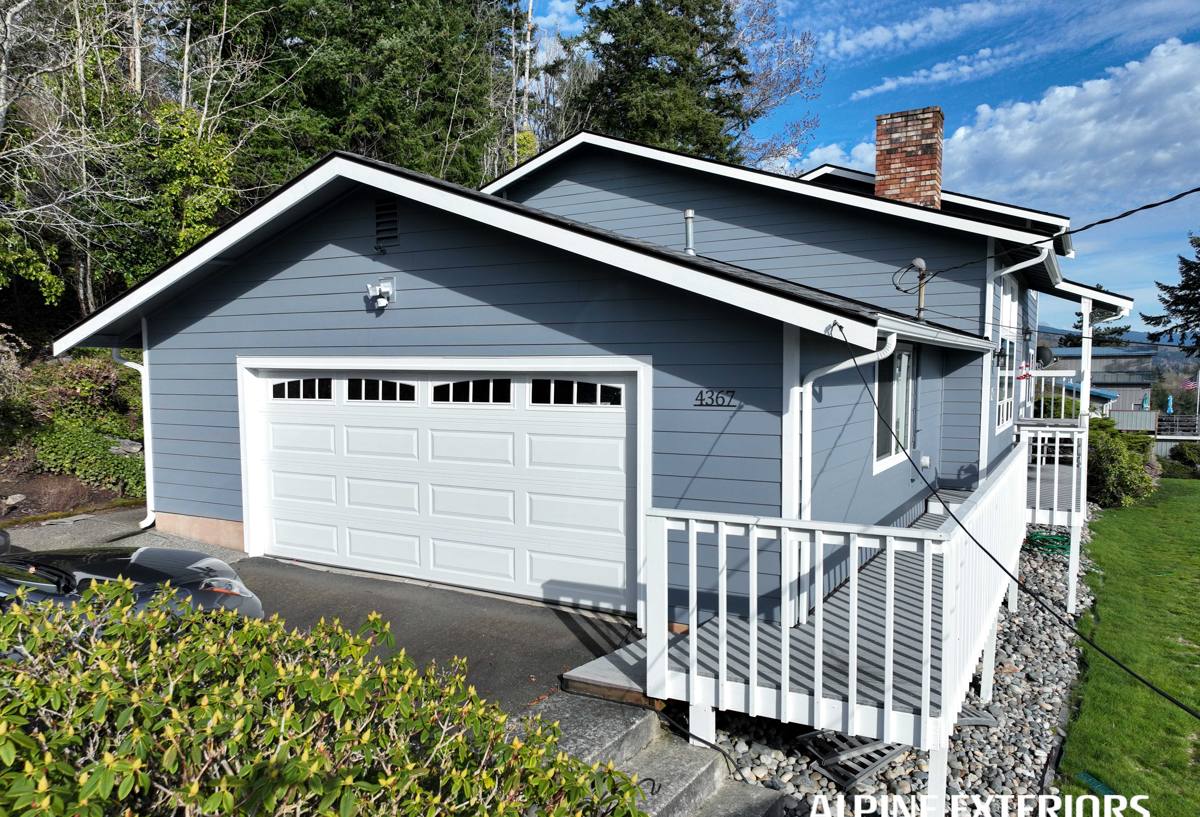
What Bow's Climate Actually Does to a Deck
Salt Air and Metal Fatigue
Proximity to Samish Bay and the surrounding saltwater means airborne salt settles on everything, including your deck's hardware. Standard zinc-coated screws and joist hangers that would last decades inland can start pitting and staining within a few years this close to the water. Once a fastener starts to corrode, it loses holding strength long before it looks bad enough for a homeowner to notice — which is exactly why the hardware spec matters more here than almost anywhere else in the county.
Driving Rain and Water Management
Rain in Bow doesn't just fall straight down — wind off the water pushes it sideways into ledger connections, stair stringers, and anywhere two pieces of material meet. A deck that isn't flashed and sloped correctly will trap water at those joints, and trapped water is what actually rots wood, not rain that runs off. This is the single most common failure point we see on older decks in the area: a ledger board attached to the house without proper flashing, quietly feeding water into the rim joist for years before anyone notices soft framing.
Moss Season
Skagit County's mild, wet winters are ideal moss-growing conditions, and a deck surface — horizontal, shaded by the house or trees, slow to dry — is a perfect host. Moss isn't just cosmetic. It holds moisture against the board surface, and on wood decking that moisture accelerates rot right where you walk. On composite decking, built-up moss and algae make the surface genuinely slick, which is a real slip hazard on stairs and near doorways.
What a Correctly Built Deck Looks Like Here
A deck that's actually built for Bow's conditions differs from a standard build in a handful of specific, non-negotiable ways:
- Stainless steel or heavy-duty coated structural hardware at all fastener and connector points, not just the visible surface screws
- Ledger flashing installed as a system — proper flashing, house wrap integration, and a drainage gap, not just a bead of caulk
- Decking gapped and installed to manufacturer spec so boards can dry fully between rain events instead of holding water
- Footings and post bases set to keep structural wood off grade and away from standing water
- A framing layout that avoids flat, low-airflow pockets where moss and standing water like to collect
- Stair and railing hardware matched to the same corrosion-resistant standard as the rest of the structure
None of this is exotic. It's standard best practice applied consistently, instead of value-engineered away to hit a lower bid. The difference shows up in year five, not day one.
Decking Material Options for This Climate
There's no single "right" decking material for every Bow project — it depends on budget, how much upkeep you want to do, and how the deck sits relative to sun, shade, and water exposure. Here's how the common options actually perform under local conditions:
| Material | Moss/Algae Resistance | Maintenance | Typical Lifespan Here |
|---|---|---|---|
| Pressure-treated wood | Low — needs regular cleaning and sealing | Annual cleaning, re-sealing every 2-3 years | 15-20 years with upkeep |
| Cedar | Moderate — natural oils help, but fade and need refinishing | Regular cleaning, periodic oil/stain | 15-25 years with upkeep |
| Capped composite | High — solid cap sheds moisture, resists staining | Occasional wash, no sealing | 25-30+ years |
| PVC decking | High — non-porous surface | Occasional wash | 25-30+ years |
We're honest with clients that pressure-treated and cedar decks look great and cost less up front, but they demand real annual maintenance in this climate to stay ahead of moisture and moss. If a homeowner isn't going to keep up with that maintenance schedule, we'll say so directly rather than sell a low-maintenance promise a wood deck can't keep.
Framing and Structure: Where the Real Work Happens
The decking surface is what you see, but the framing underneath is what determines whether the deck is still standing in twenty years. In a wet coastal climate, we pay particular attention to:
Joist Protection
Joist tape or a comparable protective barrier over the top of each joist keeps deck screws from creating a direct water entry point into the framing lumber. It's a small material cost that meaningfully extends framing life in a climate this wet.
Post Base Connections
Structural posts need to be mechanically fastened above grade, never buried in concrete or sitting directly on damp soil. Wet ground contact is one of the fastest ways to rot a post base, and it's still something we see on older decks we're asked to repair or replace.
Ledger Attachment
Where the deck attaches to the house is the highest-risk connection on the whole structure. Correct flashing integration with the home's existing water-resistive barrier is what keeps that joint from becoming a slow leak into the house framing itself, not just the deck.
Our Process for a Bow Deck Project
- On-site assessment — we look at sun/shade exposure, drainage patterns on your lot, proximity to the water, and existing structure if this is a rebuild
- Design and material discussion — honest conversation about material trade-offs for your budget and maintenance appetite
- Permitting — deck projects in Skagit County typically require a permit depending on height and size; we handle that process
- Demo and site prep — removal of the old structure if applicable, footing layout
- Framing — footings, posts, beams, joists, all built to the corrosion-resistant and moisture-managed standard described above
- Decking, railing, and stairs — installed to manufacturer spec with proper spacing and fastening
- Final walkthrough — we go over maintenance expectations specific to your chosen material before we consider the job done
Repairs vs. Replacement
Not every deck problem means starting over. If the framing is sound and the issue is surface-level — worn decking, an outdated railing, a slick moss problem — repair or a decking swap can make sense. But if we find soft or rotted framing at the ledger, posts, or joists, patching around it is a short-term fix that hides a structural problem. Signs it's worth having a deck evaluated:
- Boards that feel spongy or flex more than they used to
- Persistent green or black staining that comes back within weeks of cleaning
- Visible gaps or rust streaks at hardware and connector points
- A ledger board area that stays damp longer than the rest of the deck after rain
- Stairs or railings that feel looser than they should
Maintenance That Actually Works Here
Whatever material you choose, a couple of habits go a long way in this climate. Clean the deck surface at least once a year, ideally before the wet season sets in, to knock back moss and algae before they establish. Keep gutters and downspouts near the deck clear so runoff isn't dumping extra water onto the structure. For wood decks, don't let sealing lapse — once moisture gets into unsealed wood, moss and rot follow fast in a climate this wet. For composite or PVC, maintenance is lighter, but an annual wash still keeps the surface from staining and staying slick underfoot through moss season.
Why a Crew That Already Works Bow Matters
A contractor who mostly builds decks in drier inland areas will default to specs that work fine there and fall short here. We work throughout Skagit County, including Bow and the surrounding waterfront communities, and the flashing details, hardware grade, and material recommendations we use reflect what actually holds up in this specific environment — not a generic regional average. That local pattern recognition is what keeps a deck project from becoming a maintenance headache a few years down the road.
If you're planning a new deck or need an honest look at one that's showing its age, we're happy to come out and take a look. Fill out the form below for a free, no-pressure estimate.