 Skagit County
 Building Decks for Bow's Coastal Skagit Climate
Bow sits close enough to Samish Bay and the open water of Skagit County that homes here deal with a different set of conditions than a deck built twenty miles inland. Salt-laden air moves in off the water, rain arrives sideways more often than straight down, and the shaded, damp stretches of the year give moss and algae a long season to take hold on any horizontal wood surface. A deck built without those three things in mind — salt air, driving rain, and moss — will show its age fast: rusted fasteners, cupped boards, and a walking surface that turns slick every fall and winter.
We build decks in Bow with those realities as the starting point, not an afterthought. That means choosing hardware and fasteners rated for corrosion exposure, framing and flashing details that get water off the structure instead of trapping it, and a board layout that sheds moisture and doesn't turn into a moss farm by year three.
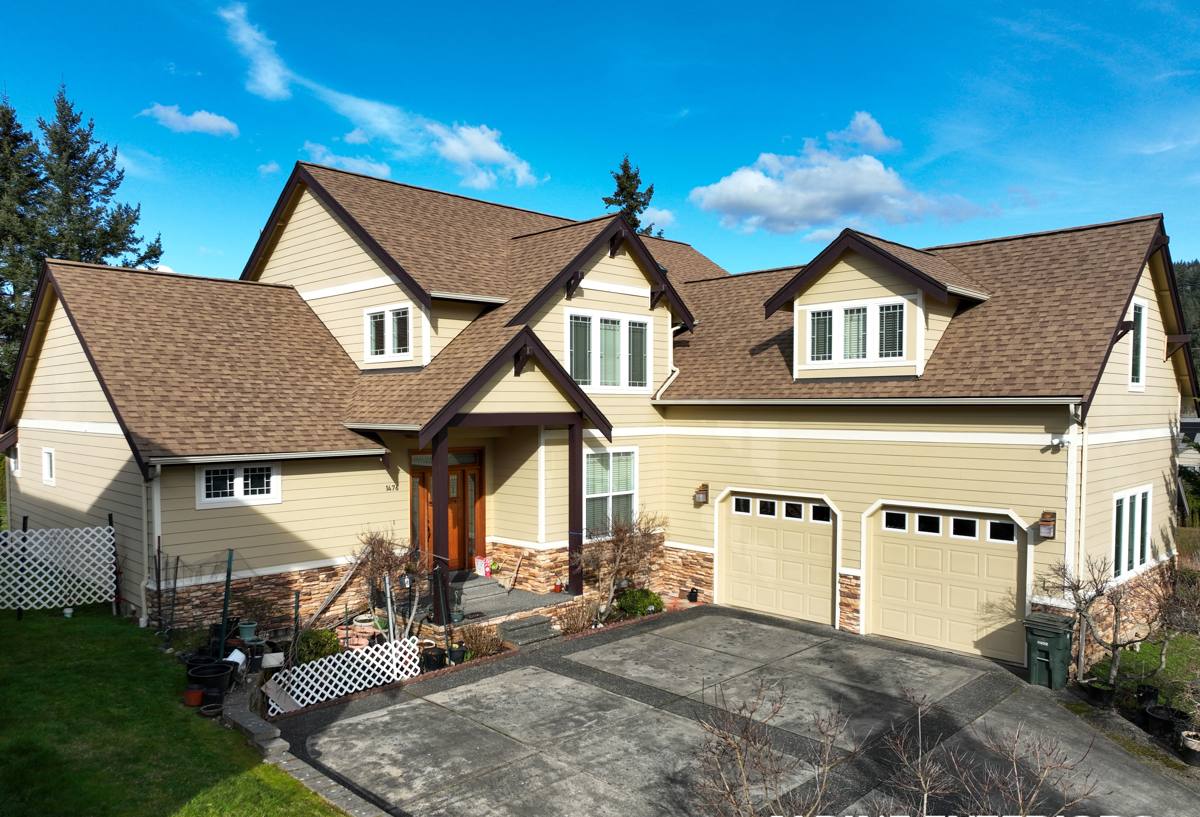
What Bow's Climate Actually Does to a Deck
Salt Air and Corrosion
Proximity to Samish Bay means airborne salt reaches decking and framing even on properties that aren't waterfront. Salt accelerates corrosion on standard fasteners, joist hangers, and hidden fastening clips. Once a fastener starts rusting inside a joist or under a board, it can stain the wood, weaken the connection, and become a maintenance headache that's hard to fix without pulling boards.
Driving Rain and Water Intrusion
Storms coming off the water in this part of Skagit County often bring rain at an angle, not straight down. That matters most at the ledger board — the point where the deck attaches to the house — and at any point where the deck meets siding, a door threshold, or a rail post. Flashing that would be adequate in a drier, calmer climate can fail here if it's not detailed for wind-driven rain.
Moss, Algae, and a Long Damp Season
Bow gets extended stretches of overcast, damp weather, especially on decks with any shade from trees or the house itself. Moss and algae grow on any surface that stays wet and doesn't get sun or airflow to dry it out. Beyond looking bad, a mossy deck surface is a slip hazard, and moss holds moisture against the wood or composite surface longer than it would otherwise sit.
What a Correctly Built Deck in Bow Requires
Fasteners and Hardware
We use stainless steel or heavy hot-dip galvanized fasteners and connectors rated for coastal or high-corrosion exposure, not the standard-grade hardware that's fine further inland. This applies to structural connectors (joist hangers, post bases, ledger bolts) as much as it does to the visible decking screws.
Framing and Ledger Flashing
The ledger connection gets a proper flashing detail — typically a metal flashing that laps over the house's water-resistive barrier and directs water out and away from the band joist, not into it. Where a deck is freestanding instead of ledger-attached, that eliminates one of the more common failure points entirely, which is worth discussing depending on your home's siding and framing.
Drainage and Airflow Underneath
Board spacing, joist orientation, and ground clearance under the deck all affect how quickly the structure dries out after rain. A deck that can't breathe underneath stays damp longer, which feeds both wood rot and moss growth on the surface above.
Surface Material Choice
Material choice matters more here than in a dry-summer climate. Some options handle standing moisture and shaded, damp exposure better than others, and some require more upkeep to stay slip-resistant through the wet months.
Decking Material Comparison for Bow Conditions
| Material | Moisture/Salt Behavior | Moss Resistance | Maintenance |
|---|---|---|---|
| Pressure-treated wood | Good if properly sealed and re-sealed; fasteners must be rated for treated lumber's chemical exposure plus salt air | Needs regular cleaning to stay ahead of moss in shaded spots | Annual inspection, periodic re-staining/sealing |
| Cedar | Naturally rot-resistant, handles damp climates well, but still needs sealing near salt exposure | Moderate — still needs cleaning in shaded areas | Periodic cleaning and oil/sealant refresh |
| Composite decking | Doesn't absorb water or rot; performs well in driving rain and salt air over the long term | Can still grow surface algae/moss if shaded and never cleaned, but doesn't degrade from it | Occasional washing; no sealing or staining needed |
| PVC decking | Fully moisture-resistant; strong choice for salt-air exposure | Same surface-cleaning need as composite | Low — washing only |
There's no single "right" material for every home in Bow — it depends on budget, how shaded the deck site is, and how much upkeep you want to take on. We'll walk through the real trade-offs for your specific site rather than push one product line.
Structure, Code, and Permits
Deck framing in Skagit County follows the prescriptive deck provisions in the adopted residential building code, covering footing depth and size, joist spans, ledger attachment, and guardrail and stair requirements. Most decks over a certain height or size need a permit through Skagit County (or the relevant local jurisdiction if Bow's parcel falls under a different permitting authority), and inspections happen at the footing and framing stages before decking goes down.
Skipping the permit step might save time up front, but it creates real problems later — at resale, with insurance, or if there's ever a structural question. We pull permits and build to the inspected structural requirements as a standard part of the job, not an upsell.
Structural Points Worth Knowing
- Footings need to reach below frost depth and bear on undisturbed or properly compacted soil
- Ledger boards need mechanical fasteners sized and spaced to the code table, plus flashing — not just lag screws driven in without a plan
- Guardrails are required above a specific height difference and have minimum height and baluster-spacing rules
- Stair stringers, rise, and run all have tolerances that get checked at framing inspection
- Post-to-beam and beam-to-joist connections need rated hardware, not just toe-nailing
Our Process for a Bow Deck Project
1. On-Site Assessment
We look at sun exposure, shade patterns, existing drainage, proximity to the water, and how the deck will attach (or not) to the house. This tells us what corrosion protection, flashing detail, and material recommendation actually fit your property.
2. Design and Material Selection
We go over decking material, framing layout, railing style, and stair placement, with honest pros and cons for each given Bow's climate — not just what looks good in a catalog photo.
3. Permitting
We handle the permit application and coordinate the required inspections so the structural work is documented and compliant from footings through framing.
4. Construction
Footings, framing, ledger flashing (if applicable), decking, and railing go in with corrosion-rated hardware throughout. We build in the drainage and airflow details discussed above rather than leaving them out to save time.
5. Final Walkthrough
We walk the finished deck with you, cover basic care — cleaning schedule, what to watch for with moss in shaded corners, and any material-specific maintenance — so you know what upkeep actually looks like going forward.
Simple Maintenance Checklist for a Bow Deck
- Sweep debris and standing leaves off the deck surface regularly, especially in shaded areas prone to moss
- Rinse or scrub visible moss/algae buildup before it gets slick, particularly heading into fall and winter
- Check fastener heads and hardware periodically for early rust or staining
- Re-seal or re-stain wood decking on the manufacturer's or installer's recommended schedule — don't wait until it's visibly gray and dry
- Keep gutters and downspouts near the deck clear so runoff isn't dumping extra water onto or under the structure
- Confirm airflow underneath the deck isn't blocked by stored items, skirting without vents, or overgrown landscaping
Why Local Deck-Building Experience Matters in Bow
A crew that mainly builds decks in drier inland climates will often use standard-grade fasteners, skip the extra ledger flashing detail, or recommend a material without factoring in salt air and moss exposure — not out of carelessness, but because it's not what they deal with day to day. Working regularly in Skagit County's coastal pockets, including Bow, means we've seen what actually happens to decking, hardware, and framing here over several wet seasons, and we build accordingly from the first footing.
If you're planning a new deck or replacing one that's showing rust, rot, or moss problems, we're glad to take a look and put together a straightforward estimate — no pressure, no upsell, just an honest read on what your property needs. The form below gets that conversation started.