 Skagit County
 Composite Decking Built for Big Lake's Conditions
Big Lake sits in a pocket of Skagit County where mature tree cover, lake humidity, and long stretches of overcast, wet weather all combine against a deck. Add in the driving rain that moves through the county most of the fall and winter, plus a moss season that can stretch from October into May, and you've got conditions that punish the wrong decking choice fast. Composite decking, installed correctly, holds up to all of that far better than wood — but "installed correctly" is doing a lot of work in that sentence, and it's where most of the problems we get called out to fix actually start.
This page covers what a composite deck needs to hold up around Big Lake specifically, what a correct installation actually involves, and what our process looks like from first look to final walkthrough.
What Big Lake Properties Actually Need From a Deck
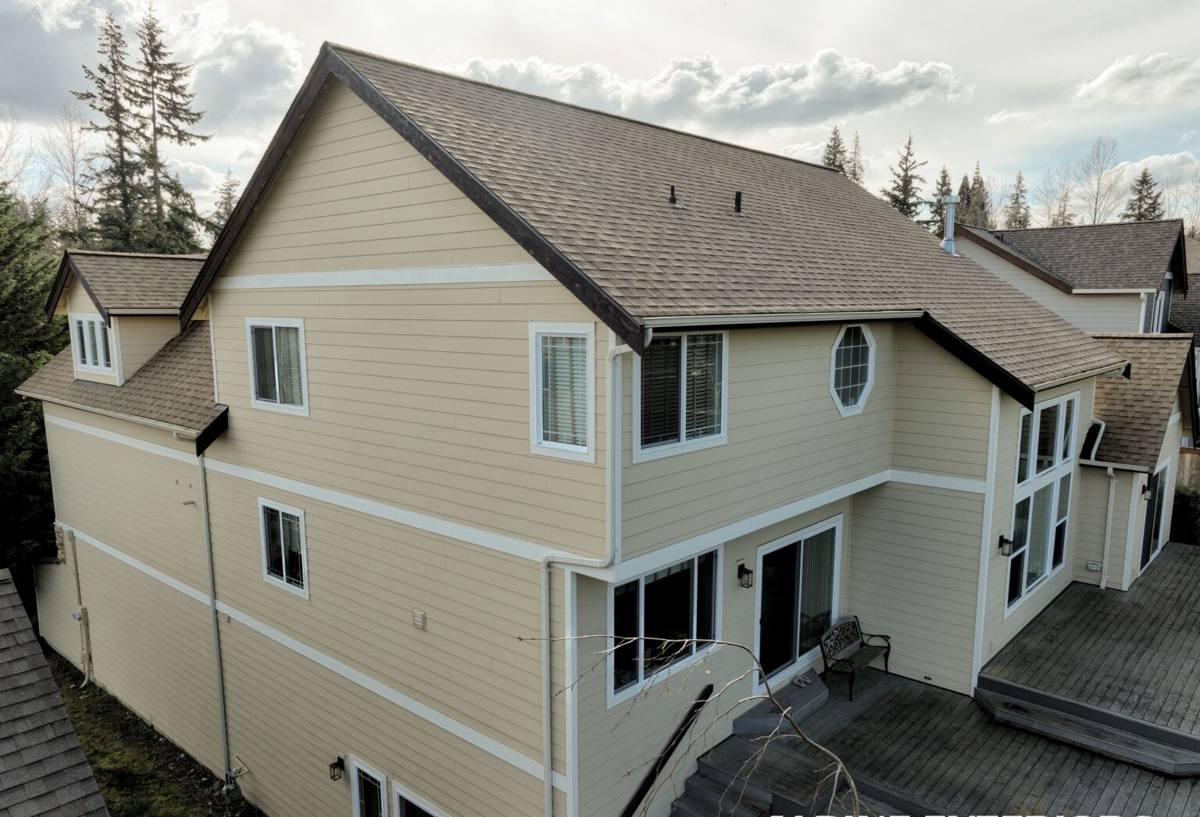
Every deck in Skagit County deals with rain. What makes lake-adjacent lots like Big Lake different is the combination of shade and standing humidity. Homes tucked under fir and cedar canopy get less direct sun to dry a deck surface between rain events, and the air off the lake itself keeps humidity higher at ground level than you'd see on an open, exposed lot. That's a recipe for:
- Moss and algae growth on any surface that stays damp and shaded for more than a day or two
- Slower drying times after storms, which matters more for the framing underneath than the boards on top
- Debris buildup — needles, cones, leaf litter — that traps moisture against the deck surface if it isn't cleared
- Higher humidity load on fasteners, flashing, and ledger connections year-round, not just during storms
None of that rules out composite decking. It actually argues for it, since composite boards don't absorb water and swell, rot, or splinter the way wood does. But it does mean the substructure, drainage, and ventilation decisions underneath the boards matter more here than they would on a dry, sunny lot on the other side of the county.
Salt Air and the Broader Skagit County Climate
Skagit County's proximity to the Salish Sea means salt-laden air is part of the region's exterior-material equation, and it factors into fastener and hardware choices on jobs throughout the county. On a shaded, tree-covered lake lot like Big Lake, that regional moisture load shows up more as sustained dampness and moss pressure than direct salt exposure — which is exactly why we spec hardware and fastening systems that are built to handle the wetter, shadier end of Skagit County's conditions rather than assuming a best-case, dry-lot install.
Composite Decking vs. Other Materials for a Shaded Lake Lot
Homeowners considering a deck around Big Lake usually compare composite against pressure-treated wood and, less often, cedar. Here's how they stack up under the specific conditions this area throws at a deck:
| Material | Moisture & Moss Behavior | Maintenance Burden | Typical Lifespan Here |
|---|---|---|---|
| Composite (capped) | Does not absorb water or swell; moss and algae sit on the surface and rinse off rather than growing into the board | Periodic cleaning; no staining or sealing | 25-30+ years with correct installation |
| Pressure-treated wood | Absorbs moisture in shaded, damp spots; prone to cupping, splintering, and moss taking hold in the grain | Annual cleaning, periodic sealing or staining | 10-15 years before major repair or replacement, often less in heavy shade |
| Cedar | Naturally rot-resistant but still absorbs moisture; graying and softening accelerate in constant shade | Regular sealing to maintain appearance and resist decay | 15-20 years with diligent upkeep |
Composite isn't magic — it still needs a correctly built substructure and it still needs cleaning. But it removes the two failure points that hit wood decks hardest in this specific setting: moisture absorption into the board itself, and moss taking root in the wood grain rather than just sitting on top of it.
What a Correct Composite Deck Installation Involves
Most composite deck problems we're called to fix aren't the boards failing — they're the substructure or details underneath being built like it's a dry-climate job. A correct install around Big Lake includes:
Framing and Ventilation
Composite boards need airflow underneath just as much as wood does, arguably more in a shaded, humid setting where trapped moisture has nowhere to go. That means proper joist spacing for the specific composite product being used (composite generally needs tighter joist spacing than wood — 12" or 16" on center depending on the board), and gaps or venting at the rim to let air move rather than sealing the underside shut.
Ledger Attachment and Flashing
Where the deck ties into the house is the single most common source of hidden rot on any deck in this county, wood or composite. Correct flashing at the ledger board — installed so water sheds away from the house rather than behind the siding — matters more here than almost anywhere else on the build, because a shaded, humid lot doesn't get the sun exposure to dry out a slow leak before it does real damage.
Fastening
Hidden fastener systems keep the deck surface clean and eliminate the screw-head corrosion you sometimes see with face-screwed boards in humid, moisture-heavy settings. Fasteners and brackets should be corrosion-resistant hardware rated for exterior, high-moisture use — not a generic option chosen to save a few dollars on the materials list.
Footings and Ground Contact
Lake-adjacent soil holds moisture longer than well-drained upland lots. Footings need to be set to proper frost depth and sized for the soil conditions on the specific lot, not just poured to a standard spec pulled from a different part of the county.
Our Process for a Big Lake Composite Decking Project
We run every composite deck job the same way, adjusted for what the specific lot needs:
- On-site assessment: we look at sun exposure, tree canopy, drainage patterns, and the existing structure (if it's a rebuild) before quoting anything.
- Design and board selection: we walk through composite options, colors, and railing systems that fit the home and the budget, and explain the real trade-offs between product tiers.
- Permitting: decks over a certain height or size need a permit through the county or local jurisdiction; we handle that paperwork rather than leaving it on you.
- Demo (if applicable): removal of the old deck, with a check of the ledger and framing underneath for hidden rot before anything new goes up.
- Framing and structural work: joists, ledger flashing, footings, and ventilation gaps built to the spacing the composite manufacturer requires.
- Decking and railing installation: boards, fascia, and railing installed with hidden fasteners and manufacturer-specified expansion gaps.
- Final walkthrough: we go over cleaning and care with you before we consider the job done.
Cost Factors for Composite Decking in Big Lake
Composite decking costs more upfront than pressure-treated wood, and the total for any given project depends on a handful of variables specific to the lot and the build:
| Factor | Why It Moves the Price |
|---|---|
| Deck size and shape | Square footage and complexity (multiple levels, angles, cutouts around trees) both add labor and material |
| Board tier | Composite lines range from base capped boards to premium multi-tone, higher-density products |
| Substructure condition | A full rebuild costs more than reusing sound existing framing, but reusing framing that isn't sound is a false savings |
| Site access | Tree-covered, sloped, or tight lake-lot access can add time for material staging and equipment |
| Railing and lighting | Composite or metal railing systems, plus any integrated deck lighting, are priced separately from the decking itself |
| Permitting requirements | Height, proximity to property lines, and local jurisdiction rules can affect scope and timeline |
We give a real number after seeing the lot, not a phone estimate, because the variables above genuinely change the total.
Maintenance: What Composite Still Needs Near the Lake
Composite decking is lower-maintenance than wood, not maintenance-free — especially in a shaded, humid spot like Big Lake. A realistic care routine looks like:
- Sweep debris (needles, leaves, cones) off the surface regularly so it doesn't trap moisture in one spot
- Rinse or wash the deck a couple of times a year to keep moss and algae from getting a foothold, especially in shaded corners
- Keep gutters and downspouts near the deck clear so runoff isn't dumping extra water onto the surface or framing
- Check railing connections and fastener points annually for looseness
- Trim back overhanging branches where practical to get a bit more light and airflow onto the deck surface
None of that is heavy work, but skipping it in a spot with this much shade and moisture is how moss gets a head start.
Why It Matters to Hire a Crew That Already Works This Area
A composite deck built to a generic spec sheet can still fail in a spot like Big Lake if the crew building it hasn't accounted for the shade, the lake humidity, and the moss pressure that comes with both. We work throughout Skagit County and see how differently the same product performs on a sun-exposed lot versus a tree-covered lake lot. That's the difference between a deck that just needs an occasional rinse and one that's fighting moss and slow-drying framing within a couple of seasons. Knowing which joist spacing, ventilation approach, and hardware grade actually holds up on this side of the county isn't something you get from a manufacturer's install guide alone — it comes from building decks here, repeatedly, and seeing what comes back for repair versus what doesn't.
Questions to Ask Before You Sign a Contract
- Will you pull the required permit, and is that included in the quote?
- What joist spacing and ventilation approach will you use for the specific composite product I'm choosing?
- How will the ledger be flashed where the deck meets the house?
- What fastener and hardware grade is included, and is it rated for high-moisture exterior use?
- What does the warranty cover — labor, materials, or both — and for how long?
- Do you have experience building decks on shaded or lake-adjacent lots specifically?
If a contractor can't answer these clearly before you sign, that's worth noting.
If you're weighing composite decking for a home near Big Lake, we're happy to take a look at the lot and give you a straight answer on what it needs. The estimate is free, there's no pressure, and you'll get a real number based on your specific site — just fill out the form below to get started.