 Skagit County
 New Roof Installation in Avon, Washington
Avon sits low in the Skagit Valley, close to the river and not far from saltwater influence off the Sound. That combination puts a roof through a specific kind of stress: damp air that never fully dries out, driving rain that comes in sideways during winter storms, and long stretches of shade and moisture that let moss and moss-friendly algae get a foothold on north-facing slopes. A roof built for a drier climate, or installed without those local conditions in mind, tends to show problems early — premature granule loss, soft decking at the eaves, and moss colonies that lift shingles from underneath. A roof built for Avon specifically holds up a lot longer.
This page covers what a correct new roof installation looks like for homes in this part of Skagit County: the materials that make sense here, the details that actually matter for keeping water out, and what our process looks like from first look to final walkthrough.
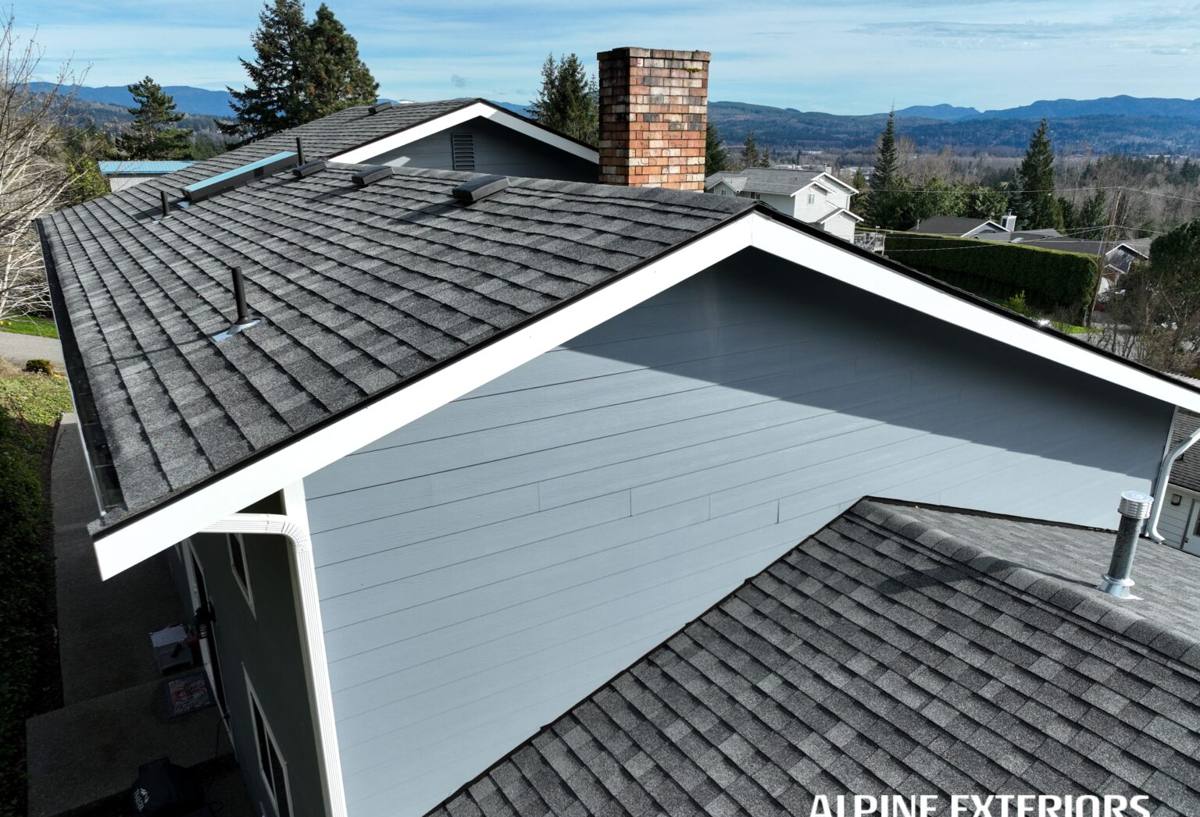
What Avon's Climate Demands From a Roof
Three factors drive almost every roofing decision we make in this area:
Persistent moisture and moss
Skagit County doesn't get extreme rainfall totals compared to some parts of Western Washington, but it gets a lot of low-intensity, long-duration wet weather, plus fog and dew that keep roof surfaces damp well after the rain stops. Shaded slopes and roofs near mature trees stay wet longest, and that's exactly where moss and algae take hold. Left alone, moss holds water against the roofing material, works its way under shingle edges, and accelerates rot in the decking underneath.
Driving, wind-pushed rain
Winter storms in this part of the valley regularly bring rain sideways rather than straight down. That kind of weather doesn't just test the shingles — it tests every flashing point, every valley, every penetration where water can be pushed uphill against gravity for a few seconds at a time. A roof that's fine in a light drizzle can leak in a driving storm if the underlayment and flashing details weren't built for it.
Salt-influenced air
Avon isn't right on the water, but this part of Skagit County still sees salt-tinged air move through, especially with westerly weather. Salt exposure accelerates corrosion on exposed metal — fasteners, flashing, vents, and any exposed hardware. Material choice and fastener quality matter more here than they would somewhere fully inland.
What a Correct New Roof Installation Involves
A new roof is more than shingles nailed to a deck. Every layer underneath does specific work, and skipping or shortcutting any of them is where most premature roof failures start.
Tear-off and deck inspection
We remove the old roofing down to the deck rather than layering over it. That lets us actually see the plywood or plank sheathing underneath, which is the only way to catch soft spots, rot, or delamination — problems that are common on older Skagit Valley homes where moss and moisture have been sitting against the roof for years. Damaged decking gets replaced before anything new goes down; roofing over bad sheathing just hides a problem that gets worse.
Ice and water shield at vulnerable points
Eaves, valleys, and areas around chimneys and skylights get a self-adhering waterproof membrane underneath the main underlayment. These are the spots where wind-driven rain and ice damming (which does happen during the valley's occasional cold snaps) are most likely to force water backward under the roofing.
Synthetic underlayment across the field
Over the rest of the roof, a high-quality synthetic underlayment gives a second line of defense if wind ever drives moisture past the primary roofing material, and it holds up better than old-style felt paper through a wet, multi-day install.
Flashing done right, not reused
Flashing around chimneys, walls, valleys, and vent penetrations is where the vast majority of roof leaks actually originate — not from the field shingles themselves. We install new flashing rather than reusing old, bent, or corroded pieces, and we pay particular attention to step flashing at wall intersections and valley metal, since these carry the heaviest water volume during a driving storm.
Ventilation that matches the home
Proper intake and exhaust ventilation keeps the attic space closer to outdoor temperature and humidity, which reduces condensation on the underside of the deck and helps prevent the kind of trapped moisture that leads to rot and mold. In a climate this damp, ventilation isn't optional — it's part of what makes the roofing warranty meaningful.
Corrosion-resistant fasteners and hardware
Given the salt influence in the air, we use fasteners and exposed metal rated for coastal-adjacent exposure rather than standard-grade hardware that can start showing rust streaks within a few years.
Roofing Material Options for Avon Homes
There isn't one "best" roofing material for every home — it depends on budget, roof pitch, architectural style, and how much long-term maintenance you want to take on. Here's how the common options stack up for this specific climate:
| Material | Moss/Moisture Resistance | Typical Lifespan Here | Maintenance |
|---|---|---|---|
| Architectural asphalt shingle | Good, especially with algae-resistant granules | 25–30 years | Periodic moss treatment on shaded slopes |
| Standing seam metal | Excellent — sheds moss and debris well | 40–50+ years | Low; occasional fastener/seam check |
| 3-tab asphalt shingle | Fair — more prone to moss lift over time | 15–20 years | More frequent moss/algae treatment |
| Cedar shake | Poor without diligent upkeep in a damp climate | Highly variable | High — regular treatment and inspection needed |
For most Avon homes, we steer people toward architectural asphalt shingles with algae-resistant granules as the practical middle ground, or standing seam metal for homeowners who want to minimize moss issues and long-term maintenance and are comfortable with the higher upfront cost. We don't install cedar shake as a standard offering in this climate — it can look great, but keeping it performing well here requires a level of ongoing maintenance most homeowners don't want to sign up for, and we'd rather be upfront about that trade-off than sell a product that needs more babying than most people expect.
Cost Factors for a New Roof in This Area
We don't quote prices without seeing the actual roof, but the main variables that move the number are consistent from job to job:
| Factor | Why It Matters |
|---|---|
| Roof size and pitch | Steeper roofs take longer and require more safety setup, adding labor cost |
| Number of valleys, penetrations, and chimneys | Each one needs custom flashing work — more of them means more labor and material |
| Deck condition | Rotten sheathing found during tear-off adds material and labor to replace |
| Material choice | Asphalt, metal, and specialty materials carry very different price points |
| Access and staging | Trees, tight lots, or limited driveway access can add setup time |
We'll walk your roof, note anything unusual, and give you a written estimate that spells out what's included — not just a single number with no context.
Our Process, Start to Finish
- Free on-site inspection, including attic ventilation and any visible deck or moss issues
- Written estimate covering materials, scope, and timeline
- Scheduling built around Skagit County's weather windows — we don't tear off a roof into an open forecast
- Tear-off and deck inspection, with any rot or damage flagged and priced before we cover it up
- Installation of ice and water shield, underlayment, flashing, roofing material, and ventilation
- Cleanup, including magnetic sweep for nails and debris removal
- Final walkthrough so you can see the finished work and ask questions before we call the job done
Signs Your Avon Home May Need a New Roof
- Granules collecting in gutters or at downspout outlets
- Visible moss growth, especially on north-facing or shaded slopes
- Curling, cupping, or missing shingles
- Daylight visible through the roof deck from inside the attic
- Soft or spongy spots when walking the roof
- Water stains on ceilings or in the attic after a storm
- Roof is approaching or past its material's expected lifespan
Why Local Experience Matters for This Job
A roof installed by a crew that doesn't regularly work in Skagit County can still look fine the day it's finished. The difference shows up two or three winters later, when moss has had time to establish on a slope that wasn't detailed for it, or when a flashing detail that works fine in a drier climate lets water through during a real driving storm. Crews who work Avon and the surrounding valley regularly know which slopes hold moisture longest, which flashing details actually stop wind-driven rain, and which materials are worth the extra cost here versus which ones just add maintenance burden without adding real protection.
That local pattern recognition is hard to shortcut. It comes from having done the tear-offs, seen which decks rotted and why, and adjusted the details accordingly.
Get a Free, No-Pressure Estimate
If your roof is showing its age, growing moss it shouldn't, or you're just planning ahead, we're happy to take a look and give you an honest assessment — no pressure, no obligation. Use the form below to request a free estimate for your Avon home.