 Skagit County
 Why Anacortes Roofs Wear Differently Than Roofs Inland
Anacortes sits out on Fidalgo Island, surrounded by Puget Sound and the Rosario Strait, and that location changes what a roof has to deal with day to day. Salt-laden marine air moves through constantly, driving rain comes in sideways off the water during winter storms, and the tree cover and humidity that define this part of Skagit County keep roof surfaces damp far longer than they would stay dry in a drier climate. None of that is dramatic on its own, but stacked together year after year, it's why asphalt shingle roofs here fail in different spots and at different rates than the same product installed forty miles inland.
The three things we watch for most on Anacortes homes are salt exposure to metal components, wind-driven water finding its way under shingles rather than off of them, and moss and algae taking hold on north-facing and shaded slopes. A roofing job that doesn't specifically account for all three isn't wrong on day one — it just ages faster than it should, and the problems show up as leaks and granule loss five to ten years earlier than the shingle's rated lifespan would suggest.
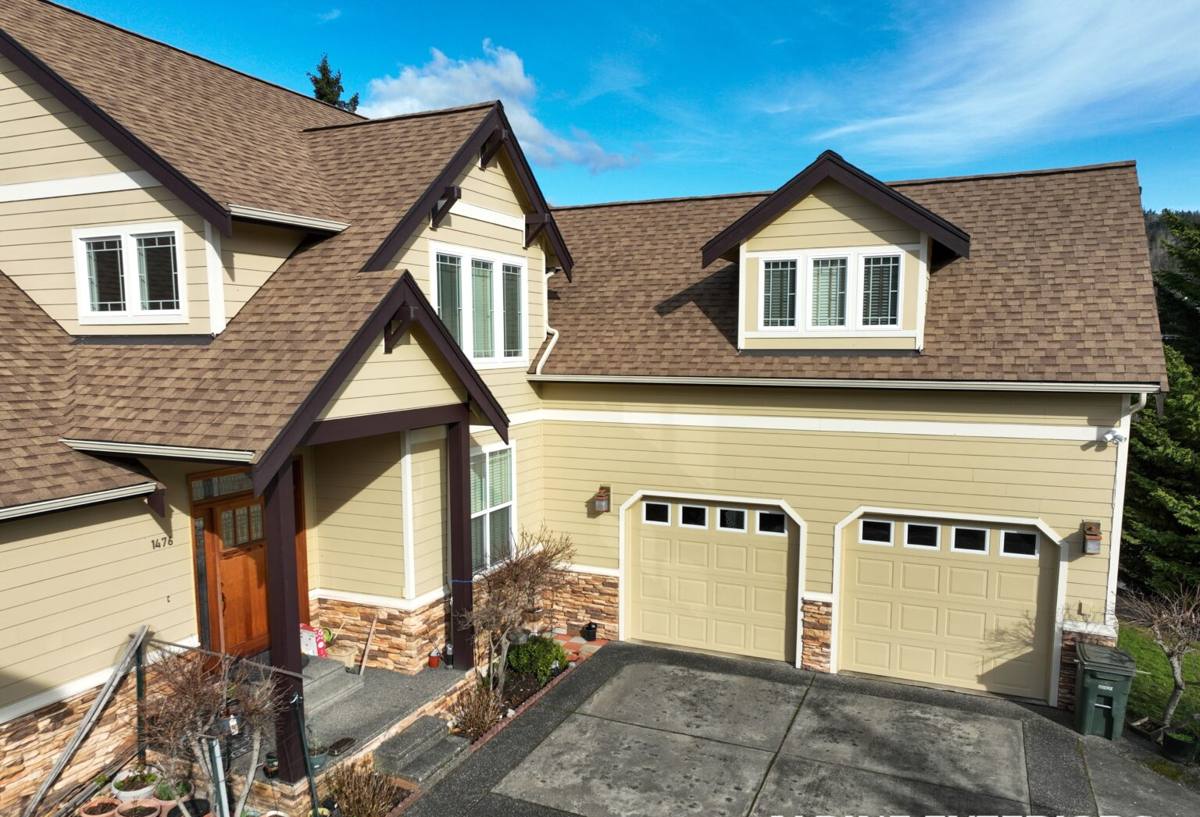
Salt Air and Your Roof's Metal Components
Shingles themselves are fairly indifferent to salt air, but the metal flashing, fasteners, and vents around them are not. Anacortes' proximity to saltwater means faster oxidation on unprotected or low-grade metal — rust streaks at chimney flashing, corroded nail heads that back out over time, and pitted vent caps are things we see on roofs here that would still look fine on a similar-age roof in a non-coastal town.
What we spec differently near the water
- Hot-dip galvanized or stainless fasteners instead of standard electro-galvanized nails
- Aluminum or coated-steel flashing rather than bare galvanized where budget allows
- Corrosion-resistant ridge and soffit vent hardware
- Sealant rated for exterior exposure at every flashing penetration, not just where it's visible
None of this adds meaningful cost to a job, but it's easy to skip if the crew doing the work is used to bidding roofs where salt exposure was never a factor. It's one of the smaller line items that has an outsized effect on how a roof looks and performs at year fifteen.
Driving Rain and Wind-Driven Water
Winter storms off the Sound don't just drop rain straight down — they push it sideways, which means water finds gaps that would never be a problem in a calm rain. Shingles are designed to shed water moving downhill, not water being forced uphill or sideways under a tab, so the details that stop wind-driven water are all in the underlayment, the flashing, and how tightly the shingles themselves are sealed down.
Where wind-driven rain actually gets in
- Valleys — where two roof planes meet and water volume concentrates
- Eaves and rakes — the edges most exposed to horizontal wind
- Around chimneys, skylights, and roof penetrations — anywhere the shingle field is interrupted
- Low-slope sections — porch roofs, dormers, and additions where water has more time to sit
Self-adhering ice-and-water membrane at eaves, valleys, and around every penetration handles the sideways-driven water that standard felt can't. It's not just a cold-climate product — in a wind-and-rain climate like ours it's arguably more useful than it is in places that actually see hard freezes, because it's sealing against wind pressure and standing water, not ice damming.
Moss, Algae, and the Long Wet Season
Skagit County's long stretch of overcast, damp weather from fall through spring gives moss and algae plenty of time to establish on any roof surface that stays shaded or slow to dry — typically the north- and west-facing slopes, and anywhere overhanging branches keep a section of roof out of direct sun. Moss isn't just cosmetic. As it mats and thickens, it holds moisture directly against the shingle surface, lifts tab edges, and works its root structure under the granule layer, which shortens shingle life significantly if it's left unmanaged.
How we build moss resistance into the roof itself
- Algae-resistant (AR) shingles with copper- or zinc-infused granules on shaded or north-facing slopes
- Copper or zinc control strips at the ridge on roofs with heavy moss history, letting rain carry trace metal down the slope
- Proper attic ventilation so the underside of the deck isn't adding its own moisture to the problem
- Clean, sealed flashing so moss and debris can't dam water at transitions
Moss-resistant materials reduce how often the roof needs attention, but they don't eliminate the need for occasional gentle cleaning — no shingle product is completely moss-proof in a climate this wet.
Ventilation: The Part of the Roof You Never See
A correctly vented attic is one of the least visible but most important parts of an asphalt shingle roof, especially in a humid coastal climate. Balanced intake at the soffits and exhaust at the ridge keeps the underside of the roof deck dry and close to outdoor temperature, which does two things: it prevents condensation from forming under the shingles from the inside, and it keeps the shingles themselves from cooking and aging prematurely on the rare hot, sunny stretches we do get.
We see plenty of older Anacortes homes with roof vents that were added or covered over during past remodels without anyone rebalancing the system. A roof that looks fine from the ground can still be under-ventilated in a way that's quietly shortening its life and contributing to the moss and moisture problems described above.
What a Correct Installation Actually Involves
A shingle roof is a system, not a single product, and skipping any layer weakens the whole thing. Here's the sequence we follow on every tear-off and re-roof:
- Full tear-off of existing roofing down to bare decking (not layering over old shingles)
- Deck inspection and repair or replacement of any soft, delaminated, or water-damaged sheathing
- Drip edge installed at eaves and rakes
- Self-adhering ice-and-water membrane at eaves, valleys, and penetrations
- Synthetic underlayment across the remaining field
- New flashing at all chimneys, skylights, walls, and roof-to-wall transitions
- Shingle installation with correct nailing pattern and exposure for the wind zone
- Ridge vent and ridge cap shingles installed last, tying the ventilation system together
- Full site cleanup, including magnetic sweep for stray nails
Every one of those steps matters on its own, but the ones that get shortcut most often on lower bids are the deck repair (because it's labor-intensive and hard to price up front) and the flashing replacement (because reusing old flashing is faster than fabricating and installing new). Both are places where corners cut now turn into leaks in a few years.
Choosing the Right Shingle for a Coastal Anacortes Roof
Asphalt shingles come in a range of grades, and the right choice depends on your roof's exposure, your budget, and how long you plan to stay in the home. Here's how the main categories compare for a coastal Skagit County property:
| Shingle Type | Typical Lifespan | Wind Rating | Best Suited For |
|---|---|---|---|
| 3-tab | 15–20 years | Lower (60–70 mph) | Budget re-roofs, secondary structures |
| Architectural / dimensional | 25–30 years | Higher (110–130 mph) | Most Anacortes homes; best balance of cost and coastal durability |
| Premium / designer | 30+ years | Highest (up to 130+ mph) | Homes prioritizing appearance and maximum longevity |
For most homes here, we point clients toward architectural shingles with an algae-resistant rating. The extra thickness compared to 3-tab shingles gives better wind performance in Sound-driven storms, and the AR granules address the moss and algae issue directly rather than leaving it to gutter cleaning and roof washing alone.
A note on manufacturer warranties
Most major shingle manufacturers require installation by a certified contractor to unlock their strongest warranty tiers, and many exclude or limit coverage for algae staining unless an AR-rated product was used. Read the warranty language before assuming a "lifetime" shingle covers everything — the workmanship warranty from the installer and the material warranty from the manufacturer are two separate things, and both matter.
What Affects the Cost of a Shingle Roof in Anacortes
We don't quote firm numbers without seeing the roof, but these are the factors that move a bid up or down, in rough order of impact:
| Factor | Why It Matters |
|---|---|
| Roof size and pitch | Steeper roofs take longer, need more safety setup, and use more material for the same footprint |
| Number of layers to remove | Tear-off labor scales with how many old layers are coming off |
| Deck condition | Rotted or soft sheathing found during tear-off adds material and labor to replace |
| Roof complexity | Valleys, dormers, skylights, and multiple planes all add flashing and labor time |
| Shingle grade chosen | 3-tab, architectural, and premium products have different material costs |
| Ventilation upgrades | Adding or correcting ridge and soffit vents where the existing system is inadequate |
| Access and site conditions | Tree cover, tight lot lines, and staging space affect setup time and disposal logistics |
Signs Your Anacortes Roof Needs Attention
Most asphalt shingle failures give warning signs well before a leak shows up inside the house. Worth checking for, especially after storm season:
- Moss mats or dark algae streaking, particularly on north- or west-facing slopes
- Granules collecting in gutters or at downspout outlets
- Shingle edges curling, cupping, or lifting
- Rust staining running down from flashing or vent stacks
- Soft or spongy spots when walked (a sign of deck damage underneath)
- Daylight visible through the attic roof deck, especially near ridges or valleys
- Missing or displaced shingles after a windstorm
- Water stains on interior ceilings, particularly near chimneys or skylights
Catching these early is almost always cheaper than waiting for an active leak, since most of them are repairable in isolation before they force a full replacement.
Why a Crew That Already Works Anacortes Roofs Matters
A roofing crew that mostly works drier, inland climates isn't going to automatically get the details above wrong — but they're also not going to think to ask about them unless the homeowner brings it up. A crew that regularly works Skagit County's coastal side already knows which slopes on a given orientation tend to hold moss, which manufacturers' AR lines actually perform well in marine air versus just carrying the label, and how the local building department here handles permitting and inspection for re-roofs.
There's also a practical scheduling piece: island and waterfront access, seasonal weather windows, and material delivery logistics all run a little differently out here than they do on the mainland side of the county. A crew that's used to that rhythm plans around it instead of getting caught off guard by it mid-project.
Maintenance That Actually Extends Roof Life Here
Even a correctly installed, algae-resistant shingle roof benefits from basic upkeep in this climate. We generally recommend:
- Gutter cleaning at least twice a year, more often under fir or cedar cover
- A visual roof check after major windstorms for lifted or missing shingles
- Gentle moss removal (soft wash, never pressure washing directly on shingles) if buildup returns between AR-shingle cycles
- Keeping overhanging branches trimmed back to reduce shade and debris on the roof surface
None of this is intensive work, but skipping it entirely is how a well-installed roof still ends up wearing faster than it should in a wet coastal climate.
If you're dealing with an aging roof, active leaks, or just want an honest read on how many years you've got left, we're happy to take a look. Fill out the form below for a free, no-pressure estimate on your Anacortes home.