 Skagit County
 Anacortes sits on Fidalgo Island, surrounded by saltwater on nearly every side, which means the siding on a house here is doing a different job than siding on a house forty miles inland. Salt-laden air, driving rain off the water, and a moss season that can run most of the year all work on a home's exterior at once. When siding starts to fail in this environment, patch repairs only buy so much time — at some point, full replacement is the honest recommendation, and doing it right matters more here than almost anywhere else in Skagit County.
Why Anacortes Siding Wears Differently
Homes close to the water take on a combination of stresses that inland siding rarely sees. Salt air is corrosive to fasteners and hard on coatings, accelerating fading, chalking, and surface breakdown on siding that isn't engineered for it. Add in the driving rain that comes through with Pacific storms — wind-driven water that gets pushed sideways into wall assemblies rather than just running down them — and siding has to manage moisture from more directions than a simple rain-shedding surface can handle.
Then there's moss. Anacortes' marine climate keeps humidity high and surfaces damp for long stretches, especially on north-facing walls, shaded elevations, and anywhere tree cover blocks the sun. Moss and mildew don't just look bad — they hold moisture against the siding surface, which shortens the life of anything that isn't built to shrug off sustained dampness.
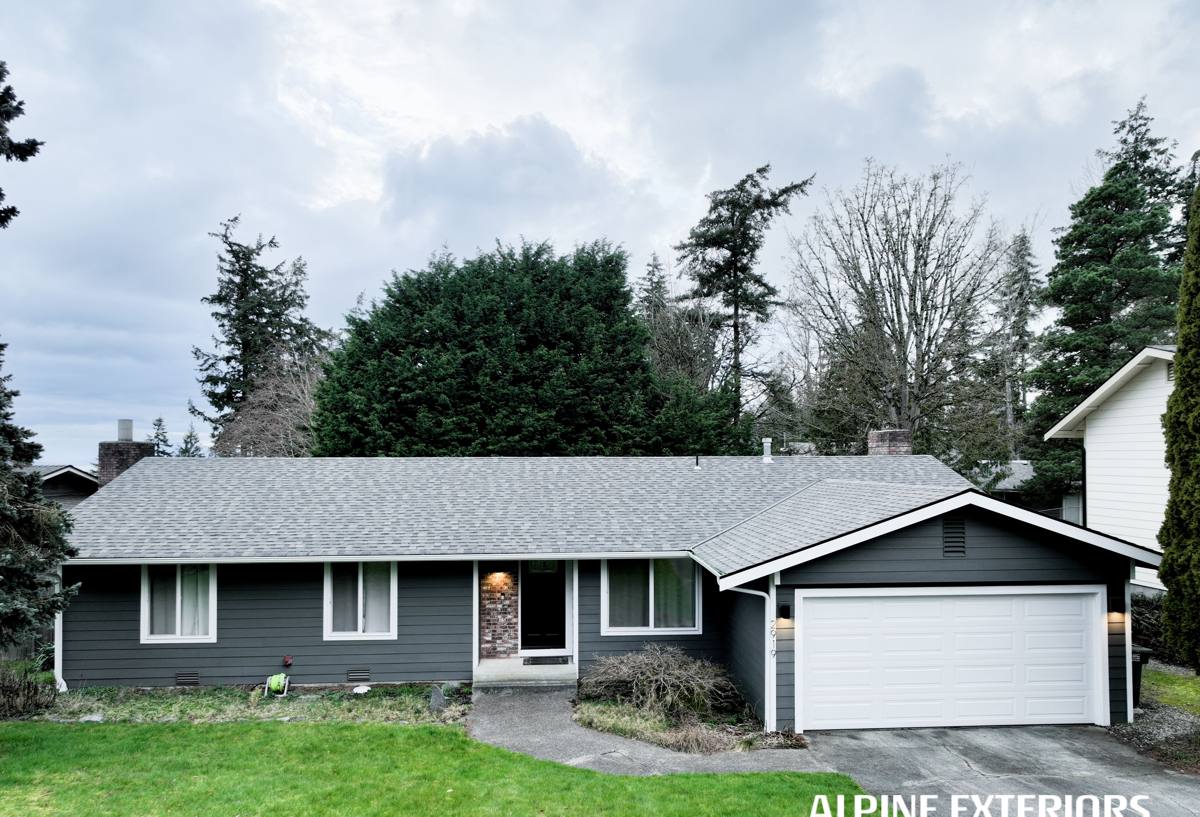
Signs a Home Needs Replacement, Not Repair
Not every siding problem calls for a full tear-off. But there's a point where spot repairs stop making sense and replacement becomes the more honest, more cost-effective answer. Watch for:
- Soft or spongy spots when you press on the siding, which usually means water has already gotten behind it
- Persistent moss or mildew that comes back within a season or two of cleaning
- Visible cracking, warping, or delamination across multiple sections rather than one isolated panel
- Paint that won't hold — repeated peeling or bubbling even after proper prep and quality paint
- Rising energy bills or drafty rooms that point to a failing weather barrier behind the cladding
- Siding that's original to a home built more than 25-30 years ago, especially on the water-facing sides
If you're seeing more than one of these, it's worth having someone look at the wall assembly itself, not just the surface layer.
What a Correct Siding Replacement Actually Involves
Replacing siding is not just swapping old panels for new ones. In a climate like Anacortes', what's behind the siding matters as much as the siding itself:
Tear-off and inspection
Removing the old siding is the first chance to actually see the sheathing and framing underneath. This is where hidden rot, past water damage, or failed flashing gets found — problems that new siding alone won't fix if they're papered over instead of repaired.
Weather-resistive barrier and flashing
A correctly installed water-resistive barrier, with properly lapped and sealed flashing at every window, door, and penetration, is what actually keeps driving rain out of the wall. Siding sheds the bulk of the water; the barrier and flashing behind it handle what gets past that first layer. Skipping or rushing this step is the single most common reason siding jobs fail early in wet coastal climates.
Proper fastening and clearances
Fiber cement siding has specific fastening patterns, nailing zones, and minimum clearances from grade, roof lines, and decks that manufacturers require for the warranty to hold — and for the product to actually perform. Gaps at butt joints, proper caulking at trim, and correct starter strip installation all affect how well the assembly handles wind-driven rain over the long run.
Ventilation
Trapped moisture behind siding is as damaging as water getting in from outside. A rainscreen gap or other ventilation strategy lets any moisture that does get through dry out instead of sitting against the sheathing.
Why We Install Only James Hardie Fiber Cement
We install one siding product on every job, including here in Anacortes: James Hardie fiber cement. It's non-combustible, resists moss and moisture damage far better than wood or vinyl, and Hardie builds climate-engineered HZ product lines specifically for regions like the Pacific Northwest that deal with sustained wet weather and marine exposure. The factory-applied ColorPlus finish is baked on and backed by its own fade and chalk warranty, which matters on a coastline where UV off the water and constant damp weather are hard on lesser coatings.
| Factor | James Hardie Fiber Cement | Vinyl / Wood / Engineered Wood |
|---|---|---|
| Moisture behavior in marine climate | Engineered for sustained wet exposure; resists rot and moss damage | Wood and engineered wood are vulnerable to rot if moisture gets behind them; vinyl depends entirely on the barrier behind it |
| Salt air / UV exposure | ColorPlus factory finish warrantied against fading and chalking | Vinyl can become brittle and fade unevenly; painted wood needs repainting on a shorter cycle |
| Fire resistance | Non-combustible | Vinyl and wood-based products are combustible |
| Warranty structure | Strong transferable warranty on material | Varies widely; often shorter or non-transferable |
| Impact resistance | Resists cracking and denting better than vinyl | Vinyl can crack or shatter, especially in cold |
We don't install LP SmartSide, vinyl, Cemplank, Allura, primed spruce, or cedar — not because those products have no place anywhere, but because after years of exterior work in this specific climate, Hardie is the product we're willing to put our name and workmanship warranty behind.
Our Process, Start to Finish
- Estimate and inspection: We look at your current siding, note problem areas, and give you a straightforward assessment of what's actually going on with your walls.
- Detailed scope and pricing: You get a clear breakdown of what's included — tear-off, barrier and flashing work, materials, trim, and finish — before any work starts.
- Tear-off and sheathing check: Old siding comes off and we inspect what's underneath, flagging anything that needs repair before new siding goes up.
- Weather barrier and flashing installation: This is the step that determines whether the job holds up through Anacortes winters, done to spec at every window, door, and penetration.
- Hardie siding installation: Installed to manufacturer fastening and clearance specs, with proper joint treatment and trim detailing.
- Final walkthrough: We go over the finished job with you before calling it done.
What Drives the Cost of a Siding Replacement
| Cost Factor | Why It Matters |
|---|---|
| Home size and wall complexity | More square footage and more corners, gables, and cutouts mean more labor and material |
| Condition of the sheathing underneath | Hidden rot or water damage found during tear-off adds repair scope before new siding can go up |
| Siding profile and trim details | Lap siding, panel siding, and shingle-style Hardie products carry different material and labor costs; more trim and detail work adds time |
| Color and finish choice | Factory-applied ColorPlus finish versus field-painted siding affects both cost and long-term maintenance |
| Access and site conditions | Multi-story sections, tight lot lines, or landscaping that limits access can add labor time |
We'd rather walk your specific home and give you real numbers than throw out a broad range that doesn't mean much until someone's actually looked at the walls.
Why Hiring a Crew That Already Works Anacortes Matters
Siding installed by someone unfamiliar with marine climates often looks fine for the first year or two before problems specific to salt air and driving rain start showing up — the wrong fastener spacing, missed flashing details, or a barrier system that wasn't detailed for the amount of wind-driven rain this area actually sees. A crew that regularly works Anacortes and the rest of Skagit County has already seen what fails here and what holds up, and builds that experience into every install rather than treating it as a generic siding job.
Local familiarity also means fewer surprises with permitting, working around the weather windows that actually exist here, and understanding which elevations on a given property need extra attention because of sun, wind, or moisture exposure specific to the site.
Caring for New Siding After Installation
Correctly installed Hardie siding is low-maintenance, but "low-maintenance" isn't "no-maintenance" in this climate. A simple annual routine keeps it performing the way it's designed to:
- Rinse siding down once or twice a year to clear salt residue, especially on water-facing walls
- Check and clear gutters and downspouts before the wet season so water isn't overflowing onto siding and trim
- Trim back vegetation and tree cover that keeps shaded sections of siding damp longer than they need to be
- Address any caulking gaps at trim and penetrations promptly rather than letting them sit through a winter
- Watch for early moss growth on shaded elevations and clean it before it establishes
If your siding is showing its age, or you just want an honest read on whether repair or replacement makes sense for your Anacortes home, we're happy to take a look. Reach out below for a free, no-pressure estimate.