 Skagit County
 Storm Damage Roof Repair for Alger Homes
Alger sits in that stretch of Skagit County where the roofs take a beating from three directions at once: wind-driven rain off the water, salt-laden air, and the deep shade that keeps moss growing most of the year. When a storm comes through, homeowners here usually already have a good idea their roof got hit — the question is how bad, and what to do about it before a small problem becomes a ceiling stain or a rot repair. This page covers what storm damage repair actually looks like for a home in the Alger area, what a correct job involves, and why it matters to work with a crew that already understands this specific stretch of the county.
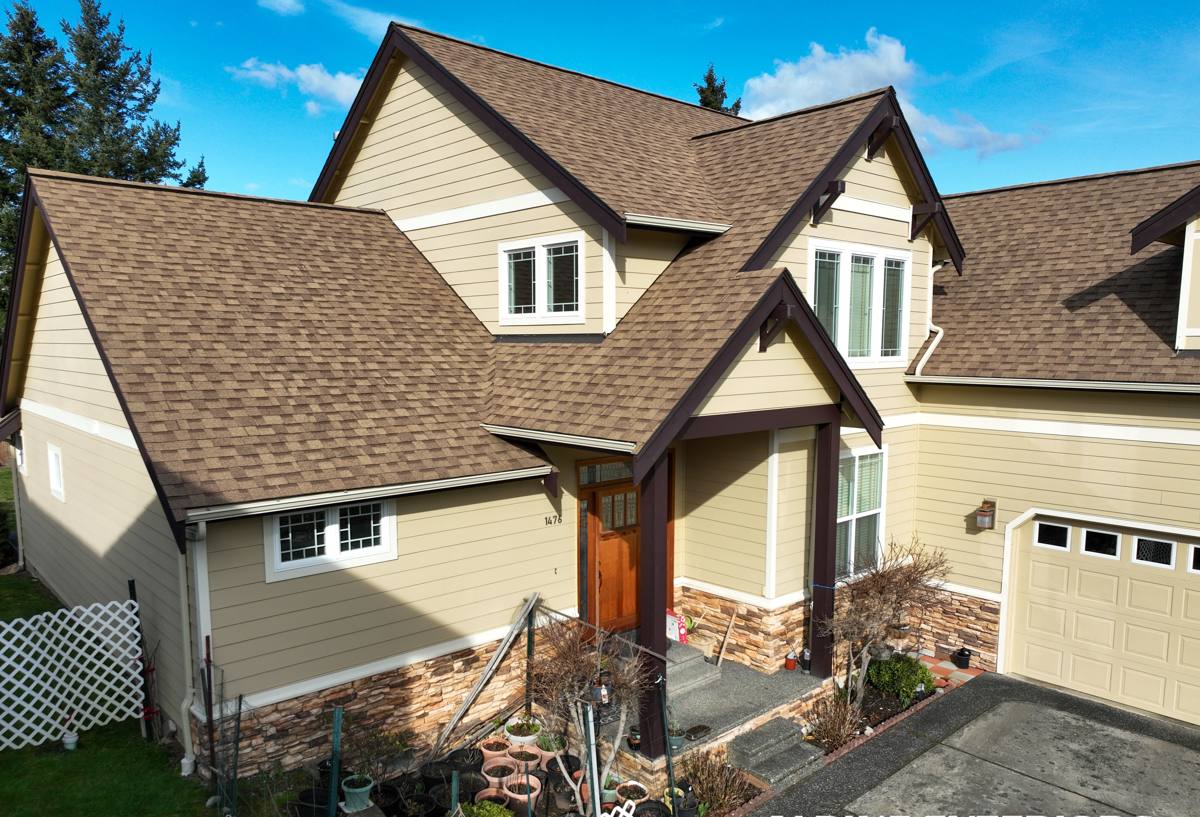
Why Alger's Climate Is Hard on Roofs
Skagit County gets its share of wind and rain every winter, but Alger's position near open water and under heavy tree cover adds a few extra wear factors that inland Skagit homes don't deal with as much.
Salt Air
Homes closer to Samish Bay and the surrounding waterways sit in a salt-air environment even when they're not directly on the shoreline — wind carries fine salt spray inland, and it settles on roofing metal, flashing, and fasteners. Over years, that accelerates corrosion on exposed metal edges, valleys, and any fastener that isn't properly coated or stainless. A roof that would hold up fine forty miles inland can show flashing corrosion here years earlier.
Driving Rain
Storms coming off the water don't just drop rain straight down — they push it sideways. Wind-driven rain finds every weak seam, every lifted shingle tab, every gap in flashing around a chimney or vent pipe. A roof that's watertight in a normal downpour can still leak in a wind-driven storm because the water is being forced uphill under laps and edges instead of running off.
Moss and Shade
Alger has a lot of tree cover, and shaded, damp roof sections are where moss thrives. Moss isn't just cosmetic — it holds moisture against the roofing material, lifts shingle edges as it grows, and works its way under flashing over time. A roof with heavy moss going into a storm is far more likely to leak than a clean one, because the moss has already been prying at the seams for months.
Put those three together — salt corrosion, wind-driven rain, and moss undermining the surface — and you get a roof that ages faster and fails in different spots than a typical dry-climate roof would.
What Counts as Storm Damage
Not all storm damage is obvious from the ground. Some of it announces itself right away; some of it takes weeks to show up as a stain on a ceiling.
- Shingles or shakes that are cracked, curled, torn, or missing entirely
- Flashing around chimneys, skylights, and vent pipes that's bent, lifted, or separated from the roof deck
- Granule loss showing up in gutters or downspouts after a hard rain
- Debris punctures from falling branches, even small ones
- Soft or spongy spots on the roof deck where water has been sitting under damaged shingles
- Gutters pulled loose or overflowing because of blocked or damaged sections
- New or worsening ceiling stains, especially near exterior walls or chimneys, appearing days after a storm
That last point matters most. Because Alger roofs deal with wind-driven rain, water can enter at a high point and travel along the underlayment before it drips through the ceiling somewhere lower and further away. A stain doesn't always sit directly under the damage that caused it, which is one reason a proper roof-level inspection matters more than guessing from inside the house.
What a Correct Storm Damage Repair Involves
A repair that only patches the visible symptom tends to fail again in the next storm. A repair that's done right addresses the roofing material, the layer underneath it, and the flashing details all at once.
Full Inspection First
Before any repair starts, the roof gets walked and the trouble areas get checked from the surface down — shingles or shakes, underlayment condition where it's exposed, flashing at every penetration, and the deck itself in any area that's been wet. Given Alger's moss exposure, this also means checking shaded north- and west-facing slopes specifically, since that's where moisture damage tends to concentrate even away from the immediate storm-damaged section.
Matching Materials, Not Just Patching
Storm repairs should use materials that match the existing roof in type, weight, and where possible, color and age, so the repaired section sheds water the same way the rest of the roof does. A mismatched patch can actually create a new weak point by changing how water flows across that section of roof.
Flashing Gets Real Attention
Given the salt-air corrosion risk in this area, flashing repair or replacement uses corrosion-resistant materials and fasteners rather than whatever's cheapest. Flashing is where most storm leaks actually originate, so it's not an area to shortcut.
Underlayment and Deck Repair When Needed
If water has been sitting under damaged shingles for any length of time, the underlayment and sometimes the deck sheathing underneath need to be checked and repaired or replaced — not just covered back over. Skipping this step is the most common reason a "fixed" leak comes back.
Our Storm Damage Repair Process
- Assessment and photos. We inspect the roof, document the damage, and explain what we find in plain terms — what's storm-related, what's pre-existing wear, and what can wait.
- Written scope and estimate. You get a clear breakdown of what the repair covers before any work starts, no surprise add-ons partway through.
- Temporary protection if needed. If there's an active leak or exposed deck, we get it covered and protected right away, even if the full repair has to wait a day or two for materials or weather.
- Repair work. Damaged materials are removed back to sound decking, matching materials and proper flashing go back in, and everything is sealed correctly for wind-driven rain, not just a light drizzle.
- Final check. We walk the finished repair with you and point out anything else worth watching, like moss buildup elsewhere on the roof that could become the next problem.
Repair vs. Replace: What Drives the Decision
Most storm damage in Alger is repairable, but there are cases where a full section or full roof replacement makes more sense than another round of repairs. The table below outlines the general factors that push the decision one way or the other.
| Factor | Leans Toward Repair | Leans Toward Replacement |
|---|---|---|
| Roof age | Under 15 years, or well-maintained older roof | Near or past expected material lifespan |
| Damage extent | Isolated to one or two sections | Spread across multiple slopes |
| Deck condition | Sound, dry sheathing under damaged area | Soft or rotted decking found during inspection |
| Moss and wear history | Minor moss, roof otherwise clean | Heavy, long-term moss and granule loss roof-wide |
| Flashing condition | Localized corrosion or damage | Widespread corrosion from years of salt exposure |
| Prior repairs | First significant repair on this roof | Repeated patch jobs in different spots over the years |
We won't push a full replacement when a proper repair will genuinely hold up, and we won't recommend patching something that's structurally past the point of a reliable fix. The goal is telling you honestly which category your roof falls into.
Insurance and Storm Damage Claims
Many storm damage repairs in this area do end up going through a homeowner's insurance claim, especially when a fallen branch or a severe wind event caused the damage. A few things help that process go smoothly:
- Document damage with photos as soon as it's safe to do so, before any temporary repairs change what's visible
- Get a written inspection report and estimate that clearly separates storm damage from pre-existing wear
- Keep records of the storm date and any local weather reports, since adjusters often want to confirm timing
- Ask questions before signing anything — you're not obligated to use a contractor recommended by the insurance company
We can provide the documentation and estimate you need for a claim. We're not an insurance adjuster and don't guarantee claim outcomes, but a clear, honest assessment makes the claims process easier on everyone.
Why It Matters to Hire a Crew That Already Works Alger
Roofing crews who mostly work drier, inland areas of Skagit County don't always think about salt-air corrosion on flashing or how shaded, moss-prone slopes behave differently in a storm. A crew that regularly works the Alger area and the water-adjacent parts of the county already accounts for that — in the materials chosen, in how flashing is handled, and in what gets flagged during inspection as a future problem versus something that needs attention now.
That local familiarity also means faster response. After a significant storm, roofing crews get busy fast, and being able to get someone out to look at active damage quickly — especially if water is getting into the house — matters more than almost anything else in that first day or two.
Protecting Your Roof Between Storms
Storm damage repair isn't just about fixing what already broke. A few habits reduce how much damage the next storm can do:
- Have moss cleared and treated on a regular schedule, especially on shaded north- and west-facing slopes
- Keep gutters and downspouts clear so wind-driven rain has somewhere to go instead of backing up under the roof edge
- Trim back branches that overhang the roof, since falling limbs are one of the most common causes of storm damage here
- Have flashing checked periodically for early corrosion, particularly if the home is within view of open water
- Address small leaks or lifted shingles promptly rather than waiting for the next storm to make them worse
If your Alger home has taken storm damage, or you're not sure whether recent weather left a mark on your roof, we're happy to take a look. Reach out for a free, no-pressure estimate using the form below.