 Skagit County
 Why La Conner Siding Takes More Damage Than Homes Inland
La Conner sits close enough to Skagit Bay and the Swinomish Channel that salt-laden air is a daily fact of life, not an occasional nuisance. Add Skagit County's long wet season — driving rain that comes in sideways off the water, months of overcast humidity, and a moss season that can stretch from fall through spring — and you have a set of conditions that will find every weak point in a home's exterior. Siding here doesn't fail because it's old. It fails because water, salt, and organic growth are working on it nearly year-round.
Salt air accelerates corrosion on fasteners, flashing, and any exposed metal trim. Combined with constant moisture cycling — wet, then briefly dry, then wet again — it creates ideal conditions for wood rot, paint failure, and hidden water intrusion behind the siding itself. Moss and algae hold moisture against the surface even longer, which is why homes here often show more visible wear than a similar house thirty miles inland would at the same age.
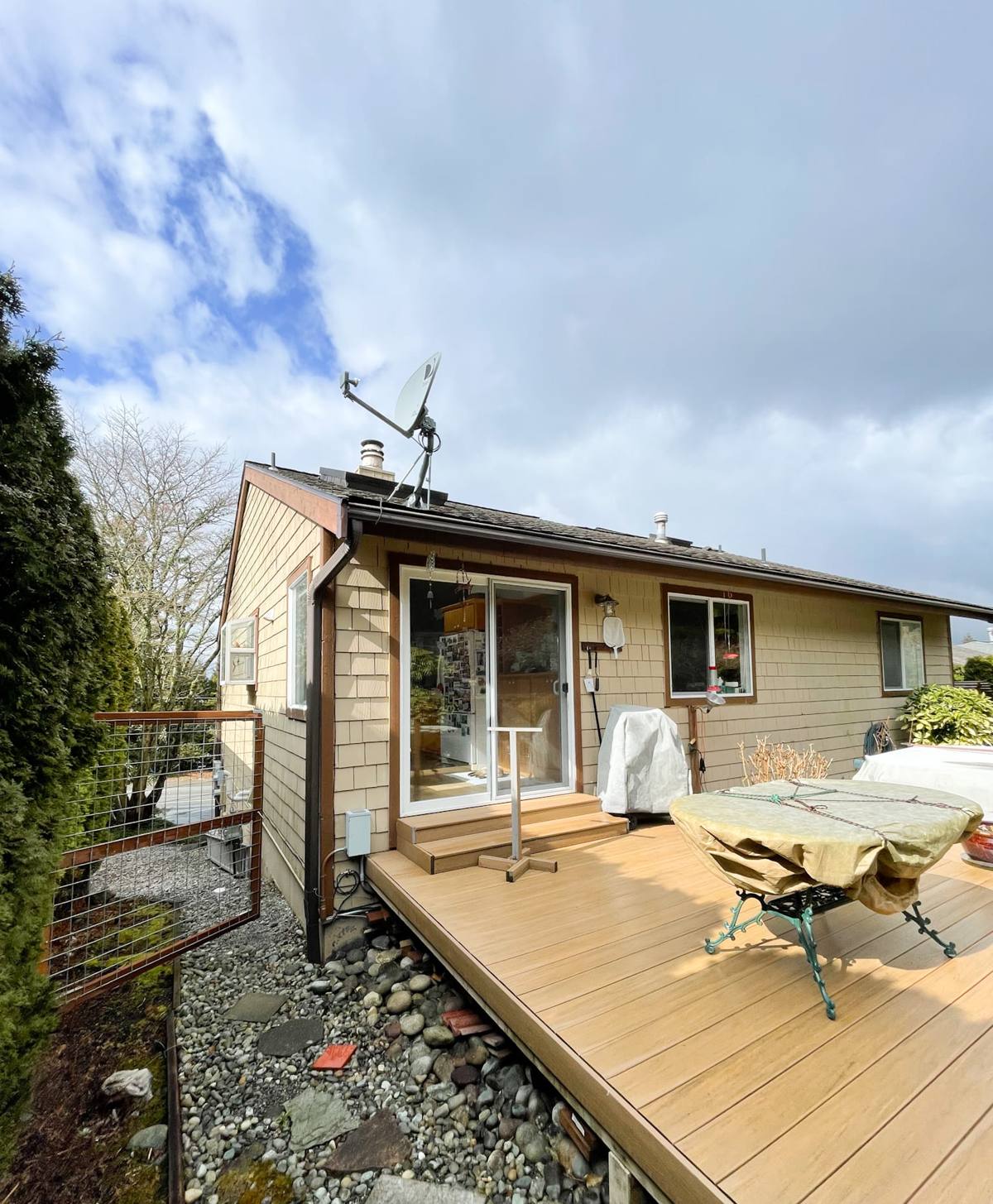
Signs a La Conner Home Needs Siding Repair
Some damage is obvious. Some isn't visible until it's already caused a problem behind the wall. Homeowners in this area should watch for both.
- Soft or spongy spots when you press on the siding, especially near the bottom courses and around windows
- Visible cracking, buckling, or separation at seams and butt joints
- Persistent moss or dark streaking that keeps returning after cleaning
- Paint that's peeling, bubbling, or chalking faster than expected
- Gaps or pulled fasteners around trim, corners, and penetrations (vents, hose bibs, light fixtures)
- Interior clues: musty smell, discolored drywall, or peeling interior paint on an exterior wall
- Rust streaks below fasteners or flashing
Any one of these can be minor on its own. Several together, especially on the weather-facing side of a home, usually mean water has already gotten past the surface and into the wall assembly.
What a Correct Repair Actually Involves
Diagnosis Before Demolition
The most common mistake in siding repair isn't the patch itself — it's skipping the diagnosis. Replacing a cracked panel without finding out why it cracked, or why water got behind it, means the same failure shows up again in a year or two. A proper repair starts by pulling back enough siding to see the water-resistive barrier, the flashing details, and the framing underneath. In a salt-air, high-rainfall environment like this, that step matters more than it would in a drier climate, because damage tends to travel further than the visible symptom suggests.
Fixing the Cause, Not Just the Symptom
Once the cause is identified — failed flashing at a window head, a caulk joint that opened up, a downspout dumping water against a wall, or simply siding installed too close to grade or a deck surface — that issue gets corrected as part of the repair. Replacing siding without fixing the underlying water path is a temporary cosmetic fix, not a repair.
Matching Materials the Right Way
We repair with James Hardie fiber cement, matched to the existing profile, reveal, and ColorPlus finish wherever possible. Fiber cement doesn't rot, and it holds up to the moisture cycling and salt exposure typical of this area far better than wood or engineered wood products. Where an exact factory match isn't available, we plan the repair location and paint approach so the seam is as unobtrusive as possible rather than papering over the problem with whatever material is on hand.
Repair or Replace? How We Help You Decide
Not every problem calls for full replacement, and not every problem should be patched. The right call depends on how much of the siding is affected, how old the existing material is, and what's happening behind it.
| Situation | Usually Points To | Why |
|---|---|---|
| Isolated damage (impact, one bad joint, one section near a downspout) | Targeted repair | The rest of the siding and structure are sound; no reason to replace what's working |
| Rot or water damage in multiple, unrelated areas | Full inspection, likely broader replacement | Scattered failure usually means a systemic issue — original installation, ventilation, or aging material |
| Siding is old wood, LP-type product, or vinyl reaching end of life | Replacement with fiber cement | Repeated patching on a failing material rarely holds up long-term in this climate |
| Cosmetic wear only (fading, moss, minor caulk failure) | Cleaning, caulking, repaint — not full repair | No structural or moisture issue; a repair would be unnecessary cost |
We'll tell you honestly which category your home falls into. If a $600 repair solves the problem, that's what we'll recommend — a full re-side isn't the answer to every siding complaint.
Why Material Choice Matters Even for a Repair
When a home's existing siding is something other than fiber cement — cedar, primed wood, or an engineered wood product — a repair is a good moment to think about what goes back up in that spot. In a climate that combines salt air, near-constant moisture, and heavy moss pressure, materials that rely on paint film and caulk to stay watertight tend to need repair again sooner than fiber cement does. That's the core reason we install James Hardie products exclusively: they're engineered to hold up to exactly this kind of exposure, with a factory finish that isn't depending on field-applied paint to do the water-resistance work.
For an isolated repair, we'll match what's there when that's the practical choice. But if a section is failing repeatedly, or the surrounding siding is clearly nearing the end of its service life, we'll say so plainly rather than quietly patching the same spot again next year.
Our Process for La Conner Siding Repair
- On-site inspection. We look at the damaged area and the surrounding siding, check flashing and drainage paths, and, where warranted, open up a section to check for hidden moisture.
- Honest diagnosis. We explain what caused the damage and what it will take to fix it correctly — not just what's visible.
- Written scope and estimate. You'll know what's being repaired, what materials are used, and what it costs before work starts.
- Correct repair. Damaged material and its cause are addressed together — flashing, sealant, and drainage details corrected, not just the visible panel swapped.
- Finish and cleanup. Paint or color matched as closely as the product allows, site cleaned, and the area walked through with you before we call it done.
Why Hiring a Crew That Already Works in La Conner Matters
Siding repair is local knowledge as much as it's a trade skill. A crew that regularly works waterfront and near-waterfront properties in Skagit County already knows what to check for: how far salt spray typically travels inland here, which flashing details tend to fail first under this area's wind-driven rain, and how aggressive the moss season gets on north-facing walls that don't get much sun. That's the difference between a repair that's cosmetically fine for a season and one that actually holds up through another wet Skagit County winter.
It also means knowing the practical side — permitting norms in the area, working around older homes with non-standard framing, and understanding that a "quick patch" mentality doesn't serve anyone well in a climate this hard on exteriors.
What to Ask Any Contractor Before You Hire
- Will you show me what's causing the damage, not just replace the panel?
- What material will you use, and will it match the existing siding?
- Is the estimate written, itemized, and clear about what's included?
- Do you carry insurance and are you licensed to work in Washington?
- How will you handle flashing and sealant, not just the visible siding?
Keeping Repaired Siding in Good Shape Afterward
Once a repair is done right, a little upkeep goes a long way in this climate. Rinse moss and algae off before it builds up rather than after, keep gutters and downspouts clear so water isn't sheeting down the wall, and trim back vegetation that keeps siding shaded and damp. Fiber cement holds up well with minimal maintenance, but no siding is entirely maintenance-free in a marine climate — a quick seasonal look at caulk joints and flashing catches small issues before they become repairs again.
If you're seeing early warning signs on your La Conner home, or you just want a second opinion on a repair someone else recommended, we're happy to take a look. Reach out for a free, no-pressure estimate using the form below.