 Skagit County
 Why Hamilton Homes Need Siding Built for This Part of Skagit County
Hamilton sits along the Skagit River in the eastern reaches of Skagit County, where the valley narrows and the tree cover thickens as the land climbs toward the Cascade foothills. Homes here don't face the exact same conditions as a house on the open flats near Mount Vernon or a place exposed to open water closer to the Sound. But the underlying challenge is the same one that defines exterior work across this whole county: a long, wet season, moisture that lingers in shaded areas, and a lot of months where siding simply doesn't get much chance to dry out. Any siding installation in this area has to be planned around that reality, not just around how the finished product looks.
That's the lens we use on every Hamilton project. The material, the water management details behind it, and the way it's fastened and finished all get chosen with this specific stretch of Skagit County in mind — not a generic install done the same way it would be anywhere else in the state.
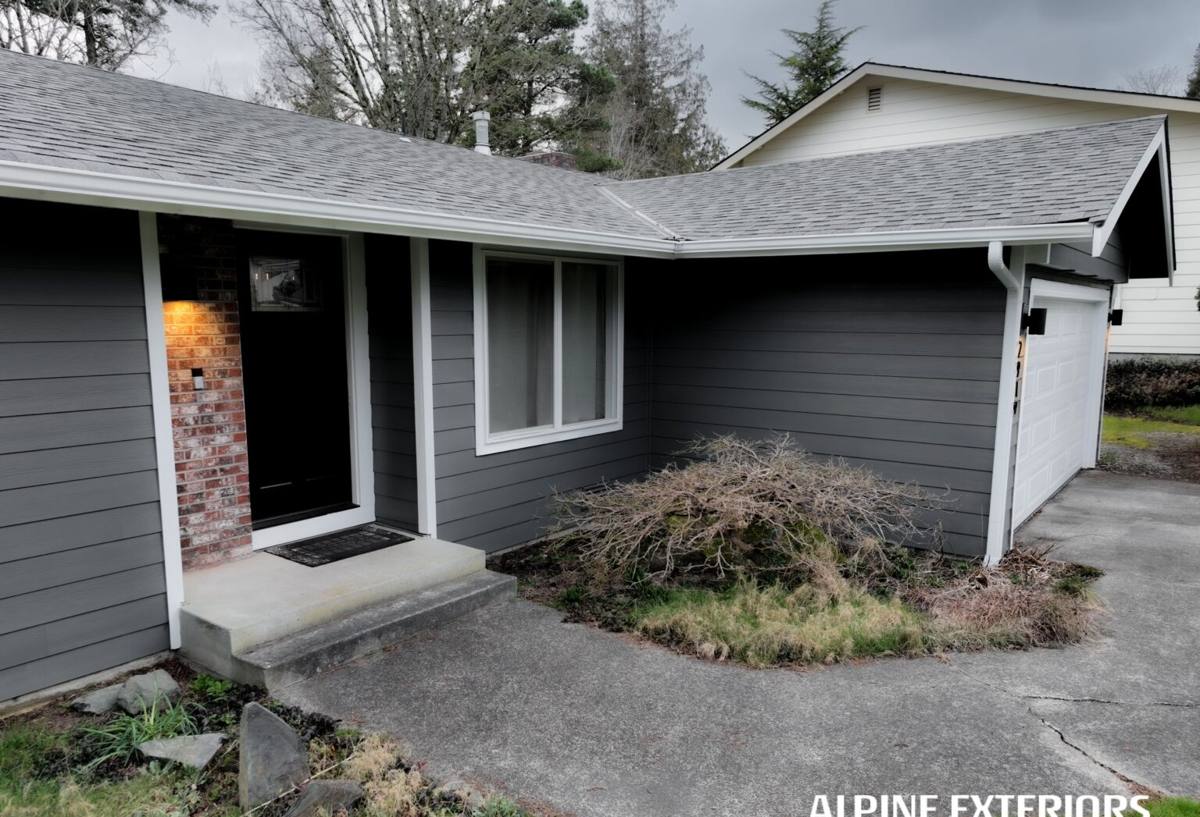
The Climate Factors Hamilton Siding Has to Handle
Rain and Moisture Load
Skagit County gets a long, driving-rain season, and river-valley communities like Hamilton often see it compounded by fog and lingering dampness that settles in low-lying, tree-shaded terrain. Siding that isn't installed with proper drainage behind it — a functioning weather-resistive barrier, correct flashing, and real clearances at the bottom — will hold moisture against the sheathing long after the rain itself has stopped.
Shade, Humidity, and Moss
Heavy tree cover is part of what makes this area attractive, but it also means many homes get long stretches of shade on at least one wall. Shaded siding stays damp longer, and damp siding is exactly what moss, algae, and mildew need to take hold. Once growth establishes itself on a wall, it holds even more moisture against the surface — which is how a moss problem quietly becomes a rot problem over a few seasons if it's never addressed.
Temperature Swings and the River Valley
Inland river valleys like this one see a wider daily temperature swing than areas right on the water — cooler nights, warmer days, and more freeze-thaw cycling through the winter months. Siding materials that expand, contract, or absorb moisture unevenly are more prone to cracking, warping, or joint failure under that kind of repeated stress.
What a Correct Siding Installation Involves
Good siding starts underneath the siding itself. A crew that rushes past the prep work is setting the finished product up to fail early, no matter how good the material is.
Weather-Resistive Barrier and Flashing
A continuous, correctly lapped weather-resistive barrier goes on first, with flashing integrated at every window, door, and roofline intersection so water is directed out and away from the sheathing rather than trapped behind the cladding. This is the part of the job nobody sees once it's finished — and the part that determines whether the wall stays dry for the next several decades.
Fastening and Clearances
Fiber cement siding has to be fastened according to the manufacturer's specifications — correct nail type, spacing, and depth — and held to proper clearance above rooflines, decks, and grade. Skip these details and you create entry points for water even on an otherwise well-chosen material.
Trim, Caulking, and Finish Details
Trim boards, joints, and penetrations get sealed with the right products in the right places — not everywhere, since over-caulking can trap moisture just as badly as leaving a gap unsealed. This is a judgment call that comes from experience with how these details actually perform over time in a wet climate.
Why We Install Only James Hardie Fiber Cement
We made a deliberate decision to install one product system: James Hardie fiber cement. We don't install vinyl, LP SmartSide, Cemplank, Allura, primed spruce, or cedar. That's not a marketing position — it's a standard we hold because of what we've seen these products do, and not do, in wet Pacific Northwest conditions over the long haul.
Fiber cement is non-combustible, dimensionally stable in the swings between wet and dry, and resistant to the kind of moisture absorption that drives rot in wood-based products and softens or embrittles other composites over time. James Hardie's ColorPlus finish is factory-applied and baked on under controlled conditions, which gives it better fade and wear resistance than a field-applied paint job, and it's backed by a substantial, transferable limited warranty. Hardie also engineers regional product lines — its HZ5 and HZ10 systems — specifically for the moisture and climate profile of areas like ours, rather than selling one formulation nationwide. For a valley community with a long wet season and real shade coverage, that engineering matters.
How Our Process Works for Hamilton Projects
- Inspection and assessment: We walk the exterior, check for existing moisture damage, and evaluate how sun exposure, shade, and drainage patterns affect each wall of the house.
- Removal and prep: Old siding comes off, sheathing is inspected and repaired where needed, and any damaged framing is addressed before anything new goes up.
- Water management install: Weather-resistive barrier and flashing go in first, correctly lapped and sealed at every penetration.
- Siding installation: James Hardie panels or lap siding are installed to manufacturer spec — fastener type, spacing, and clearances all held to standard.
- Trim and finish work: Corner boards, trim, and caulking are completed with attention to which joints need sealing and which need to breathe.
- Final walkthrough: We go over the finished work with you before we consider the job done.
Materials and Costs: What Hamilton Homeowners Should Know
Material Comparison
| Factor | Vinyl | Wood / LP SmartSide | James Hardie Fiber Cement |
|---|---|---|---|
| Moisture resistance | Doesn't absorb water, but can trap it behind panels | Absorbs moisture; prone to swelling and rot at cut edges | Engineered for wet climates; resists moisture-driven damage |
| Moss and mildew resistance | Moderate; growth sits on the surface | Lower; organic material feeds growth | High when properly maintained |
| Fire resistance | Can soften or melt under heat | Combustible | Non-combustible |
| Expected lifespan | 20–30 years, fades over time | Variable; shortened by moisture exposure | Decades, with a strong transferable warranty |
| Maintenance | Low, but cracks and warps over time | Higher; needs regular sealing and paint upkeep | Low; factory finish holds color |
What Drives the Cost
Every Hamilton home is different, and the honest answer is that cost depends on several project-specific factors rather than a flat per-square-foot number we could quote sight unseen.
| Cost Factor | Why It Matters |
|---|---|
| Home size and wall area | More square footage means more material and labor hours |
| Tear-off vs. overlay | Full removal of old siding adds labor but allows inspection and repair of sheathing underneath |
| Existing moisture damage | Rotted sheathing or framing found during tear-off needs repair before new siding goes on |
| Trim and architectural detail | More corners, dormers, and trim lines mean more cutting and finish work |
| Site access | Steep lots, tree cover, or limited staging space can affect labor time |
Signs Your Hamilton Home May Need New Siding
- Visible moss, algae, or dark staining that keeps coming back after cleaning
- Soft or spongy spots when you press on the siding surface
- Peeling or bubbling paint, especially on shaded walls
- Warping, cracking, or boards separating at the seams
- A musty smell near exterior walls or noticeably higher indoor humidity
- Siding that's original to a home built more than 20–25 years ago
Why Hire a Crew That Already Works in Hamilton
Working regularly in this part of Skagit County means we already know how a river valley setting behaves — where shade sits longest on a wall, how moss and moisture patterns show up differently than they do closer to the water, and what it actually takes to keep a wall system dry through a full Pacific Northwest winter. That's not something a crew coming from outside the area picks up on the first job. It's also worth choosing a contractor who's familiar with local permitting expectations and who stands behind the work with a real warranty — not just the manufacturer's, but their own installation workmanship as well.
If you're weighing a siding project for a Hamilton home, we're happy to take a look and give you an honest read on what your walls actually need — no pressure, no upsell, just a straight answer. Fill out the form below to request a free estimate.