 Skagit County
 Skyline sits close enough to the water that salt air is a fact of life, and far enough into the tree cover that shade and moisture linger on the roof long after a storm has passed through the rest of Skagit County. Put those two things together with the driving rain that comes off the Sound in the wet months, and you get a roofing environment that's genuinely harder on a roof system than most inland parts of the county. A roof replacement done right here isn't just "new shingles" — it's a full system built to handle salt, standing moisture, and a moss season that can run most of the year on shaded slopes. This page walks through what that actually looks like.
What Skyline's Climate Actually Does to a Roof
Every roofing decision on a Skyline home should start with an honest look at the three things working against it: salt air, wind-driven rain, and moss.
Salt Air
Skyline's location near Anacortes and the Sound means airborne salt reaches roofs here more than it does further inland in the county. Salt exposure accelerates corrosion on exposed metal — fasteners, flashing, vent caps, and gutter hardware — faster than it does in a dry inland climate. A roof system that isn't specified with that in mind can show rust streaking and corroded fasteners well before the shingles themselves are worn out.
Wind-Driven Rain
Storms coming off the Pacific don't just drop rain straight down here — they push it sideways into roof planes, valleys, and wall-roof intersections. That matters because a lot of roof leaks aren't failures of the shingles themselves; they're failures at the details — valleys, chimney flashing, skylight curbs, and sidewall step flashing — where wind-driven water gets pushed uphill against gravity and finds any gap that wasn't sealed correctly.
Moss Season
Shaded, tree-covered lots common around Skyline keep roof surfaces damp for extended stretches, and that's exactly the environment moss and algae need to establish. Moss isn't just a cosmetic problem — as it grows, it lifts shingle edges and holds water against the roofing surface, which shortens the service life of the material underneath it and can telegraph moisture into the deck over time.
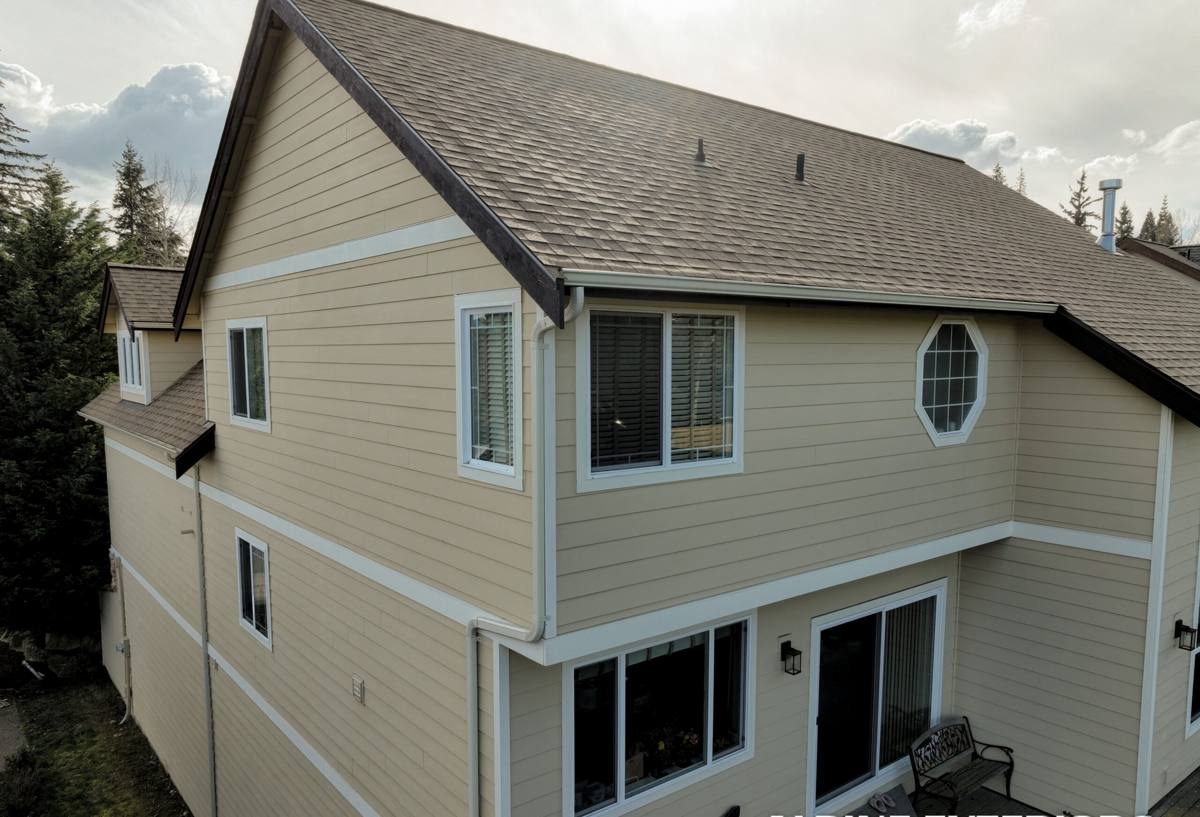
Signs a Roof Has Reached Replacement, Not Repair
Not every roof problem calls for a full tear-off. Isolated flashing leaks, a handful of storm-damaged shingles, or a single failed vent boot are usually repair-scale problems. Replacement becomes the right call when the issues are systemic rather than isolated:
- Granule loss visible across large sections of the roof, not just one slope
- Shingles that are cupping, curling, or cracking broadly rather than in one spot
- Moss coverage heavy enough that it's difficult to tell how much shingle is left underneath it
- Multiple past repairs in different locations, suggesting the material itself is past its service life
- Soft spots, sagging, or visible daylight through the decking from the attic side
- The roof is at or past the age range its material is rated for, and a first serious leak has already shown up
A straight answer on which category your roof falls into is part of a proper inspection, not something that should be guessed at from the ground.
What a Correct Replacement Actually Involves
A roof replacement is a system, and every layer of that system matters more in a climate like this one than it would somewhere drier.
Tear-Off and Deck Inspection
A full tear-off strips the roof down to the decking, which is the only way to actually assess what's underneath. Trapped moisture, soft or delaminated plywood, and old flashing that should've been replaced years ago are things you can't see or price accurately until the old roofing is off. Any compromised decking gets replaced before anything new goes down — installing new roofing over a soft deck just hides the problem instead of fixing it.
Underlayment and Water-Resistive Barrier
In a climate with sustained wind-driven rain, the underlayment layer is doing more work than it would in a drier region. Synthetic underlayment across the full roof, with self-adhering ice-and-water shield membrane at the vulnerable spots — eaves, valleys, around penetrations, and along sidewalls — gives the roof a second line of defense if wind-driven water ever gets past the shingles themselves.
Flashing Details
Flashing is where the majority of real-world leaks originate, and it's also the part of a roof job that's easiest to shortcut. Valleys, chimneys, skylights, and any wall-to-roof intersection need new, correctly lapped flashing — not old flashing reused to save time. This is the detail work that separates a roof that holds up through a genuine wet season from one that doesn't.
Fastener and Hardware Selection
Given the salt air here, fastener and hardware choice isn't a minor spec detail — it's a durability decision. Corrosion-resistant fasteners and flashing metals hold up to salt exposure meaningfully longer than standard hardware, and the difference shows up as rust streaking and failed fasteners years before it otherwise would if the wrong hardware goes in to save a small amount on the job.
Ventilation
Proper intake and exhaust ventilation keeps the attic space at a consistent temperature and moisture level, which protects the new decking and shingles from the underside. In a damp climate, poor ventilation contributes to condensation inside the attic — which can degrade decking and insulation even when the roofing above is performing fine.
Choosing a Roofing Material for This Climate
There isn't one "right" material for every Skyline home — pitch, budget, tree cover, and how long you plan to stay in the house all factor in. Here's how the common options actually compare in this specific climate:
| Material | Moss/Algae Resistance | Wind-Driven Rain Performance | Salt Air Durability | Typical Lifespan |
|---|---|---|---|---|
| Standard asphalt (3-tab) | Low — moss establishes easily without algae-resistant granules | Adequate with correct underlayment | Moderate; fasteners are the weak point | Shorter end of asphalt range |
| Architectural/laminate asphalt | Better with algae-resistant (AR) granule products | Good — thicker profile sheds wind-driven rain well | Moderate; corrosion-resistant fasteners recommended | Longer end of asphalt range |
| Standing-seam metal | Very good — moss struggles to establish on a smooth metal surface | Excellent when properly detailed | Good with correctly specified coated panels and fasteners | Longest of the common options |
| Cedar shake | Poor in this climate without diligent maintenance | Adequate if maintained | Moderate | Shorter, and maintenance-dependent |
For most Skyline homes under heavy tree cover, we lean toward architectural asphalt with algae-resistant granules or standing-seam metal, specifically because both hold up better against sustained moss pressure than standard 3-tab asphalt or untreated cedar. That's a recommendation based on how these materials perform in sustained shade and dampness — not a claim that other materials can't work with the right maintenance commitment.
Cost Factors Worth Understanding Before You Get Quotes
Roof replacement pricing varies by home, and broad totals aren't useful without seeing the specific roof. What does move the number, and is worth asking about when comparing quotes:
| Factor | Why It Affects Cost |
|---|---|
| Roof pitch and complexity | Steeper pitches and more valleys/dormers mean more labor time and more flashing detail work |
| Number of existing layers | Tear-off of multiple old layers takes longer than a single-layer tear-off |
| Decking condition | Soft or rotted plywood found during tear-off needs replacement before new roofing goes down |
| Material choice | Standing-seam metal and premium architectural shingles cost more upfront than standard asphalt |
| Access and site conditions | Steep driveways, tight lot access, or heavy tree cover near the roofline can add setup and safety time |
| Ventilation and flashing upgrades | Bringing an older roof's ventilation or flashing details up to current standards adds scope beyond a like-for-like swap |
Why a Crew That Already Works Skyline Matters
A roofing crew that regularly works Skyline and the surrounding Anacortes area has already seen how salt air, driving rain, and moss actually behave on roofs in this specific setting — not just in general Pacific Northwest terms. That translates into practical judgment calls: which fastener and flashing metals are worth the extra cost given the salt exposure here, which slopes on a shaded lot need extra attention to ventilation, and which valley and sidewall details tend to be the weak points on homes built to this area's older construction standards. It also means familiarity with local permitting expectations and a realistic sense of what a roof in this exact microclimate needs to actually last, rather than a generic recommendation pulled from a drier region.
What to Ask Any Roofer Before You Sign a Contract
- Will the deck be inspected and any damaged sheathing replaced, with pricing agreed on before work starts?
- What underlayment and ice-and-water shield products are being used, and where specifically will the membrane be installed?
- What fastener and flashing metal is specified, and is it appropriate for salt-air exposure?
- Is attic ventilation being assessed and addressed as part of the job, not just the roofing surface?
- What's the manufacturer's warranty on the material, and what's the contractor's own workmanship warranty?
- Is the company licensed and insured to do roofing work in Washington, and can they provide proof?
Maintaining a New Roof in a Moss-Heavy Climate
A correctly installed roof still benefits from basic upkeep in a climate like this one. Keeping gutters clear of needles and debris prevents water from backing up under the eave edge. Periodic moss removal — done carefully, without pressure-washing that can strip granules — keeps shade-prone slopes from building up the kind of moss coverage that shortens shingle life. Trimming back overhanging branches where practical reduces both shade and debris accumulation. None of this replaces a correctly installed system, but it extends the service life you're paying for.
If your Skyline roof is showing its age, or you just want a straight answer on whether you're looking at repair or replacement, we're glad to come take a look. The estimate is free, there's no pressure attached to it, and you'll get a clear explanation of what we find — use the form below to get started.