 Skagit County
 Building New in Hamilton? Get the Windows Right the First Time
When you're building new in Hamilton, the window installation happens once, at the framing stage, and then it's covered by siding, trim, and interior finish for the life of the house. There's no second chance to fix a bad flashing detail without tearing into finished walls. That's a different job than swapping out an old window in an existing wall, and it needs to be treated that way from the first rough opening.
Skagit County's weather doesn't make this easier. Long stretches of driving rain, humid river-valley air, and a moss season that can run most of the year all put pressure on every seam and joint in a building envelope. A new-construction window install that skips a step or rushes the sequencing can leave a house with a leak that doesn't show up for a year or two — by which time it's a drywall and framing repair, not a caulk job.
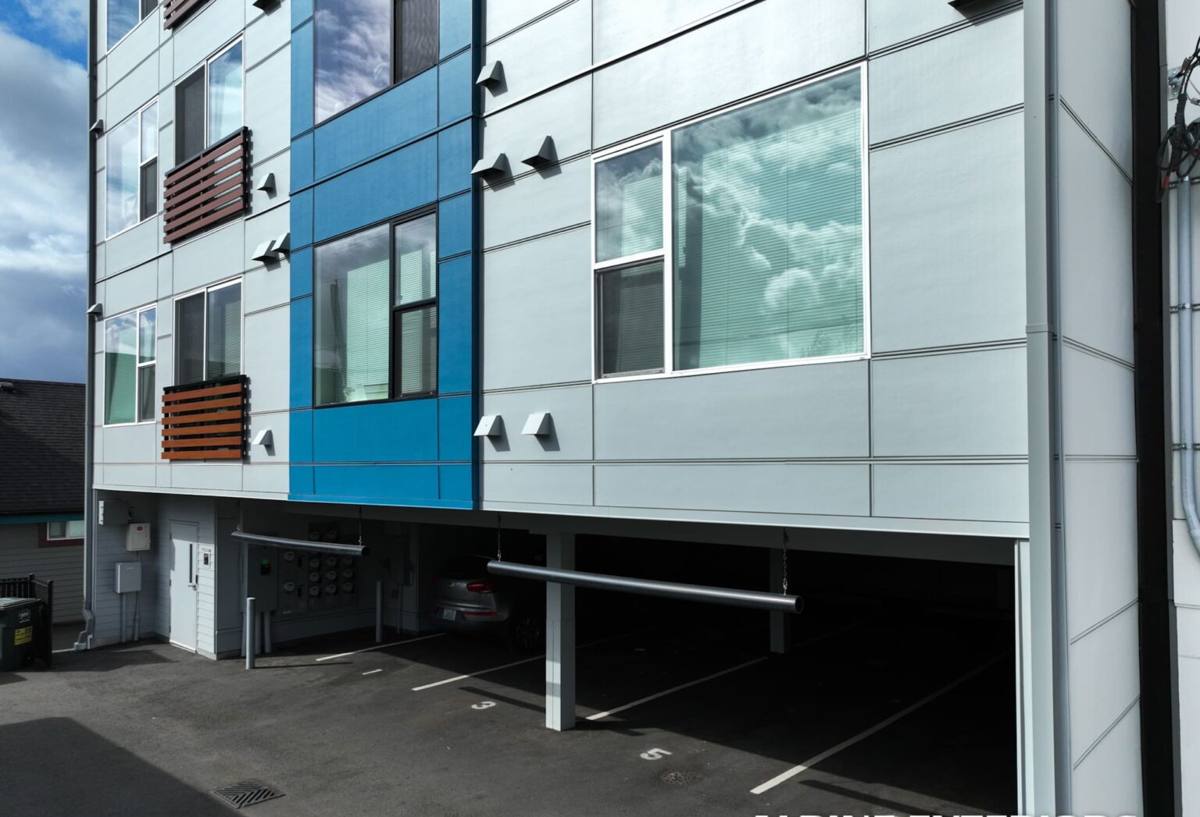
How New-Construction Windows Differ From Replacements
Replacement windows get set into an existing, already-clad wall — the installer works with what's there and seals around the edges. New-construction windows are installed before the exterior finish goes on, which means the window itself becomes part of the wall's water-management system, not just an object sitting inside it.
Nail-fin vs. flush-fin framing
Most new-construction windows in this region use a nailing flange (nail fin) that gets fastened directly to the sheathing, then integrated with the weather-resistive barrier (WRB) and flashing tape in a specific shingle-lap order. Flush-fin or block-frame windows are set differently, often with the flashing built up around the perimeter rather than over a flange. Either approach can perform well — but only if the installer follows the manufacturer's flashing instructions to the letter, because that's what the window's warranty is actually based on.
Why sequencing matters more here than in a dry climate
In a drier region, small sequencing mistakes might never show up as a problem. In Skagit County, with sustained rain events and wind-driven water hitting exterior walls, any gap in the shingle-lap order becomes a path for water to get behind the siding and into the wall assembly. Once that happens, it's usually hidden until rot, staining, or mold shows up — often not near the window itself, but lower on the wall where water eventually finds its way out.
What Skagit County's Climate Demands From a New Window Install
Hamilton sits in the Skagit River valley, and while it's not on the immediate coast, the same marine weather systems that bring salt-laden air and driving rain across the county reach inland here too — just filtered through the foothills. That means humid air, extended damp periods, and the moss and algae growth that comes with shade and moisture sitting on exterior surfaces for months at a time.
- Consistent, wind-driven rain that tests every flashing lap and sealant joint, not just the ones facing prevailing weather
- High ambient humidity that slows drying time if water does get behind the cladding
- Moss and algae growth on sills, trim, and shaded wall sections that can trap moisture against the frame if not detailed correctly
- Temperature swings between summer heat and damp winter cold that stress sealants and expansion joints over time
None of this means new construction here is harder than anywhere else — it means the margin for error in the flashing and sealing details is smaller, and it's worth hiring people who install to that standard as a matter of course, not as an upsell.
The Water-Management Sequence We Follow
A correct new-construction window install is really a sequence of overlapping layers, each one shedding water onto the layer below it — like shingles on a roof. Skip a layer or install it out of order, and the whole system stops working even if every individual piece looks fine.
1. Sill pan flashing first
Before the window ever goes into the opening, the rough sill gets a sloped or flat pan flashing that catches any water that finds its way past the window and directs it back outside the wall, not down into the framing.
2. Housewrap and flashing tape in shingle-lap order
The WRB gets cut and folded into the opening, then the window fin is taped over the housewrap at the sides and bottom, with the top flashing tape lapping over the housewrap above — so water always sheds downward and outward, never into a seam.
3. Head flashing and drip cap
A head flashing or drip cap above the window kicks water away from the top of the frame before it can run down and pond on the head flange — a detail that matters more here given how many consecutive rain days the county sees in fall and winter.
4. Interior and exterior sealant, not one or the other
Both a continuous interior air seal and an exterior weep-compatible sealant are used — sealing only one side either traps moisture inside the wall or leaves no backup if the primary seal ever fails.
Choosing the Right Frame and Glass for This Climate
New construction gives you a real choice of frame material and glazing package, since you're not constrained by an existing opening. For Hamilton and the rest of Skagit County, the deciding factors are usually moisture tolerance, long-term maintenance, and how the window performs against Washington's energy code minimums.
| Frame Material | Moisture Tolerance | Maintenance | Typical Fit for This Climate |
|---|---|---|---|
| Vinyl | Very good — won't rot or corrode | Low — occasional cleaning | Common, cost-effective choice for most new builds |
| Fiberglass | Excellent — dimensionally stable in wet/humid swings | Low | Strong choice where long-term stability matters most |
| Wood-clad (exterior clad, wood interior) | Good if detailing and finish are maintained | Higher — clad exterior needs periodic inspection at joints | Popular for appearance; needs disciplined flashing and upkeep |
| Aluminum | Fair — prone to condensation without thermal breaks | Moderate | Less common for residential in this climate without upgraded thermal breaks |
On glazing, Washington's energy code sets minimum U-factor and solar heat gain requirements for new construction, and most new builds in this region land on double-pane, low-E glass with argon fill as a baseline. In a valley setting like Hamilton, where winter fog and damp air are common, a slightly better U-factor also helps reduce interior condensation on cold mornings — worth discussing with your builder before glass gets ordered.
How We Work With Your Builder and Framing Schedule
New-construction window work isn't a standalone job — it happens inside someone else's construction schedule, usually right after rough framing and before siding starts. Coordination matters as much as the install itself.
- We review the window schedule and rough opening sizes against the plans before delivery, catching mismatches early instead of at the jobsite.
- We confirm WRB and flashing tape products are compatible with the window manufacturer's warranty requirements — mixing incompatible tapes and wraps is a common way warranties get voided without anyone noticing.
- We install sill pans, windows, and flashing in the correct shingle-lap sequence, photographing key steps before they're covered by siding.
- We coordinate directly with your general contractor or framer on timing, so windows go in at the right point in the schedule — not too early, before the wall is ready, and not so late that it holds up siding.
- We do a final walk-through of every opening before siding crews close the wall, since that's the last point where a flashing issue can be corrected without demo.
Checklist: What to Confirm Before Your Windows Go In
- Rough openings match the window schedule, with correct allowance for shimming and flashing thickness
- WRB is installed and lapped correctly before window fins are taped
- Sill pan flashing is in place at every opening, sloped or dammed to direct water outward
- Flashing tape and housewrap are confirmed compatible with the window manufacturer's installation instructions
- Head flashing or drip cap is specified for every opening, not just ones facing prevailing weather
- Frame material and glazing package match the home's energy code target and your maintenance expectations
- Interior air sealing is planned as a separate step from exterior sealant, not skipped in favor of one or the other
Common Mistakes We See on New Builds — and Avoid
Most window problems on new construction don't come from a bad window. They come from installation shortcuts that are invisible once siding goes up: flashing tape applied in the wrong order, housewrap slit and not properly integrated around the fin, missing sill pans, or sealant used as a substitute for proper flashing instead of a backup to it. In a climate with as much sustained rain as Skagit County gets, these shortcuts tend to surface as real problems — just later, and in a place that's harder to fix.
We also see mismatched materials cause issues — a housewrap and flashing tape from different manufacturers that aren't rated as compatible, which can quietly void a window's warranty even though the install looks correct on the surface. Part of our process is checking these compatibility requirements before the first window ever goes into an opening.
Why Hire a Crew That Already Works in Hamilton
Hamilton is a small community, and building here often means working with rural lot access, longer material lead times, and coordination with local building department requirements that differ slightly from the bigger cities in Skagit County. A crew that already works this area knows the local inspection process, has a working relationship with area builders and suppliers, and isn't learning the county's permitting quirks on your project. That local familiarity translates into fewer scheduling surprises and a smoother handoff between framing, window install, and siding.
It also means we've seen how homes in this specific setting — river valley humidity, seasonal moss growth, long rainy stretches — actually perform over time, not just how they're supposed to perform on paper. That's the kind of knowledge that shows up in the small decisions during install: where to add extra flashing lap, which sealants hold up best here, and how to sequence the work so nothing gets rushed ahead of a coming storm.
Get a Free, No-Pressure Estimate
If you're building new in Hamilton and want your windows installed correctly the first time — with the flashing, sequencing, and product choices matched to Skagit County's climate — we're happy to walk through your plans and give you a straightforward estimate. There's no pressure and no obligation, just a clear look at what the job actually involves for your specific build. The form below gets you started.