 Skagit County
 Roof Repair in Mount Vernon: Built for Skagit County's Wet, Mossy Climate
A roof in Mount Vernon doesn't fail the way a roof does in a dry climate. Out here, the damage is slow and cumulative — months of low clouds, driving rain off the Sound, and marine air that never really dries out between storms. Add in the moss season that stretches from fall through spring in most years, and you've got a set of conditions that will find every weak point in a roof system eventually. Roof repair in this part of Skagit County isn't just patching a leak; it's understanding how our specific weather attacks specific materials, and fixing the problem in a way that holds up through the next ten wet seasons, not just the next dry one.
We work on homes throughout Mount Vernon and the surrounding valley, and the repair calls we get tend to follow a pattern tied directly to the climate: moss holding moisture against shingles, flashing that's corroded or come loose after years of wind-driven rain, and valleys or low-slope sections where water sits longer than it should. Understanding that pattern is the first step to a repair that actually lasts.
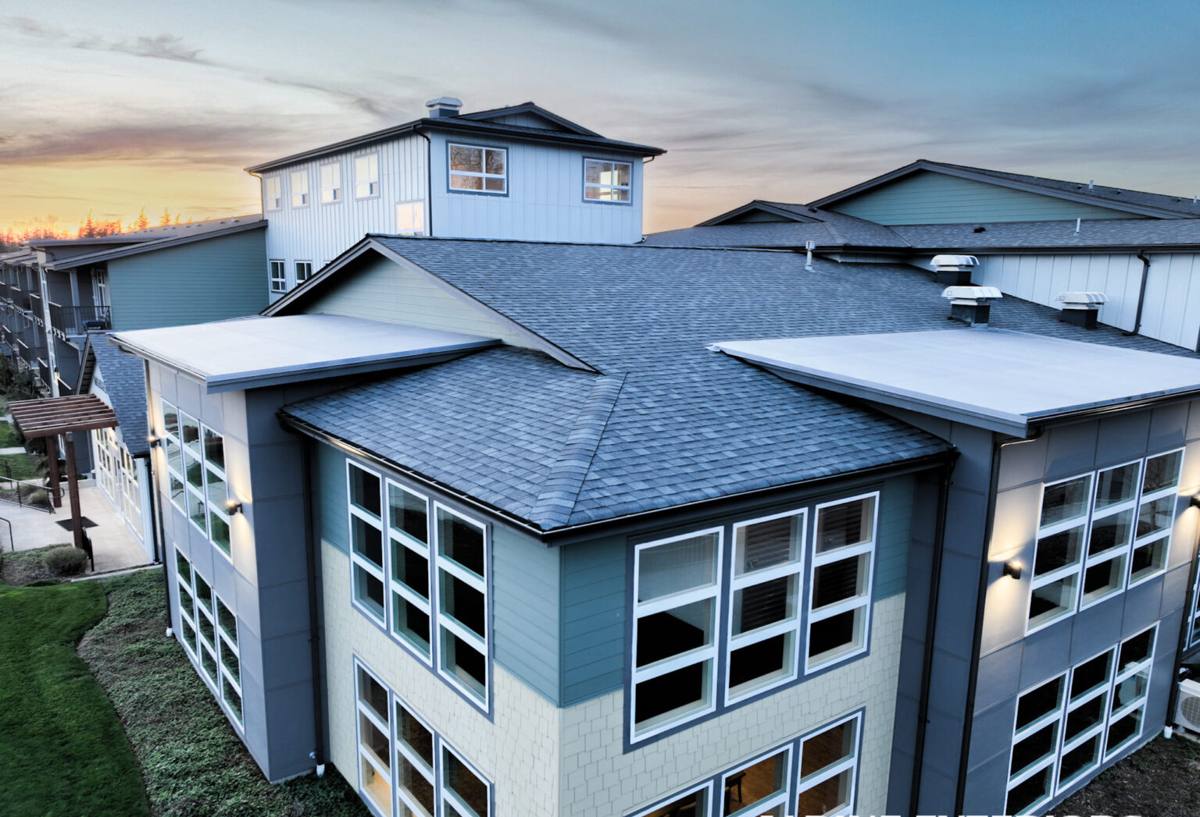
What Skagit County Weather Does to a Roof
Mount Vernon sits in a river valley with the Salish Sea close enough that the air carries real moisture year-round. That marine influence — salt-tinged air, persistent humidity, and rain that comes in sideways during winter storms — is harder on a roof than dry heat or even heavy snow. A few specific effects show up again and again:
Moss and Organic Growth
Moss doesn't just sit on top of shingles — it holds water against the roofing surface, works its way under shingle edges, and lifts tabs as it grows. A roof that goes a few years without moss treatment or removal will show accelerated granule loss and, eventually, soft spots in the decking underneath. This is the single most common cause of repair calls we get in this area.
Driving Rain and Wind-Driven Water
Rain that comes in at an angle finds gaps that vertical rain never would — under flashing laps, around vent boots, and at the edges of skylights and chimneys. Roofs that were fine for years can start leaking once a flashing seal ages past its useful life, and driving rain is usually what exposes it.
Freeze-Thaw and Temperature Swings
Mount Vernon doesn't get extreme cold often, but the valley does see enough freeze-thaw cycling each winter to stress caulking, sealants, and any spot where two materials meet. Small cracks that formed in fall can open further with each freeze, turning a minor issue into an active leak by late winter.
Signs Your Mount Vernon Home Needs Roof Repair
Most roof problems give warning signs well before water actually reaches the inside of the house. Catching them early is what keeps a repair a repair, instead of turning it into a full roof replacement.
- Dark streaks or thick moss growth concentrated on the north-facing or shaded slopes of the roof
- Shingle granules collecting in gutters or at downspout outlets
- Curling, cupping, or lifted shingle edges, especially on older sections of roof
- Visible daylight through the attic roof deck, or damp insulation near the roofline
- Water stains on ceilings or upper walls, particularly after a heavy storm
- Cracked, rusted, or separated flashing around chimneys, skylights, and vent pipes
- Sagging areas in the roofline that weren't there a year or two ago
- A musty smell in the attic, which often shows up before any visible stain does
Any one of these on its own might be minor. Two or three together, especially after a wet winter, usually means it's worth having someone look before the next storm season.
What a Correct Roof Repair Actually Involves
A roof repair that's done right starts with figuring out the actual source of the problem, not just patching where the water showed up inside the house. Water travels — a stain on a bedroom ceiling can trace back to a flashing failure several feet away at the roofline.
Diagnosis Before Anything Else
We start by tracing the leak or damage to its actual origin, checking the roof surface, flashing, penetrations, and decking condition. On a moss-heavy roof, we also assess how much granule loss has occurred and whether the shingles underneath the moss are still structurally sound or need to be part of the repair.
Matching Materials Honestly
When we replace a section of shingles, we do our best to match the existing roofing in profile and color, but we're upfront that some visible difference is often unavoidable — shingles fade with UV and weather exposure over time, and a patch installed today won't be an exact color match to shingles that have been up for eight or ten years. We'll tell you what to expect before the work starts, not after.
Flashing and Moss Get Addressed Together
In this climate, a repair that fixes the leak but leaves moss growth or aging flashing nearby is a repair that will need to be revisited. We treat and clear moss from the repair area, check adjacent flashing for corrosion or lifted seams, and make sure water has a clear path off the roof once we're done — not just at the exact spot that was leaking.
Common Roof Repair Issues We See in Mount Vernon Homes
| Issue | Typical Cause | What the Fix Involves |
|---|---|---|
| Moss-damaged shingles | Years without moss treatment; shaded, north-facing slopes | Moss removal, treatment, and shingle replacement in affected sections |
| Flashing leaks | Aged sealant, corrosion, or wind-driven rain finding gaps | Removal and reinstallation of flashing with proper laps and sealing |
| Soft or spongy decking | Long-term moisture intrusion under damaged shingles | Cutting back to sound decking, replacing plywood or sheathing, then reroofing that section |
| Vent boot cracking | UV exposure and age of rubber or plastic boot collars | Boot replacement, usually a quick, targeted repair |
| Valley leaks | Debris buildup or aging valley metal/underlayment | Clearing debris, inspecting underlayment, replacing valley flashing as needed |
Our Roof Repair Process
We keep the process straightforward because most homeowners just want the leak stopped and a clear understanding of what happened and why.
1. Inspection and Diagnosis
We look at the roof from both the surface and, when accessible, the attic side, to confirm where water is actually entering and how far it has traveled.
2. Honest Assessment and Quote
We explain what we found in plain terms — what needs to be repaired now, what's worth keeping an eye on, and a straightforward price before any work begins. If the damage is more extensive than a simple repair can reasonably address, we'll say so rather than patch over a bigger problem.
3. The Repair Itself
We remove and replace only what needs replacing, address the underlying cause (flashing, moss, decking), and confirm proper water flow off the repaired section before we consider the job finished.
4. Cleanup and Walkthrough
We clear debris, old materials, and moss removed during the repair, then walk the work with you so you know exactly what was done.
Repair vs. Replacement: How We Decide
Not every roof problem calls for a full replacement, and not every leak can be fixed with a small patch. The honest answer depends on the roof's age, how widespread the damage is, and what's happening underneath the surface.
| Factor | Leans Toward Repair | Leans Toward Replacement |
|---|---|---|
| Roof age | Under 15–20 years, depending on material | Nearing or past typical material lifespan |
| Extent of damage | Localized to one section or penetration | Widespread moss damage or granule loss across multiple slopes |
| Decking condition | Sound, dry decking under the damaged area | Soft, rotted, or repeatedly wet decking in multiple spots |
| Repair history | First or occasional repair needed | Recurring leaks in different areas over recent years |
| Cost over time | Repair cost is a small fraction of replacement cost | Cumulative repairs are approaching replacement cost |
We'll walk you through where your roof falls on this table honestly. There's no benefit to us talking a homeowner into a full replacement when a targeted repair will genuinely hold — and no benefit to patching a roof that's going to keep costing you money in leak calls.
Materials and Standards We Hold to on Every Repair
We match repairs to what performs reliably in Skagit County's marine climate rather than whatever is cheapest to install. That means proper underlayment at repair edges, corrosion-resistant flashing materials suited to a salt-influenced, high-moisture environment, and shingle products with a track record in wet, moss-prone conditions. We're also straightforward about maintenance trade-offs — some lower-cost repair materials look fine going in but require more frequent attention later, and we'd rather tell you that upfront than let it surprise you in a few years.
Why a Crew That Already Works in Mount Vernon Matters
Roofing problems in a marine climate like ours don't always look the way a general roofing guide describes. A crew that works regularly in Mount Vernon and the surrounding Skagit County valley has already seen how moss builds up on local roof orientations, which flashing details tend to fail first in this rainfall pattern, and how quickly a small leak can turn into decking damage when the air stays damp for weeks at a time. That local pattern recognition is what separates a repair that's diagnosed correctly the first time from one that gets revisited every rainy season.
It also matters for scheduling and response. Roof leaks in this climate tend to show up — or get worse — right when a storm system moves through, and a crew already working in the area can typically get to a leak faster than one coming from farther out.
Maintenance Tips to Extend Your Roof's Life in This Climate
A few habits go a long way toward keeping repair calls to a minimum in a climate like Skagit County's:
- Have moss treated or removed on a regular schedule rather than waiting until growth is heavy
- Keep gutters and downspouts clear so water isn't backing up under roof edges
- Trim back tree branches that shade roof sections and keep them damp longer than the rest of the roof
- Have flashing around chimneys, skylights, and vents checked every few years, since these are the most common leak points
- Address small leaks as soon as they're noticed — in this climate, delay almost always means more decking damage
If you're dealing with a leak, noticing moss buildup, or just want an honest read on where your roof stands after another Skagit County winter, we're glad to take a look. Reach out for a free, no-pressure estimate using the form below.