 Skagit County
 Window Replacement Built for March Point's Weather, Not Just Its Houses
March Point sits out on the water in Skagit County, which means the homes here take a different kind of beating than houses further inland. You've got salt-laden air coming off the bay, wind-driven rain that finds every gap in a tired window frame, and a moss season that seems to stretch longer every year. A window that performs fine in a sheltered subdivision can fail years early out here if it wasn't chosen and installed with this specific exposure in mind. This page covers what that actually means for a window replacement project on your home — the failure patterns we see, what a correct install looks like, and how we run the job from estimate to cleanup.
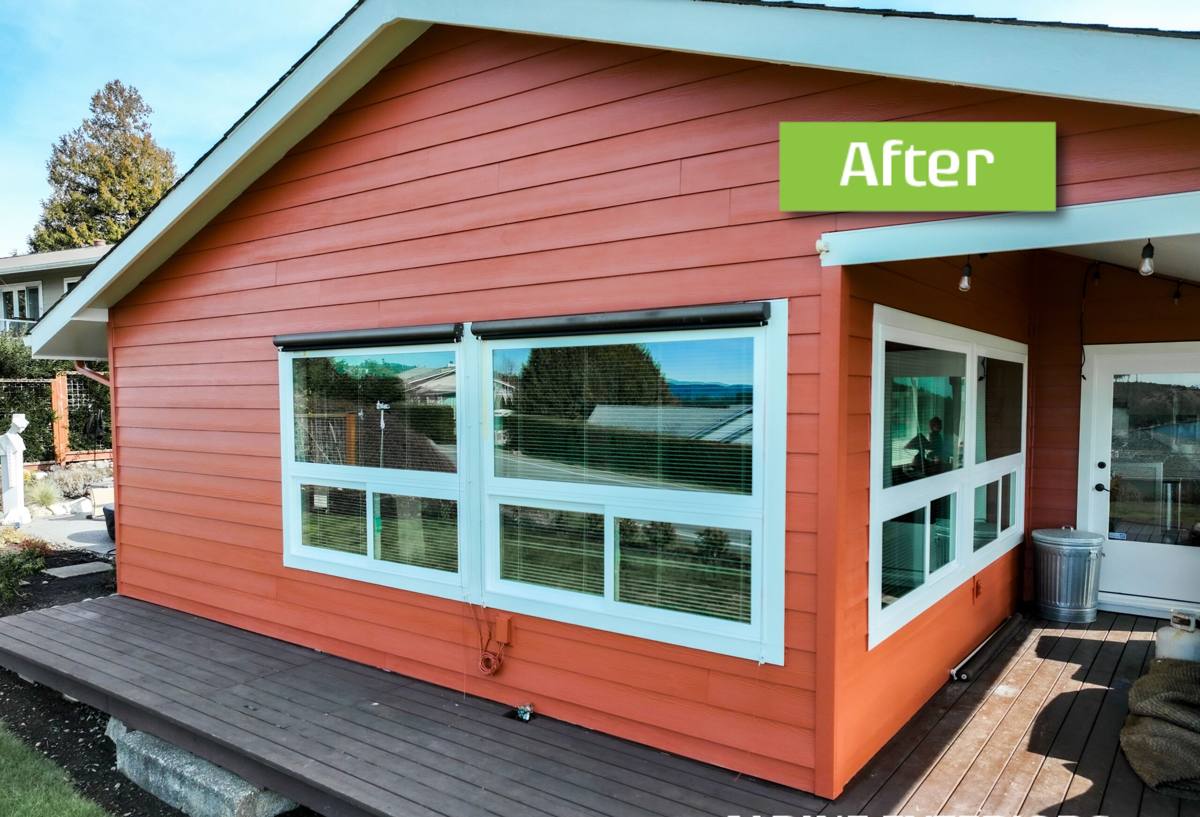
What This Climate Does to Windows Over Time
Every coastal Skagit County property deals with some version of salt, rain, and shade. March Point gets a concentrated dose of all three, and it shows up in predictable ways once a window starts to age.
Salt Air and Metal Components
Salt in the air accelerates corrosion on anything metal — hinges, cranks, balance systems, and especially aluminum frames or cladding that isn't rated for marine-adjacent exposure. Once corrosion starts inside a window's moving hardware, the window stops closing and locking properly, which is often the first sign homeowners notice, well before the glass or frame shows visible damage.
Driving Rain and Flashing Failures
Rain that comes in sideways off open water puts real pressure on a window opening, not just a light drizzle running down the siding. If the flashing, weather barrier, and sill pan weren't installed correctly the first time — or if caulking was used to paper over a gap instead of proper flashing — that wind-driven rain finds its way behind the window trim. You often don't see it until there's staining, soft trim, or a musty smell showing up well after the window itself looks fine from outside.
Moss, Shade, and Prolonged Moisture
A long moss season means more surfaces around your home stay damp longer, including window sills, exterior trim, and the transition points where the window meets the siding. Wood components that sit wet for extended stretches are the ones that rot first. Moss holding moisture against a sill or trim board is a slow, quiet way to lose material that would otherwise last decades.
Signs a March Point Home Needs Window Replacement
Not every issue means full replacement — sometimes reglazing or hardware repair is enough. But these are the signs we take seriously on homes in this area:
- Windows that are hard to open, close, or lock, especially after damp weather
- Visible condensation or fogging between panes of double-glazed glass (a sign the seal has failed)
- Soft, spongy, or discolored trim and sill material around the window frame
- A noticeable draft or cold spot near the window even when it's fully closed
- Paint that keeps peeling or bubbling on the interior sill despite repainting
- Visible rust or pitting on hinges, cranks, or aluminum components
- Moss or algae buildup that keeps returning on the sill or lower frame within weeks of cleaning
- A noticeable jump in heating costs without another clear explanation
Choosing the Right Window for This Location
Frame material matters more here than it would on a home set back from the water. We steer March Point homeowners toward materials that hold up to salt exposure and repeated wet-dry cycling without a lot of upkeep.
Frame Material Trade-Offs
| Frame Material | How It Handles Salt Air & Rain | Maintenance Burden |
|---|---|---|
| Vinyl | Doesn't corrode; seams and welds are the weak point if installation quality is poor | Low — occasional cleaning |
| Fiberglass | Very stable in wet, salty conditions; holds paint and dimension well | Low to moderate |
| Wood-clad | Good insulating properties, but exposed wood or damaged cladding is vulnerable to rot near the water | Higher — needs monitoring at joints and sills |
| Bare aluminum | Prone to pitting and corrosion in salt air over time; not our first recommendation this close to the water | Higher — hardware and finish need attention |
Glass and Hardware
Beyond the frame, we look at the glass package and hardware finish. A quality low-E, dual- or triple-pane unit cuts down on condensation and heat loss, which matters through Skagit County's wet winters. For hardware, corrosion-resistant finishes on hinges and locks are worth the small upgrade cost on a home that's getting salt air daily — it's cheap insurance against the exact failure mode we see most often out here.
What a Correct Installation Actually Involves
The window product itself is only part of the equation. Most premature window failures we're called out to inspect trace back to installation shortcuts, not the window brand. On a March Point home, we treat these steps as non-negotiable.
Flashing and Weather Barrier Integration
The window opening has to be flashed so that any water reaching the framing drains outward, not into the wall cavity. That means proper integration with the house wrap or weather barrier in the correct shingle-lap order — top piece overlapping the one below it, every time — so water is always directed down and out, never trapped.
Sill Pan and Drainage
A sloped sill pan under the window gives any water that does get past the exterior seal somewhere safe to go, instead of pooling against the wood sill. This is one of the most commonly skipped steps in a rushed replacement, and it's exactly the detail that matters most in a driving-rain environment like this one.
Sealant, Fasteners, and Fit
We use exterior-grade sealants rated for the temperature and moisture swings we get here, not general-purpose caulk that hardens and cracks within a couple of seasons. Fasteners and shims are set so the window operates square and true, since a racked frame is what leads to hardware wearing out early and gaps opening up over time.
Our Process, Start to Finish
- On-site assessment: We look at each window opening individually — condition of the existing frame, sill, and surrounding siding — not just take a measurement and quote a number.
- Product recommendation: Based on that assessment and the window's exposure (facing open water, shaded and mossy, etc.), we recommend frame material and glass package suited to that specific opening.
- Written estimate: Clear scope, materials, and price before any work starts — no surprise add-ons mid-project.
- Removal and inspection: Once the old window is out, we check the framing underneath for hidden rot or moisture damage before installing anything new.
- Installation: Proper flashing, sill pan, shimming, and sealing as described above.
- Cleanup and walkthrough: We clear debris and walk the finished openings with you so you know how they operate and what to look for over time.
Cost Factors for Window Replacement in March Point
Every home is different, so we won't quote a fixed number without seeing the openings, but these are the main factors that move the price up or down:
| Factor | Why It Affects Cost |
|---|---|
| Number of openings | More windows means more labor and material, but per-unit pricing typically improves with volume |
| Frame material chosen | Vinyl is generally the most budget-friendly; fiberglass and wood-clad cost more upfront but may suit certain homes better |
| Condition of existing framing | Hidden rot or moisture damage found during removal adds repair work before a new window can go in correctly |
| Window size and configuration | Large picture windows, bays, or custom shapes cost more than standard double-hung or slider sizes |
| Accessibility | Second-story or hard-to-reach openings take more time and equipment than ground-floor windows |
Why Hiring a Crew That Already Works March Point Matters
A window installer who mostly works inland jobs may not think twice about flashing details or hardware finish that a homeowner near open water actually needs. Crews who work Skagit County's waterfront and near-waterfront neighborhoods regularly see how salt air, driving rain, and moss-heavy shade play out on real houses over years, not just at the moment of installation. That experience shows up in the small decisions — which sealant holds up, how tight the sill pan slope needs to be, which hardware finish is worth the upgrade — that separate a window that looks good on install day from one that still operates smoothly five or ten years later.
Caring for New Windows in This Climate
A correctly installed window still benefits from a little seasonal attention out here:
- Rinse salt residue off frames and glass periodically, especially after storms with wind off the water
- Keep sills and tracks clear of moss and debris so water can drain freely
- Check that weep holes on vinyl or fiberglass frames stay clear and unblocked
- Operate hardware a few times each season so hinges, cranks, and locks don't seize up from disuse and moisture
- Have caulking and sealant lines inspected every couple of years, since even good sealant has a service life
Get a Straight Answer for Your Home
If your March Point home has windows that are drafty, hard to operate, fogging between the panes, or showing soft trim, it's worth having someone look at the actual openings rather than guessing from a distance. We'll give you an honest read on whether you need full replacement or just repair, walk you through material options suited to this exact exposure, and put together a clear estimate with no pressure to sign on the spot. The form below gets you started — reach out and we'll set up a time to take a look.