 Skagit County
 Why La Conner Homes Wear Out Siding Faster Than You'd Expect
La Conner sits right where the Swinomish Channel meets Skagit Bay, and that location shapes everything about how siding performs here. Homes close to the water take on salt-laden air that settles into every seam, joint, and fastener on a wall. Add in Skagit County's long stretch of wet, overcast months, and you've got a climate that punishes siding materials that aren't built for sustained moisture exposure. It's not unusual for us to see homes in this area showing paint failure, soft trim, or moss colonization years before a comparable house on the drier east side of the county would show the same wear.
None of this means La Conner is a bad place to own a home — it means the siding has to be chosen and installed with this specific environment in mind. That's the whole point of this page: what a correct siding installation looks like for a La Conner property, not a generic "siding installation" write-up that could apply anywhere in the country.
What This Climate Actually Does to a Wall Assembly
Salt Air and Metal Fasteners
Airborne salt accelerates corrosion on anything metal — nail heads, flashing, trim fasteners. When a fastener corrodes, it can streak the siding, weaken its hold, or create a small entry point for water. This is a bigger deal within a mile or two of the water than it is further inland, and it's one reason fastener choice and flashing detail matter more here than in a lot of the county.
Driving Rain and Wind-Driven Moisture
Storms coming off the Salish Sea don't just drop rain straight down — wind pushes it sideways into wall assemblies, especially on west- and south-facing elevations. Siding that relies on face-sealed caulk joints instead of proper flashing and drainage tends to let moisture in over time, even if it looks fine from the curb.
The Moss and Mildew Season
Skagit County's wet season runs long, and shaded or north-facing walls in La Conner can stay damp for weeks at a stretch. That's an ideal environment for moss, algae, and mildew to take hold on siding surfaces and in trim joints — particularly on products with a porous or unsealed surface.
Why James Hardie Fiber Cement Fits This Environment
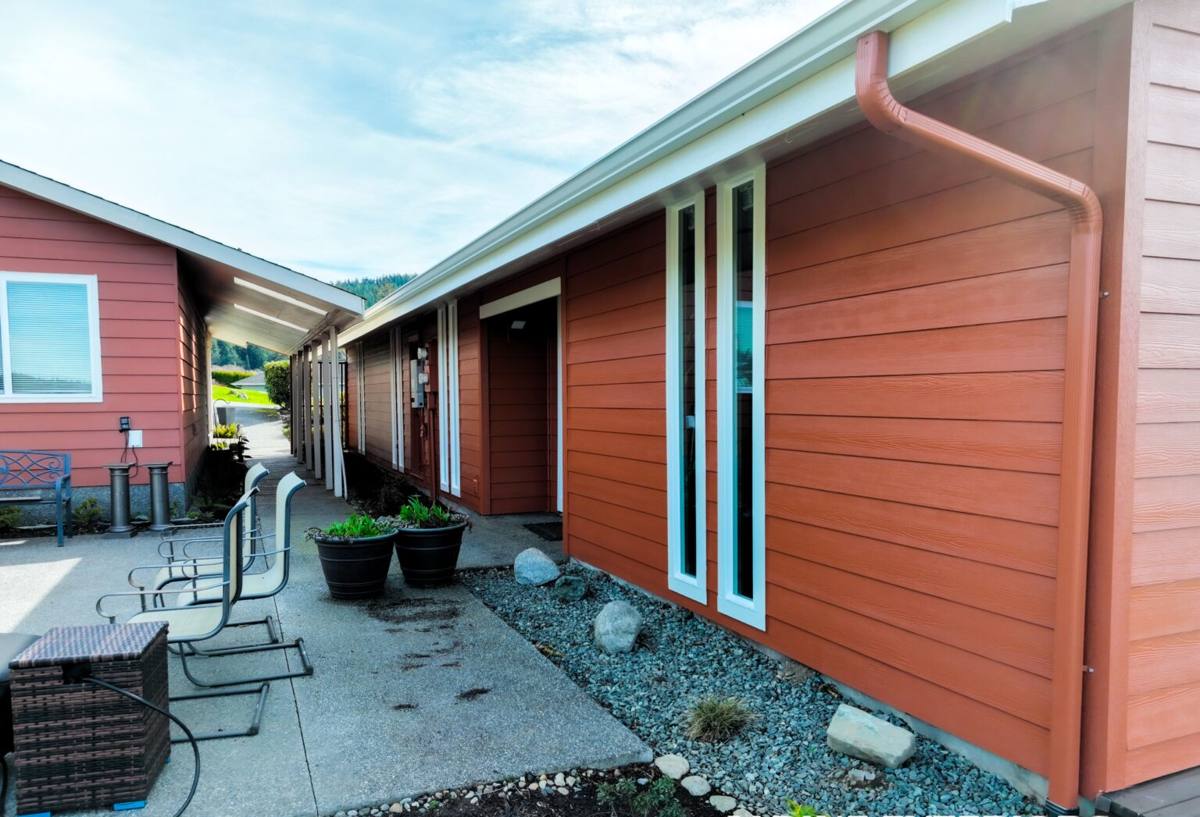
We install James Hardie fiber cement exclusively — it's the only siding system we put on homes, in La Conner or anywhere else we work. That's a deliberate standard, not a default. Fiber cement is non-combustible, dimensionally stable in wet-dry cycling, and doesn't feed mold or rot the way wood-based products can. Hardie's ColorPlus factory finish is baked on under controlled conditions, which gives it better adhesion and UV resistance than a field-applied paint job — and in a climate that's hard on painted surfaces, that difference compounds over the years.
Hardie also engineers its HZ5 product line specifically for climates with sustained moisture and freeze-thaw exposure, which describes the Pacific Northwest well. We're not choosing this product because it's the only option on the market — there are other siding materials, and we could install several of them. We choose Hardie because, installed correctly, it holds up to salt air, driving rain, and moss pressure better than the alternatives, and it carries a strong transferable warranty that backs that performance up.
| Concern in La Conner's Climate | What Correct Hardie Installation Addresses |
|---|---|
| Salt air corrosion | Corrosion-resistant fasteners and properly detailed flashing at penetrations |
| Wind-driven rain | Weather-resistant barrier plus shingled flashing that drains water outward, not caulk relied on as the primary seal |
| Moss and algae on shaded walls | Factory-cured ColorPlus finish that resists surface staining better than field-painted materials |
| Long wet season / humidity | Fiber cement's dimensional stability — it doesn't swell, cup, or rot the way wood-based siding can |
| UV and weathering over decades | Baked-on finish with a strong transferable warranty backing the product |
What a Correct Installation Involves
The siding material is only part of the equation — how it's installed determines whether a home actually gets the protection that material is capable of providing. A poor installation of a great product will fail faster than a careful installation of a mediocre one. For a La Conner home, we pay particular attention to a few things:
Water Management Behind the Siding
Every wall needs a weather-resistant barrier and properly lapped flashing at windows, doors, and any penetration — vents, hose bibs, light fixtures. Water that gets behind the siding needs a path to drain back out, not a trap that holds moisture against the sheathing.
Proper Clearances and Gaps
Hardie's installation specifications call for specific clearances from grade, roof lines, and decks, along with gaps at butt joints to allow for expansion. Skipping these details is one of the most common ways an installation crew undermines an otherwise good product — and it's exactly the kind of shortcut that shows up as problems two or three winters later.
Fastening to Spec
Fastener type, spacing, and placement all affect how the siding holds up to wind load and how well it resists the kind of loosening that corrosion can cause in a salt-air environment. We follow manufacturer fastening schedules rather than treating it as a judgment call.
Caulking and Sealant as a Backup, Not a Primary Defense
Caulk has a service life, and it's not the layer that should be doing the heavy lifting for keeping water out. Correct flashing and lapping should manage water even before sealant is applied — sealant is the second line of defense, not the first.
Our Process for a La Conner Siding Installation
- On-site assessment: We look at the home's exposure — how close to the water, which elevations take the worst weather, existing moisture damage, and current siding condition.
- Tear-off and sheathing inspection: Once the old siding is off, we check the sheathing underneath for rot or soft spots before anything new goes up. This step matters more in a wet climate, where hidden moisture damage is common.
- Weather barrier and flashing installation: This is the layer that actually keeps water out long-term, and it goes in before a single piece of Hardie board is hung.
- Hardie installation to manufacturer spec: Correct clearances, fastening, and joint treatment throughout.
- Trim, caulk, and finish detailing: Final sealant work and trim details, applied as a backup layer to the water management already in place.
- Walkthrough: We go over the finished work with the homeowner before calling the job done.
Why a Crew That Already Works This Area Matters
Siding installation isn't identical from one part of Skagit County to another. A crew that mostly works drier, inland areas can get away with habits that don't hold up on a home a few blocks from the Swinomish Channel. Working in La Conner regularly means knowing which elevations tend to take the worst wind-driven rain, which details matter more because of salt exposure, and where moss pressure is going to be worst on a given lot based on shade and airflow. That local pattern recognition is part of what a correct installation depends on — it's not something you can fully substitute with a generic checklist.
What to Check Before Hiring Anyone for the Job
- Do they install to the manufacturer's written specifications, including clearances and fastening schedules — not just "how we've always done it"?
- Will they inspect and address sheathing condition before installing new siding, not just cover over what's there?
- Do they detail flashing and water management as the primary defense, with caulk as backup rather than the main seal?
- Can they explain why they chose the siding product they're proposing, including its trade-offs?
- Do they carry proper licensing and insurance for exterior work in Washington?
- Will you get a clear, written scope of work rather than a verbal estimate?
What Homeowners Can Do Between Now and a New Install
If a full siding replacement isn't imminent, there are things that help protect a La Conner home in the meantime: keeping gutters clear so water isn't sheeting down walls, trimming back vegetation that keeps walls shaded and damp, and having any visible caulk failures or soft trim looked at before they become bigger moisture problems. None of this replaces a proper installation when the siding has reached the end of its service life, but it buys time and limits damage.
Get a Straight Answer for Your Home
Every home on the water handles weather a little differently depending on orientation, shade, and exposure. If you're noticing paint failure, moss buildup, soft spots, or just want an honest read on where your siding stands, we're happy to take a look. Reach out for a free, no-pressure estimate — we'll walk the exterior with you and tell you straight what we see, using the form below.