 Skagit County
 Building Decks for La Conner's Waterfront Climate
La Conner sits right on the Swinomish Channel, which means homes here deal with a version of Skagit County weather that's a notch tougher than towns further inland. Salt-laden air off the water, near-constant winter rain, and a moss season that can run from fall through spring all put extra stress on an outdoor structure. A deck built to a generic spec sheet, without accounting for that combination, tends to show its age fast — loose fasteners, soft spots, slick green film on the boards, and rail posts that start to wobble within a few years.
We build and repair decks throughout Skagit County, and La Conner's mix of coastal exposure and heavy shade from mature trees on some lots makes it its own case. This page walks through what actually matters for a deck built to hold up here, not just look good on install day.
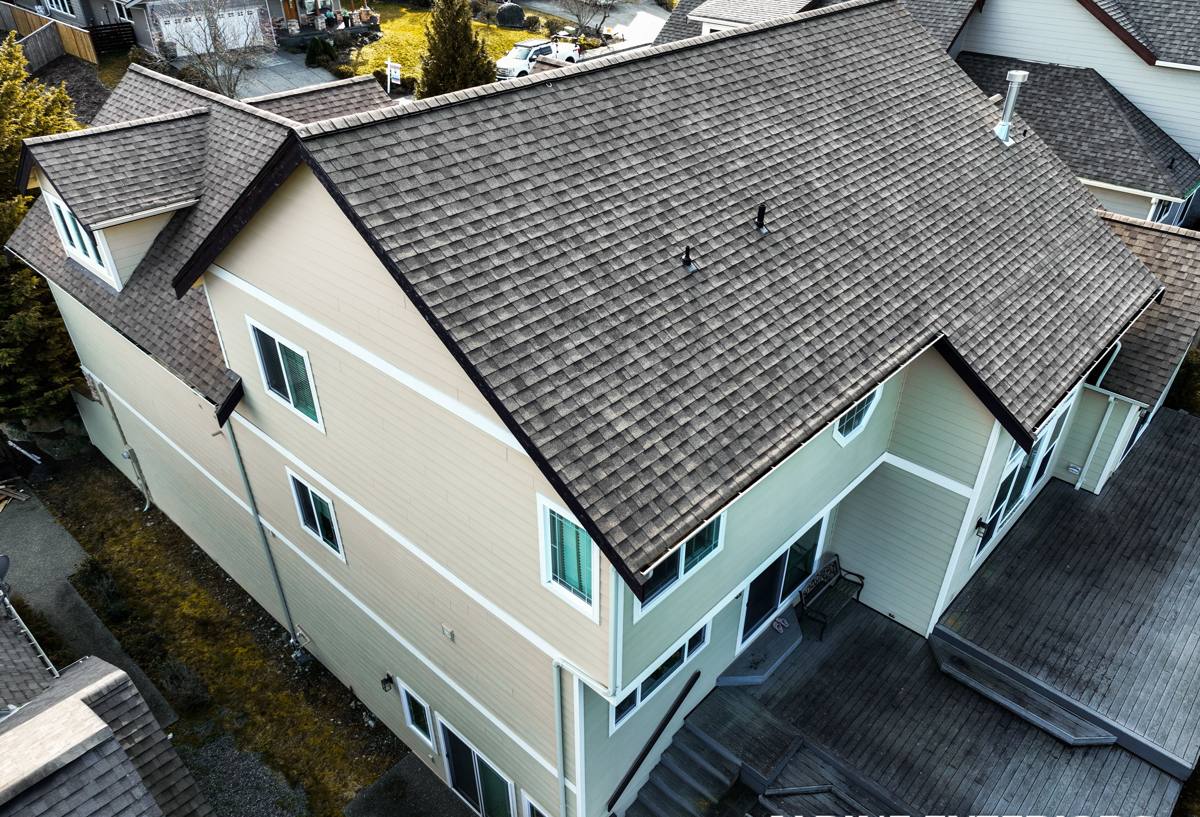
What Salt Air, Rain, and Moss Actually Do to a Deck
Salt Air
Airborne salt accelerates corrosion on anything metal — screws, joist hangers, post bases, railing hardware. Standard zinc-coated fasteners can start rusting within a couple seasons this close to the water. Once a fastener corrodes, it loses holding strength long before it looks obviously bad, which is how a deck can seem fine right up until a board lifts or a rail feels loose underfoot.
Driving Rain
Skagit County gets sustained, wind-driven rain, not just the occasional shower. Water finds its way into any gap in flashing, any exposed end-grain cut, and any spot where a ledger board wasn't properly sealed against the house. Over time that moisture works into framing lumber that was never meant to stay wet, and rot sets in from the inside where you can't see it until a board flexes or a post feels spongy.
Moss and Algae
Shaded, damp surfaces in this climate grow moss and algae readily, especially on north-facing decks or ones tucked under trees. Beyond looking bad, a mossy deck surface is a slip hazard and holds moisture against the wood far longer than a clean, dry surface would — which speeds up rot and finish failure underneath it.
What a Correctly Built Deck Needs Here
- Corrosion-resistant fasteners and hardware rated for coastal/marine exposure, not standard exterior-grade
- Properly flashed ledger board connection where the deck meets the house, so water can't track behind it
- Footings and post bases set to keep structural wood off the ground and away from standing moisture
- Decking material and gap spacing chosen to shed water and resist moss growth rather than trap it
- Airflow underneath the deck so the framing can dry out between rain events instead of staying damp
- A railing system built with the same corrosion-resistant hardware, since rail posts take direct weather exposure on all sides
Skip any one of these and the deck will still look fine at handoff — the problems show up in year two or three, which is exactly when they're more expensive to fix than they would have been to build correctly the first time.
Choosing Decking Material for a La Conner Property
There's no single right answer here — it depends on your budget, how much upkeep you want to do, and how exposed your lot is to salt air and shade. Here's how the common options compare for this specific climate:
| Material | Salt Air Behavior | Moss/Algae Resistance | Maintenance |
|---|---|---|---|
| Pressure-treated wood | Fine if fasteners are corrosion-resistant; wood itself holds up well | Needs regular cleaning and re-sealing to resist growth | Highest — annual cleaning, periodic sealing |
| Cedar | Naturally decent rot resistance; hardware still matters | Still needs cleaning, though cedar sheds some moisture better | Moderate to high — sealing recommended |
| Composite decking | Very good — doesn't corrode or absorb salt | Better resistance, though shaded boards still need occasional washing | Low — no sealing, occasional cleaning |
| PVC/capped polymer | Excellent — fully sealed surface | Best of the group, sheds moisture and grows less growth | Lowest — cleaning only |
We're honest with clients that composite and capped polymer cost more up front but make sense on shaded, damp lots where a wood deck would need constant attention. On sunnier, more open sites, a well-maintained wood deck can perform just fine and costs less to build. What we won't do is sell a product as low-maintenance if the site conditions say otherwise — that's a setup for a homeowner to be frustrated two years in.
Framing and Fasteners: Where Decks Actually Fail
Most deck failures we get called out to repair in this area aren't decking-board problems — they're framing and hardware problems that were hidden under a nice-looking surface. A ledger board that wasn't flashed correctly lets water into the house rim joist. Standard fasteners corrode and lose grip years before the wood around them fails. Post bases set directly in contact with wet soil or mulch rot from the bottom up.
We frame every deck with corrosion-resistant structural screws and connectors rated for the exposure, flash every ledger connection properly, and keep structural wood separated from ground moisture with appropriate post bases. It costs a little more in materials than building to the bare minimum code spec, but it's the difference between a deck that needs re-decking in 8-10 years versus one whose structure is still sound at 20-25.
Our Process for a La Conner Deck Project
1. On-Site Assessment
We walk the site, look at sun and shade exposure, drainage, proximity to the water, and how the deck will tie into the house. This is where we flag anything that needs special attention — a shaded north side that'll need moss-resistant material, a ledger connection that needs careful flashing, grading that affects drainage under the deck.
2. Design and Material Selection
We talk through material options honestly, including trade-offs on cost and maintenance, and design the framing and layout to fit how you'll actually use the space.
3. Permitting
Deck projects in Skagit County typically require a permit depending on size and height — we handle that process as part of the job so you're not chasing paperwork.
4. Build
Framing first, with proper flashing, corrosion-resistant hardware, and correct post/footing work. Decking and railing go on once the structure is right — not the other way around.
5. Walkthrough
We walk the finished deck with you, cover basic care (what to clean, how often, what to watch for), and make sure everything's solid before we call it done.
Repair, Refresh, or Rebuild?
Not every aging deck needs to be torn out. If the framing is sound and the problems are cosmetic — worn finish, a mossy surface, a few soft boards — a refresh or targeted repair can add years of life for a lot less than a full rebuild. But if the ledger connection has been leaking, if joists or posts are soft when you press on them, or if the deck was built without corrosion-resistant hardware to begin with, patching the surface just hides a structural problem that will keep getting worse. We'll tell you straight which situation you're in rather than pushing whichever job is bigger.
Maintenance That Actually Matters Here
- Rinse or sweep off standing debris and leaves regularly, especially in shaded areas — trapped debris holds moisture
- Clean moss and algae off the surface at least once a year, more often on shaded or north-facing decks
- Check railing posts and stair connections annually for looseness — a sign fasteners may be corroding
- Reseal wood decking on the schedule appropriate to the product (composite and PVC don't need this)
- Keep gutters and downspouts near the deck clear so runoff isn't dumping extra water onto or under it
- Look underneath the deck once a year for signs of moisture, rot, or pest activity in the framing
Why Hire a Crew That Already Works in La Conner
A deck contractor who mostly works drier inland areas may not think twice about standard fasteners or skip extra flashing detail on a ledger board — and it might not cause a problem where they usually work. On a waterfront lot in La Conner, those shortcuts show up fast. We build decks throughout Skagit County and know which details matter more here: the hardware spec, the flashing, the material choice for a shaded, damp site. That's not a marketing line — it's the difference between a deck that needs real repair work in a few years and one that doesn't.
If you're planning a new deck or dealing with one that's showing its age, we're happy to take a look and give you an honest read on what it needs. Reach out for a free, no-pressure estimate using the form below.