 Skagit County
 Why Conway's Climate Is Hard on Siding
Conway sits low in the Skagit River valley, close enough to Skagit Bay and the open water of Puget Sound that salt-laden air is part of daily life, not an occasional event. That salt air accelerates corrosion on fasteners and trim, and it works its way into any siding product that isn't built to shrug it off. Add the driving rain that comes through this part of Skagit County in fall and winter storms — often pushed sideways by wind off the water — and you have a climate that finds every weak seam, every under-flashed window, and every gap where water can get behind the cladding.
Then there's moss. Western Washington's long, overcast, damp stretch from October through April gives moss, algae, and mildew months to establish themselves on anything that stays wet and shaded — north-facing walls, areas under eaves with poor airflow, and low sections near landscaping. On the wrong siding material, that moisture load leads to swelling, delamination, or paint failure. On siding that's engineered for it and installed correctly, it's a cosmetic issue you rinse off, not a structural one.
None of this is unique to any one street or subdivision in Conway — it's the reality for any home in this stretch of the lower Skagit valley. What matters is choosing a siding system and an installation approach that accounts for it from day one, instead of finding out the hard way five or ten years in.
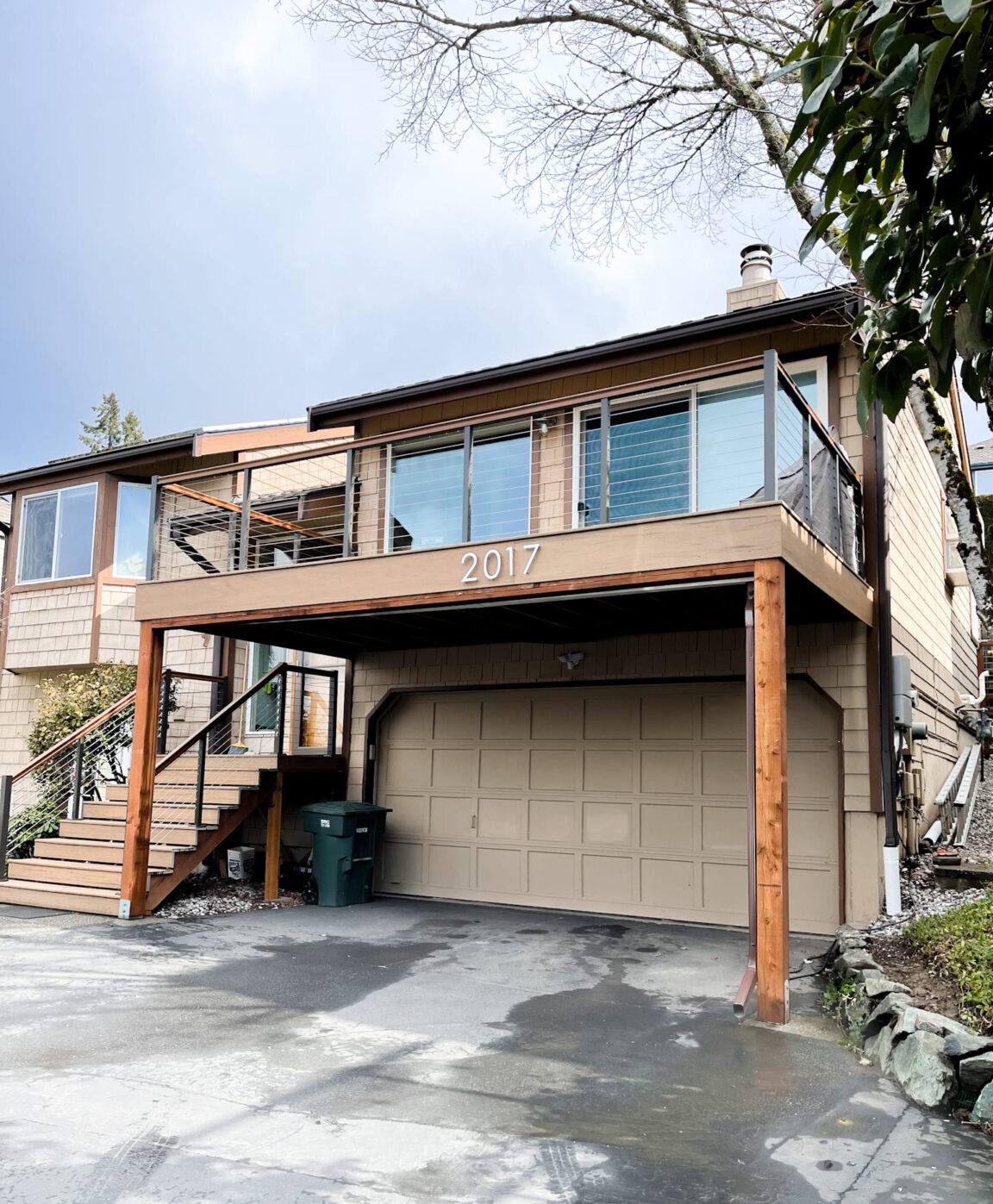
What Correct Fiber Cement Installation Looks Like Here
Fiber cement is only as good as the install behind it. In a climate that combines wind-driven rain with sustained dampness, the details most homeowners never see are exactly what determine whether the siding performs for thirty-plus years or starts causing problems in five.
The details that actually matter
- A drainage plane and weather-resistive barrier installed and lapped correctly, so any water that gets past the siding has somewhere to go besides your sheathing
- Proper flashing at every window, door, and roof-to-wall transition — the single most common failure point on poorly installed siding jobs
- Correct fastener spacing, type, and depth, driven per the manufacturer's specification rather than "close enough"
- Board and joint gaps sized and caulked per spec, since fiber cement expands and contracts with moisture and temperature
- Clearance between the bottom of the siding and grade, decks, or roof lines, so standing water and splashback don't sit against the board
- Ventilation behind the cladding where the wall assembly calls for it, so damp air has a way out instead of staying trapped against the sheathing
Skip any one of these and you've undermined the product, no matter how good the material itself is. This is the gap between "siding that's on the wall" and "siding that's actually going to perform in Skagit County weather."
Why We Install Only James Hardie in This Area
We don't install LP SmartSide, vinyl, Cemplank, Allura, or primed wood siding, and in a location like Conway that's a deliberate call, not a brand preference. Engineered-wood products like LP SmartSide use a wood-strand substrate with a resin coating — it holds up fine in a lot of the country, but in an environment with this much sustained moisture and salt exposure, any breach in that coating (a fastener miss, a poorly sealed cut edge, a joint that opens up) gives water a path into wood fiber that swells and deteriorates. Vinyl flexes and can distort in wind and heat cycling, and its seams and butt joints are exactly the kind of entry points that driving rain finds. Primed wood siding needs a maintenance schedule most homeowners can't realistically keep up with once moss and mildew get a foothold.
James Hardie fiber cement is Portland cement, sand, and cellulose fiber — it doesn't have a wood substrate to rot, and it's non-combustible. Hardie's HZ5 product line is engineered specifically for the kind of wet, marine-influenced climate zone that includes the Skagit Bay area, with a formulation built to resist moisture damage in exactly these conditions. The ColorPlus factory finish is baked on under controlled conditions rather than field-applied, which means better color retention and adhesion than a coating that has to cure on-site in Skagit County's damp air. Combined with a strong transferable warranty, it's the system we're willing to put our name behind for homes taking this kind of weather year after year.
Our Process for a Conway Fiber Cement Project
1. On-site assessment
We walk the exterior, check the current siding and sheathing for moisture damage, and look at the specific exposures on your home — which walls take the worst of the wind-driven rain, where moss has already established itself, and where existing flashing and trim need attention.
2. Scope and product selection
We spec the right Hardie product for each elevation — lap siding, panel, or trim combinations — and walk through ColorPlus color options versus field-painted finishes, along with a realistic cost breakdown before any work starts.
3. Tear-off and sheathing check
Old siding comes off and we inspect the sheathing underneath. Any water damage found at this stage gets addressed and documented before new siding goes up — covering a compromised wall with new siding just hides the problem.
4. Weather barrier and flashing
This is the step that determines long-term performance. We install the drainage plane, flash every penetration, and get the details right before a single board of visible siding goes on.
5. Installation to manufacturer spec
Fastening, gapping, and caulking follow James Hardie's published installation requirements — the requirements that keep the warranty valid and the siding performing as designed.
6. Final walkthrough
We inspect the finished work with you, check trim and caulk lines, and make sure everything is buttoned up before we consider the job done.
Signs Your Current Siding Is Losing the Battle
Homeowners in Conway often live with early warning signs for years before calling anyone, mostly because the signs look cosmetic at first. Worth a closer look if you're seeing:
- Moss or dark streaking that keeps coming back within weeks of cleaning, especially on north- or shade-facing walls
- Paint that's bubbling, peeling, or chalking faster than a normal repaint cycle would explain
- Soft spots, swelling, or a spongy feel when you press on the siding near the bottom courses or around windows
- Visible gaps or separation at board joints, corners, or trim
- A musty smell near exterior walls inside the home, which can point to moisture already behind the cladding
Any of these is worth a professional look before it turns into a sheathing or framing repair rather than a siding repair.
What It Costs
Fiber cement siding pricing depends on more variables than most homeowners expect. The table below covers the main cost drivers we walk through on a Conway estimate.
| Factor | Why It Moves the Price |
|---|---|
| Tear-off condition | Rotten sheathing or hidden moisture damage found during tear-off adds repair scope before new siding goes up |
| Home size and elevation complexity | More corners, gables, and trim details mean more cutting, flashing, and labor time |
| Product line and profile | HardiePlank lap siding, panel systems, and trim combinations carry different material costs |
| Finish choice | Factory-applied ColorPlus finish versus field painting affects both material cost and long-term maintenance |
| Site access | Steep grades, tight lot lines, or limited equipment access near the water and lower valley properties can affect labor time |
| Existing flashing and window trim | Homes needing new flashing or trim replacement, not just siding, add scope |
We give a written, itemized estimate after the on-site assessment rather than a ballpark over the phone — the tear-off condition alone can shift the number significantly, and we'd rather you know that up front than get a surprise mid-project.
Keeping Your New Siding Looking Right
Fiber cement is low-maintenance compared to wood or vinyl, but "low-maintenance" isn't "no-maintenance," especially in a climate that grows moss on everything that holds still. A simple annual routine keeps it performing:
- Rinse the exterior once a year with a garden hose or low-pressure wash — skip the pressure washer, which can force water behind boards and damage caulk lines
- Check caulk at joints, trim, and penetrations annually and have any cracked or separated caulk redone before it lets water in
- Keep landscaping and irrigation from spraying directly onto the siding or holding moisture against the bottom courses
- Address moss or mildew early with a gentle wash rather than letting it build up over a full wet season
- Watch gutters and downspouts — overflow running down the siding face is one of the more common causes of localized staining and premature wear
Why a Crew That Already Works Conway Matters
Skagit County's permitting requirements, typical wall assemblies, and weather windows aren't identical to what you'd find on the other side of the Cascades or even in parts of Snohomish County. A crew that already works this specific stretch of the lower Skagit valley knows how to schedule around the wet season, how local sheathing and moisture conditions tend to show up once tear-off starts, and what flashing details actually hold up against wind coming off the bay rather than just meeting a generic code minimum. That local track record is worth more than a lower bid from a crew that's never worked this exposure before — the cost of a redo on a house exposed to Skagit Bay weather is a lot higher than the cost of getting it right the first time.
If you're weighing a siding replacement or repair in Conway, we're happy to walk your property, look at what your home is actually dealing with, and put together a straightforward, no-pressure estimate — no obligation, just a clear look at what correct installation would take for your house.