 Skagit County
 Why Windows Matter More in Avon's Climate
Windows are one of the hardest-working parts of a house in Avon. They take the brunt of wind off the water, sit through months of driving rain, and spend a good part of the year shaded and damp enough for moss to take hold on sills and trim. When windows are doing their job, a home stays warmer in winter, cooler on the rare hot week, and dry where it counts. When they're not, you feel it in cold drafts near the glass, foggy panes, and heating bills that climb every year without an obvious reason why.
"Energy-efficient" gets used loosely in this industry, so this page focuses on what it actually means for a home in this part of Skagit County, what a correct installation looks like here, and how we approach window projects in Avon specifically.
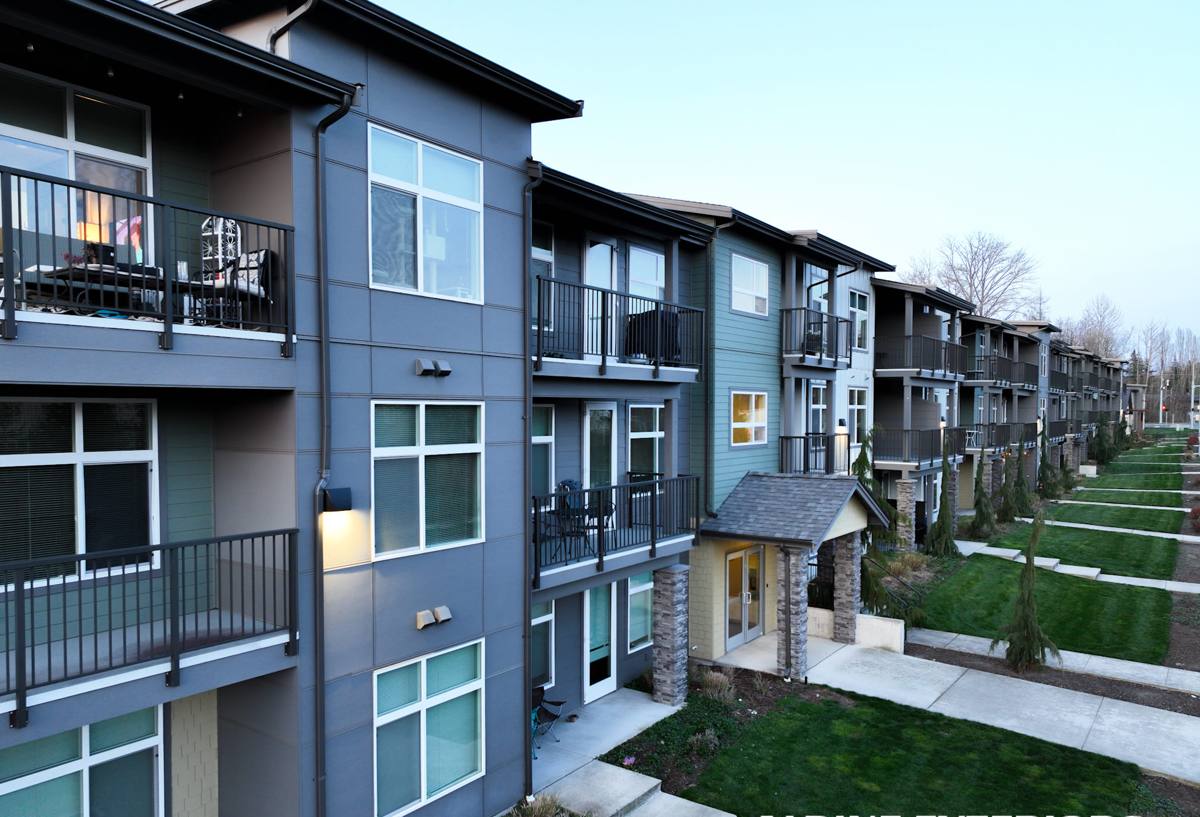
What Skagit County Weather Does to Ordinary Windows
Salt Air and Corrosion
Homes near the Skagit Valley's tidal flats and open water get a steady dose of salt-laden air. Over years, that air is hard on unprotected metal — window hardware, screen frames, and lower-grade cladding fasteners can pit and corrode faster than they would inland. It doesn't ruin a window overnight, but it shortens the working life of hinges, locks, and balance mechanisms if the materials weren't chosen with that exposure in mind.
Driving Rain and Wind-Driven Moisture
Rain here doesn't always fall straight down. Wind off the water pushes it sideways into wall assemblies and window openings, which is exactly the condition that exposes a weak flashing detail or a bead of sealant that was never really doing its job. A window can be perfectly efficient on paper and still leak, because efficiency and weathertightness come from two different parts of the job — the product and the installation.
Moss, Shade, and Prolonged Dampness
Mature trees and long gray stretches mean a lot of window trim in this area stays shaded and damp far longer than it would in a drier climate. That's the same environment moss thrives in. On wood-framed or wood-trimmed windows, prolonged dampness at the sill and lower corners is where rot usually starts — often years before it's visible from inside the house.
What "Energy-Efficient" Actually Means
Frame Material
The frame affects both insulation value and how the window holds up to this climate. Vinyl and fiberglass frames don't absorb moisture the way wood does, which matters more here than in a dry climate. Wood and wood-clad frames can still be the right call for certain homes, but they ask for more upkeep and more careful detailing at every joint.
Glazing and Coatings
Double-pane glass with a low-E coating and an inert gas fill (typically argon) is the baseline for a genuinely efficient window today. Low-E coatings are microscopically thin layers that reflect heat back where you want it — inside in winter — without noticeably changing how clear the glass looks. Triple-pane glass adds another layer of insulation and is worth pricing out on north-facing walls or rooms that run cold, though it adds weight and cost that isn't always necessary on every elevation.
Installation Quality
A high-efficiency window installed with a poor seal performs worse than a mid-grade window installed correctly. This is the part of the job that doesn't show up on a spec sheet — proper flashing, sill pans, backer rod and sealant compatible with the siding and cladding, and shimming that keeps the frame square. In a climate that pushes rain sideways into wall openings, this step is not optional.
Signs Your Avon Home Is Ready for a Window Upgrade
Some of these show up gradually enough that homeowners get used to them before realizing they're actually a problem:
- Condensation or fogging between the panes (a sign the seal has failed and the gas fill is gone)
- Cold air noticeable near the glass or frame even with the window fully closed
- Soft or discolored wood trim at the sill or lower corners
- Visible moss or persistent green staining on window sills or exterior trim
- Windows that are hard to open, close, or lock — often a sign the frame has shifted or swollen
- A noticeable draft or temperature difference in rooms with older or original windows
- Rising heating bills without a clear cause elsewhere in the house
Comparing Window Options for This Climate
There's no single "best" window for every home — the right choice depends on budget, the home's style, and how exposed a given wall is to wind and rain. Here's how the common frame options generally compare for a coastal Skagit County property:
| Frame Material | Upfront Cost | Maintenance in This Climate | Typical Lifespan |
|---|---|---|---|
| Vinyl | Lowest | Low — doesn't rot or corrode, occasional cleaning | 20–30 years |
| Fiberglass | Mid-to-high | Low — very stable in temperature swings and moisture | 30–40+ years |
| Wood-clad | High | Moderate to high — cladding protects the exterior, but interior wood and joints still need attention | 20–30 years with upkeep |
| Solid wood | High | Highest — regular painting/sealing needed, most vulnerable to prolonged dampness | Varies widely with maintenance |
For homes with heavy wind or rain exposure, or lower-maintenance goals, vinyl or fiberglass tend to be the more practical long-term choice. Wood and wood-clad windows can still be right for a period-style home, but we're upfront that they come with a real maintenance commitment in this climate — that's a trade-off, not a flaw in the product.
Our Process for Avon Window Projects
- On-site assessment — we look at existing window condition, framing, and any signs of moisture damage before recommending anything.
- Measurement and product selection — sized to the actual opening, with frame material, glazing, and gas fill chosen for the wall's sun and wind exposure.
- Careful removal — old windows come out without unnecessary damage to surrounding siding or trim, and we check the rough opening for hidden rot before installing anything new.
- Flashing and sealing — sill pans, flashing tape, and sealants are installed in the correct order so water is directed out, not trapped in the wall.
- Installation and shimming — the frame is set square and plumb, shimmed evenly, and fastened per manufacturer specs so the window operates smoothly for years.
- Interior and exterior finish work — trim, caulking, and touch-up so the finished opening looks intentional, not patched.
Installation Details That Matter Most in This Climate
This is the part of a window project that's easy to skip and hard to fix later without pulling the window back out.
Sill Pans and Flashing
A sill pan under the window opening gives any water that gets past the frame a way out instead of a place to sit. Combined with properly lapped flashing tape (installed shingle-style, top over bottom), this is the single biggest factor in whether a window stays dry through a wet Skagit County winter.
Sealant Compatibility
Not every caulk or sealant is compatible with every siding or cladding material, and using the wrong one can fail faster than no sealant at all. We match sealants to the surfaces involved rather than defaulting to whatever's on the truck.
Weep Holes and Drainage Paths
Many window systems rely on small weep holes to let incidental moisture drain back out. If these get sealed over, painted shut, or blocked by debris during installation or later trim work, water can be trapped inside the frame — leading to problems that stay hidden until they're serious.
Questions Worth Asking Before You Hire
Whoever you choose for a window project in Avon, these are worth confirming upfront:
- Will you inspect the rough opening for rot or moisture damage before installing new windows?
- What flashing and sill pan approach do you use, and why?
- What frame materials and glazing packages do you recommend for this specific wall or elevation, and why?
- What's covered under warranty — the product, the labor, or both — and for how long?
- Will the same crew handle removal, installation, and finish work, or is it subcontracted out in pieces?
Why a Crew That Already Works Avon Matters
Window performance in Skagit County isn't theoretical — it's tested every winter by wind off the water, sideways rain, and long damp stretches that give moss and rot plenty of time to work. A crew that installs windows in Avon regularly has already seen which details hold up here and which ones fail early, and builds that into every job rather than treating each house as a generic install. That local pattern recognition — knowing which walls take the worst weather, which older homes tend to have hidden rot at the sill, which sealants actually hold up to salt air — is difficult to substitute with a spec sheet alone.
If your windows are original to the house, fogged between the panes, or just costing you more in heat every winter, it's worth having someone look at them who understands what this climate actually does to a window over time. We're happy to walk your home, point out what we see, and put together a straightforward, no-pressure estimate — use the form below to get started.