 Skagit County
 Building a Deck That Holds Up in Edison's Weather
Edison sits close enough to the water that salt air is a real, daily factor in how anything built outdoors ages. Add in the driving rain that comes through Skagit County most of the fall, winter, and spring, plus a moss season that stretches longer here than it does inland, and you've got a climate that is genuinely harder on a deck than most homeowners realize until their first one starts failing. A deck built the same way you'd build one in a dry inland town won't hold up the same way out here. The fasteners corrode faster, the moisture finds the wrong places to sit, and the shaded, damp surfaces grow moss well before the wood or composite itself would otherwise show its age.
This page is about doing deck building the right way for this specific area — what the climate actually does to a deck over time, what a correctly built one looks like, and why it matters to work with a crew that already builds decks in this part of Skagit County rather than one learning the local conditions on your project.
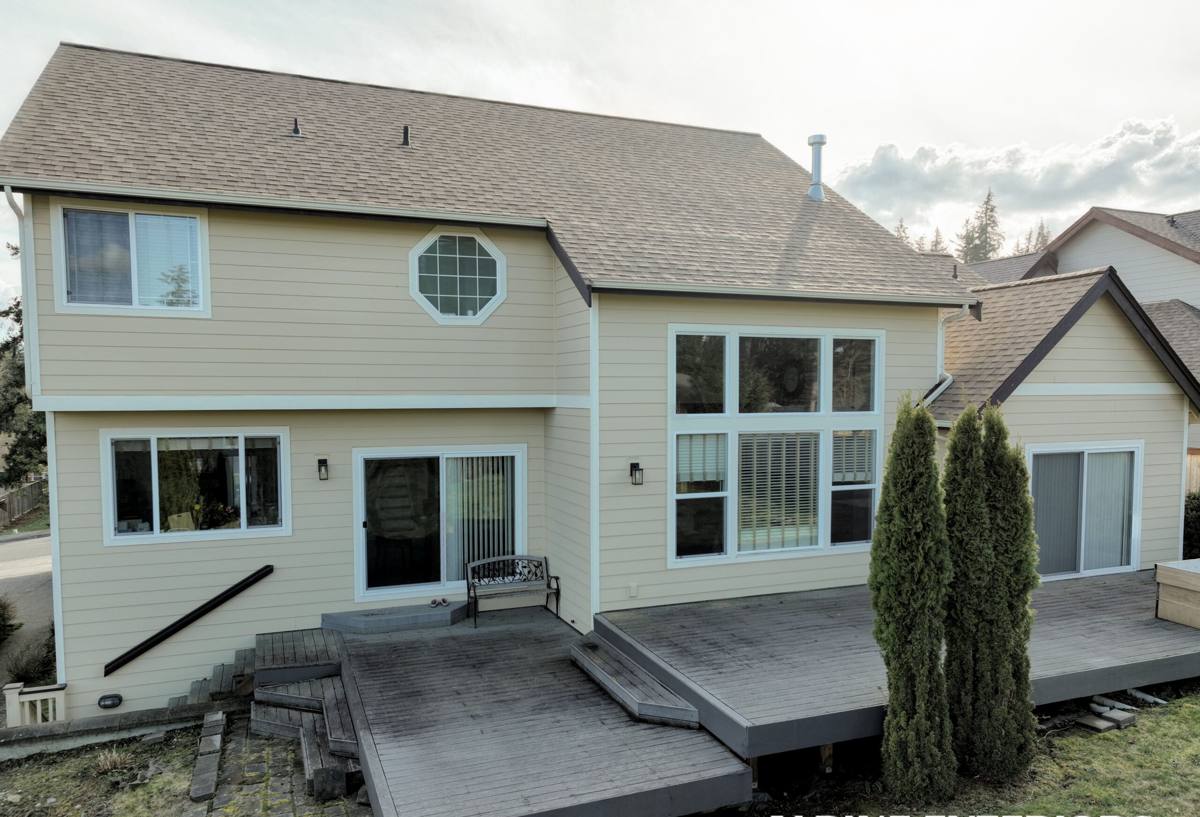
What Edison's Climate Actually Does to a Deck
Salt Air and Corrosion
Salt-laden air doesn't need direct ocean spray to do damage — it travels on the wind and settles on every exposed metal surface, all day, every day. Over a few seasons, standard fasteners, joist hangers, and hardware that would last decades inland can start to rust, weep stains into the decking, and lose holding strength right where it matters most: the ledger board, the joist hangers, and the post bases carrying the structural load. This is the single biggest reason a deck near the coast needs a different hardware spec than one built forty miles inland.
Driving Rain and Moisture Intrusion
Rain here doesn't just fall straight down — wind-driven rain gets pushed sideways and even upward under poorly flashed ledger boards and edge details. Where a deck attaches to the house is the single most common place we find water damage on older decks: no flashing, flashing installed backward, or a ledger sealed tight against the siding with no drainage gap behind it. Once water gets behind that connection, it's working on the house's framing, not just the deck's.
The Long Moss Season
Skagit County's damp, shaded stretch of the year runs long, and horizontal surfaces — deck boards, stair treads, railing caps — are exactly where moss and algae like to establish. Beyond looking bad, a mossy deck surface gets genuinely slick, which is a real fall hazard on stairs and ramps. How a deck is built — board spacing, airflow underneath, how much shade the site gets — has a lot more to do with how fast moss takes hold than most homeowners expect.
What a Correctly Built Deck Involves Here
Framing, Fasteners, and Joist Protection
Given the salt air, we spec fasteners and structural hardware rated for coastal exposure — stainless steel or heavy hot-dip galvanized, not the standard-grade coated fasteners that are fine in a dry inland climate but start showing rust streaks within a few years out here. Framing lumber gets joist tape or a comparable flashing membrane over the top edge of every joist, which keeps standing water out of screw holes and end grain — the two places rot starts first.
Decking Board Choice and Spacing
Board spacing affects drying time after every rain, and drying time affects how much moss and algae get a foothold. We set gaps to allow water to shed and air to move, and we talk through board material honestly with every homeowner — wood, composite, and capped composite all behave differently in a wet, shaded climate, which is covered in the comparison below.
Footings and Ledger Attachment
Footings are sized and set to meet Skagit County's permit and load requirements for the specific deck — height, span, and soil all factor in. The ledger connection gets proper flashing, a drainage gap behind it, and correct fastening into the house framing, not just into siding. This one connection point is where we see the most expensive repairs on decks that were built without it done right the first time.
Decking Material Comparison for This Climate
There's no single "best" decking material — the right choice depends on budget, how much upkeep you want to do, and how much shade and moisture the site sees. Here's how the common options actually perform in a salt-air, high-rain, long-moss-season environment like Edison's.
| Material | Moisture & Moss Behavior | Maintenance | Notes for This Climate |
|---|---|---|---|
| Pressure-treated wood | Absorbs and releases moisture; moss and mildew can develop on shaded boards if not cleaned | Needs periodic cleaning and re-sealing to perform well | Lowest upfront cost; requires the most ongoing attention here |
| Cedar | Naturally more rot-resistant than PT wood, but still an organic surface moss can colonize in shade | Periodic cleaning and finish maintenance recommended | Good appearance, moderate upkeep; still needs coastal-grade fasteners |
| Traditional composite | Doesn't rot, but uncapped composite can still hold surface moisture and support algae/moss growth | Occasional washing; less than wood, more than capped composite | Solid middle ground on cost and upkeep |
| Capped composite / PVC | Sheds moisture at the surface, generally the most moss-resistant option | Lowest ongoing maintenance of the common options | Higher upfront cost, best fit for shaded, damp sites |
Whatever material you choose, it's only as good as the structure underneath it and the fasteners holding it together — a premium composite deck built with the wrong hardware in this climate will still show hardware corrosion and staining early.
Our Deck Building Process
- Site assessment. We look at sun/shade exposure, drainage, existing structure (for replacements), and how exposed the site is to weather and salt air.
- Design and material selection. We walk through decking, railing, and hardware options honestly, including the trade-offs in the table above, based on your budget and how much maintenance you actually want to do.
- Permitting. We handle what Skagit County requires for the scope of the project — permits, and engineering where the design calls for it.
- Build. Framing, flashing, and fastener details get done to the coastal-climate spec described above, not a generic inland spec.
- Final walkthrough. We go over the finished deck with you, including what maintenance will actually keep it looking and performing well in this climate.
Keeping a New Deck Ahead of the Moss
A well-built deck in this climate still needs some seasonal attention — the goal is to stay ahead of moss and moisture rather than deal with a deep clean once it's already established. A simple seasonal routine goes a long way:
- Sweep debris (leaves, needles, seed pods) off the deck surface regularly — trapped organic matter holds moisture and is exactly what moss needs to get started
- Rinse or lightly wash horizontal surfaces before moss visibly takes hold, not after — it's far easier to prevent than to remove
- Check that gaps between boards are clear and not packed with debris, so water can still drain and air can still move underneath
- Inspect the ledger flashing and any visible hardware once a year for rust staining or gaps that let water behind the connection
- Trim back overhanging vegetation where possible — more sun and airflow on the deck surface means a shorter moss season on that deck
- Address any soft or discolored boards right away — in this climate, small moisture problems don't stay small for long
What Affects the Cost of Your Deck
We don't quote a price without seeing the site, but these are the factors that actually move the number, in roughly the order they matter:
| Factor | Why It Matters |
|---|---|
| Size and shape | More square footage and complex layouts (angles, multiple levels) mean more framing, decking, and labor |
| Decking material | Pressure-treated, cedar, composite, and capped composite span a wide cost range, as shown in the comparison table |
| Height and stairs | A deck with stairs, guardrails, or significant height above grade needs more structure and more code-required detail |
| Site access | Tight side yards or difficult equipment access can add time and cost to any project |
| Hardware spec | Coastal-grade stainless or hot-dip galvanized fasteners cost more than standard-grade hardware, but they're what actually holds up here |
| Permitting and engineering | Larger or elevated decks may require engineered plans, which adds a step but keeps the project code-compliant |
Why Hire a Crew That Already Works Edison
A deck built without accounting for salt air, driving rain, and a long moss season doesn't fail because the crew was careless — it fails because that crew was used to building somewhere with an easier climate. Knowing to spec coastal-grade fasteners without being asked, flashing a ledger board correctly for wind-driven rain, and setting board spacing with this area's shade and moisture in mind isn't guesswork — it's the difference between a deck that needs real attention in five years and one that's still solid in twenty. We already know Skagit County's permitting process, we already build for this exact combination of weather conditions, and we'd rather explain the honest trade-offs between materials up front than have you find out the hard way which ones don't hold up here.
If you're planning a new deck or need to replace one that's showing its age, we're happy to take a look and walk through your options. Reach out for a free, no-pressure estimate using the form below.