 Skagit County
 Decks in Alger Face a Different Set of Problems
Alger sits close enough to Samish Bay and the surrounding tidal flats that salt-laden air is a daily fact of life, not an occasional nuisance. Add in the long, wet stretch of fall through spring that defines Skagit County weather, plus tree cover that keeps decks shaded and damp long after a storm has passed, and you've got a combination that's hard on outdoor structures. A deck built with generic, one-size-fits-all specs — the kind you'd see in a catalog aimed at a dry inland climate — will show its age here fast: rust bleeding from fasteners, soft spots at the ledger board, and a green film of moss that never fully goes away no matter how often you scrub it.
Building a deck that actually holds up in Alger isn't about buying the most expensive materials available. It's about matching every component — framing, fasteners, decking, railings, and finish — to what this specific stretch of Skagit County throws at it, and building the details correctly the first time so you're not fighting rot, corrosion, or slick moss growth five years down the road.
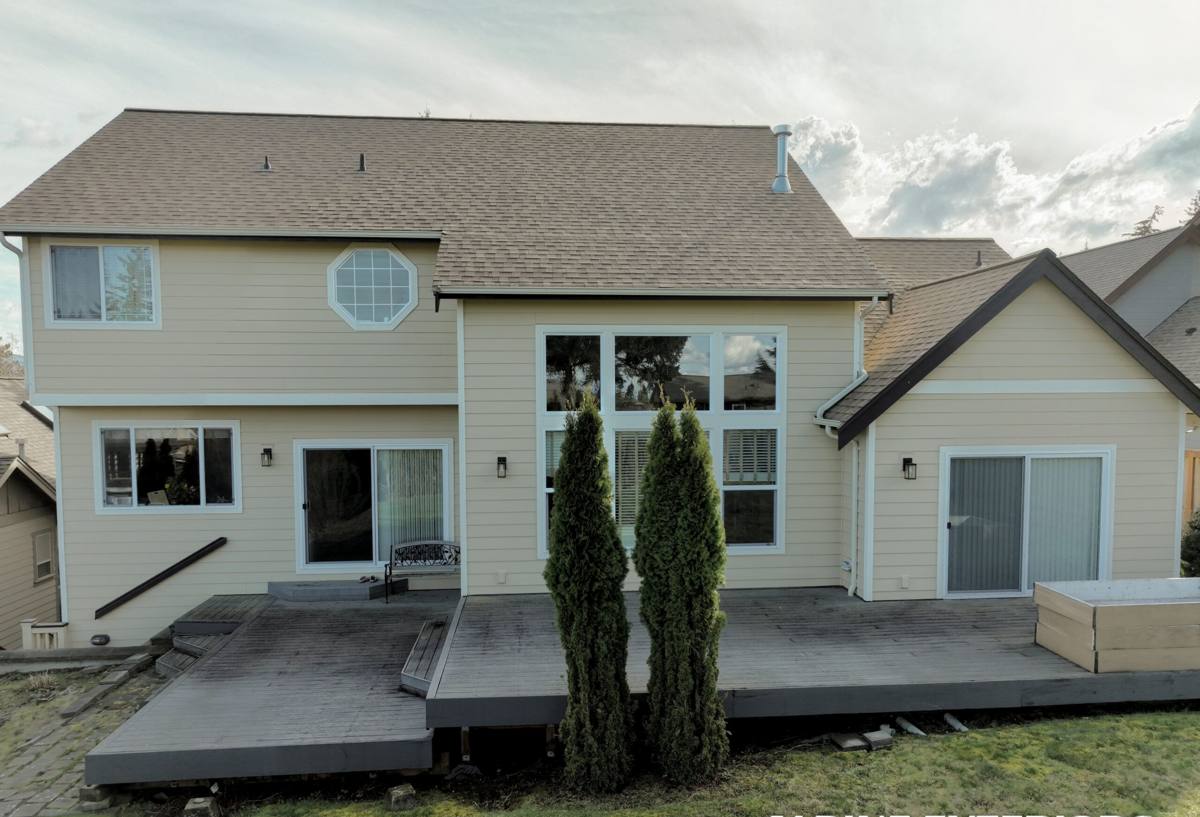
What Salt Air, Rain, and Moss Actually Do to a Deck
Salt Air
Salt in the air accelerates corrosion on anything metal — nails, screws, joist hangers, bolts, and railing hardware. Standard galvanized fasteners that are perfectly fine forty miles inland can start rusting within a couple of seasons this close to the water. Once a fastener starts to corrode, it loses holding strength long before it looks obviously bad, which is how you end up with a railing post that feels solid but isn't.
Driving Rain
Skagit County doesn't just get rain — it gets rain that comes in sideways during winter storms, driven by wind off the water. That matters for deck building because it pushes moisture into places a calm, straight-down rain never would: behind ledger boards, under railing base plates, and into end grain on stair stringers. Flashing details that would be optional in a drier climate are not optional here.
Moss and Shade
Wherever a deck sits under trees or on the north side of a house, moss and algae take hold on any surface that stays damp for more than a day or two. Beyond the cosmetic issue, moss holds moisture against the decking surface, which speeds up rot in wood products and creates a genuinely dangerous slip hazard on stairs and ramps — something we take seriously when we're placing a deck's layout and choosing surface material.
Choosing the Right Decking Material for Alger
There's no single "best" decking material for every home — it depends on budget, how much upkeep you're willing to do, and how exposed the deck is to shade and moisture. Here's how the common options actually perform in this climate:
| Material | Moss/Algae Resistance | Maintenance | Typical Lifespan Here |
|---|---|---|---|
| Pressure-treated pine | Poor in shade without upkeep | Annual cleaning and periodic sealing | 10–15 years |
| Cedar | Moderate — natural oils help | Cleaning plus refinishing every 2–3 years | 15–20 years |
| Composite (capped) | Good — surface doesn't absorb moisture | Periodic washing, no sealing/staining | 25+ years |
| PVC/vinyl decking | Very good | Occasional washing | 25+ years |
We don't push composite or PVC on every job — real wood still has a place, especially where the deck is small, gets good sun, or the homeowner wants that natural look and doesn't mind the upkeep. But on shaded lots and homes closer to the water, we're honest with clients that a capped composite product will save them a lot of headache compared to a wood deck they have to pressure-wash and reseal every year just to keep moss from taking over.
A Word on Uncapped Composite
Older, uncapped composite boards had a real problem in wet climates like this one — the wood-fiber core could absorb moisture at cut edges and fastener holes, leading to swelling and mold growth over time. That's not a knock on composite decking as a category, just a reason we only spec fully capped boards on jobs in this area, where end grain and screw penetrations are sealed against moisture intrusion.
Framing and Structure: Where Most Deck Failures Start
The decking surface is what you see, but the framing underneath is what determines whether a deck is safe in ten years. In a climate like Skagit County's, we pay particular attention to:
- Ledger board flashing — the ledger, where the deck attaches to the house, has to be flashed to shed water away from the rim joist and siding, not toward it. A poorly flashed ledger is one of the most common sources of hidden rot we find on older Alger decks.
- Joist protection — capping joists and beams with a flashing tape rather than relying on the treated lumber alone to resist standing water.
- Post base connections — keeping post bottoms off grade and off standing water, using bases that let water drain rather than pool against the wood.
- Corrosion-resistant hardware — stainless steel or heavy-duty coated fasteners and joist hangers rated for the corrosive, coastal-adjacent conditions here, not the standard galvanized hardware sold for general inland use.
- Proper drainage slope — decking run with a slight pitch away from the house so water sheets off instead of collecting.
Our Deck Building Process
1. On-Site Assessment
We walk the property, look at sun and shade exposure, drainage patterns, and how close the deck site is to established trees or moisture-holding vegetation. This tells us how aggressive the moss and rot risk will be and shapes our material recommendation.
2. Design and Layout
We plan the deck's footprint, stair placement, and railing style around both how you want to use the space and how water and shade move across the site. Small layout choices — like keeping a deck edge back from overhanging branches — make a real difference in how much moss maintenance you'll deal with later.
3. Permitting
Most deck projects in unincorporated Skagit County require a building permit, particularly for decks above a certain height or attached to the home. We handle the permit application and coordinate inspections so you're not left navigating county requirements on your own.
4. Framing
Footings, posts, beams, and joists go in first, built to the loads and spans required by code, with the flashing and hardware detailed above. This is the stage that determines the deck's real lifespan, and it's the stage that's easiest to shortcut if a crew doesn't know the area.
5. Decking, Railings, and Stairs
Surface material is installed with proper fastener spacing and gapping to allow drainage and airflow underneath — tight, poorly gapped decking traps moisture and speeds up both rot and moss growth. Railings are set with corrosion-resistant hardware and checked for rigidity, not just code-minimum attachment.
6. Final Walkthrough
We walk the finished deck with you, cover basic care specific to the material you chose, and point out anything worth keeping an eye on given the site's shade and drainage.
What a New Deck Typically Costs to Build Right
Pricing depends heavily on size, height, material, and site access, but here are the factors that move the number most on Alger jobs:
| Cost Factor | Why It Matters Here |
|---|---|
| Decking material | Wood costs less up front; capped composite costs more but cuts long-term maintenance in shaded, damp spots |
| Height above grade | Taller decks need engineered footings and stronger railings, adding labor and material |
| Site drainage/grading | Poor drainage under the deck footprint may need correcting before framing to avoid future rot |
| Hardware grade | Stainless or marine-grade fasteners cost more than standard galvanized but hold up far longer in salt air |
| Access for equipment | Tight or wooded lots common around Alger can add labor time for material staging |
We'd rather walk your specific site and give you real numbers than throw out a generic range that doesn't reflect what your property actually needs.
Keeping a Deck in Good Shape Once It's Built
Even a well-built deck needs some seasonal attention in this climate. A short, realistic maintenance routine goes a long way:
- Sweep leaves and debris off the surface regularly, especially in fall — trapped organic matter is what feeds moss growth
- Rinse the deck surface periodically to knock down early moss and algae before it establishes
- Check railing posts and stair connections once a year for looseness, which can signal early hardware corrosion
- Keep gutters and downspouts near the deck clear so runoff isn't dumping extra water onto the structure
- For wood decks, plan on cleaning and resealing on the schedule appropriate to the species — skipping this is the single biggest reason wood decks fail early here
- Trim back overhanging branches where practical to increase sun exposure and airflow
Why a Crew That Already Works in Alger Makes a Difference
Deck building isn't just carpentry — in a place like Skagit County, it's carpentry plus a working knowledge of how salt air, driving rain, and shade-driven moss actually behave on a structure over years, not just at the final walkthrough. A crew that builds decks all over the region knows which hardware grade holds up near the water, how local building officials want ledger flashing detailed, and which decking products actually perform in the shaded, damp lots common around Alger versus which ones just look good on a spec sheet. That local pattern recognition is what keeps a deck looking and functioning right in year eight, not just year one.
If you're planning a new deck or replacing one that's showing its age, we're happy to take a look and talk through what makes sense for your site and budget. Fill out the form below for a free, no-pressure estimate.