 Skagit County
 Why Conway Decks Wear Out Faster Than the Brochures Suggest
Conway sits low in the Skagit River delta, close to tidal influence and surrounded by wet farmland, sloughs, and marsh. That geography is part of what makes the area beautiful, but it also means the air near any Conway property carries more moisture, more often, than homes up on drier ground elsewhere in Skagit County. Add the region's driving rain, a moss season that can run from fall through spring, and the salt-tinged air that drifts in off Puget Sound and Skagit Bay, and you have a climate that goes after wood decks from every direction at once: from below through ground moisture, from above through rain and moss, and from the fasteners out through corrosion.
A deck built or replaced without those specific conditions in mind will usually look fine for the first year or two. The problems show up later — soft spots near the ledger, fasteners bleeding rust streaks, moss creeping into the board gaps, and joists that feel solid on top but are rotting quietly underneath. Replacing a deck the right way in Conway means designing against all of that from day one, not patching around it after the fact.
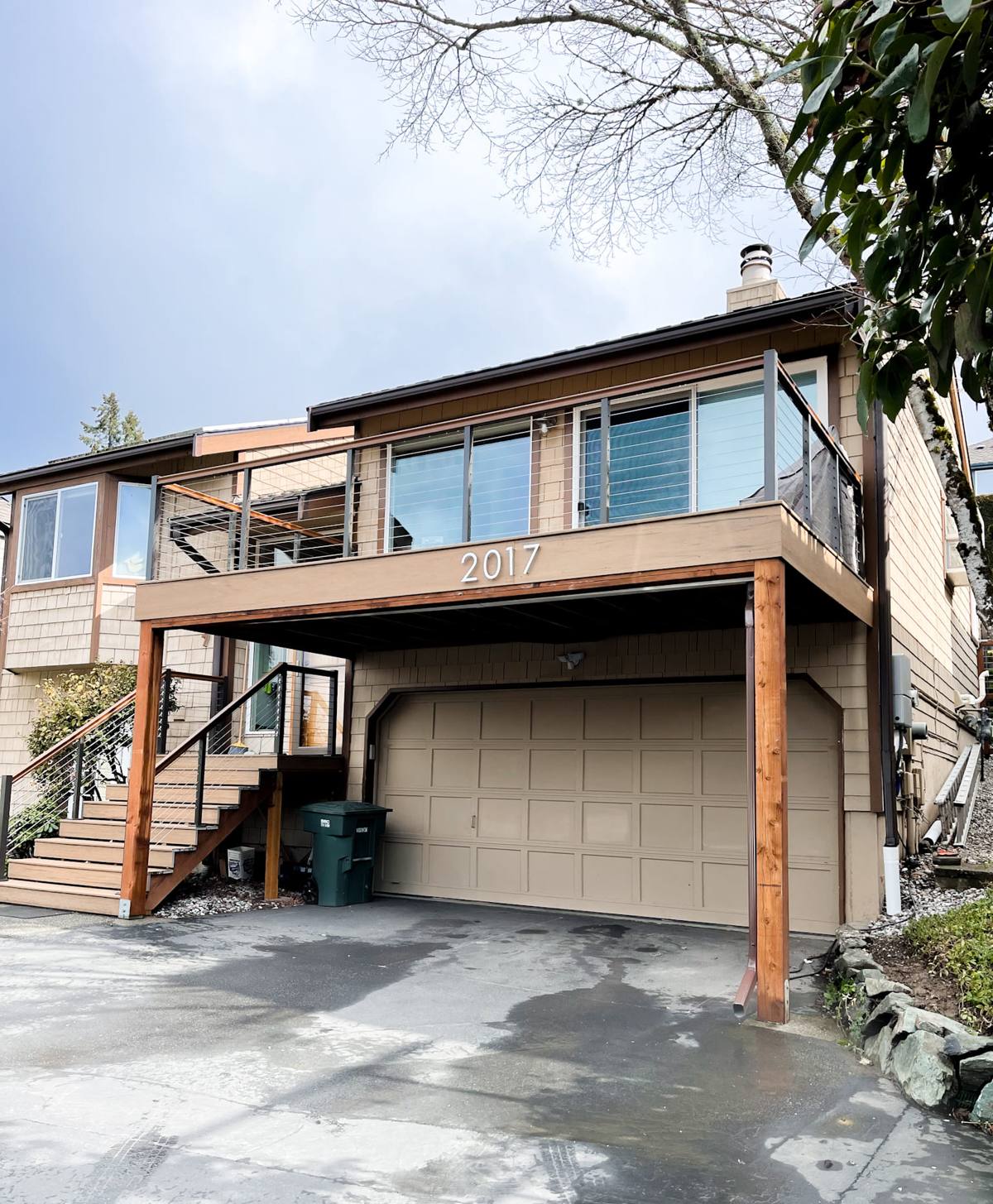
Signs a Conway Deck Needs Replacement, Not Another Repair
Not every tired deck needs to come out entirely. But in a damp, low-lying area like this, repair is often just delaying a bigger job — and sometimes it's masking a structural issue underneath. Here's how we tell the difference on site.
- Soft, spongy decking near the house, especially close to the ledger board where water collects
- Visible gaps opening between boards, or boards cupping and splitting along their length
- Rust streaking from screws or nails, which usually means the original fasteners weren't rated for treated lumber
- Persistent moss or algae growth that returns within weeks of cleaning
- A ledger board pulling away from the house, or flashing that's missing or improperly installed
- Posts or footings that feel loose, or any visible rot at ground contact points
- A deck more than 20-25 years old that's never had the substructure inspected
If what you're seeing is limited to surface boards and the framing underneath is sound, repair or a re-decking job can make sense. If the ledger connection, joists, or footings are compromised, a full replacement is the honest recommendation — patching a failing frame just moves the cost down the road while adding risk.
What a Correct Deck Replacement Actually Involves
A deck replacement is more than pulling old boards and screwing down new ones. In a climate like Conway's, the parts you don't see matter more than the parts you do. A proper job covers:
Removal and Assessment
We tear out the old decking and expose the framing so we can actually see what's underneath — not guess at it. This is where hidden rot, undersized footings, or a poorly flashed ledger usually turn up.
Ledger Attachment and Flashing
The ledger board, where the deck attaches to the house, is the single most common failure point on decks in wet climates. It needs proper structural fasteners (not just deck screws), a code-compliant connection, and flashing that actually sheds water away from the house rather than trapping it against the rim joist.
Footings and Framing
Footings need to sit below frost depth and bear on solid, undisturbed soil — something that takes more care to verify on the soft, silty ground common around the Skagit delta. Framing lumber should be properly rated for ground or weather exposure, with fasteners and hardware matched to that lumber to avoid galvanic corrosion.
Decking, Fasteners, and Drainage
Board spacing, fastener choice, and airflow underneath the deck all affect how fast moisture leaves the structure after a storm. Getting this wrong is why some decks stay damp and mossy for days after everyone else's yard has dried out.
Choosing Materials for Conway's Climate
There's no single "best" decking material — there's a best material for your budget, your maintenance appetite, and how exposed your particular lot is to rain, shade, and moss. We'll walk through the honest trade-offs rather than pushing one option.
| Material | Upfront Cost | Maintenance | How It Handles Conway's Damp/Moss Conditions |
|---|---|---|---|
| Pressure-treated lumber | Lowest | Annual cleaning, periodic sealing | Good rot resistance if properly sealed and kept ventilated; needs consistent upkeep to stay ahead of moss and mildew |
| Cedar | Moderate | Regular sealing/staining | Naturally rot-resistant and attractive, but softer surface can hold moisture longer without diligent maintenance |
| Composite decking | Higher | Occasional washing, no sealing | Doesn't rot or splinter; still needs regular cleaning since moss and algae will grow on any damp surface, including composite |
| PVC decking | Highest | Minimal | Fully moisture-resistant board; best long-term option for heavily shaded or consistently wet areas, at a higher initial cost |
We install all of the above, and we'll tell you plainly which one fits your specific spot on the property — a deck under fir trees on the shaded, damp side of a Conway lot has different needs than one that gets afternoon sun.
Fasteners and Hardware
Whatever decking you choose, the hardware matters just as much. Salt-influenced air near the delta and bay accelerates corrosion on the wrong fastener type. We use stainless or coated fasteners and connectors rated for treated lumber and coastal-influenced conditions, matched correctly to the metals they're touching, so you're not dealing with rust streaks and weakening connections five years in.
Our Deck Replacement Process
We keep this straightforward because a deck replacement shouldn't feel like a mystery to the homeowner paying for it.
- On-site assessment — we look at the existing deck, ledger, footings, and site drainage before recommending anything
- Honest scope and estimate — you'll know upfront whether this is a repair, a re-deck, or a full replacement, and why
- Permitting — we handle the paperwork through the applicable jurisdiction so the work is inspected and legal
- Demo and structural correction — old decking comes out, framing and footings get inspected and corrected as needed
- Ledger, framing, and decking installation — built to current code with materials matched to your site conditions
- Final walkthrough — we go over the finished deck with you, including what maintenance it actually needs
Permits and Code in Skagit County
Most deck replacements that involve structural work — new footings, a rebuilt ledger connection, or a deck attached at a new height — require a permit and inspection under the applicable building code, whether your property falls under Skagit County or a nearby municipal jurisdiction. This isn't paperwork for its own sake: it's what confirms the ledger connection and footings can actually carry the load safely, which matters more in wet, shifting ground than it does on a dry inland lot. We pull the permits and coordinate inspections as part of the job so you're not left chasing that down yourself.
Maintaining a New Deck Through Skagit County's Wet Months
Even the best-built deck needs some seasonal attention in this climate. A little consistency goes a long way toward avoiding early moss buildup and moisture damage.
- Sweep leaves and debris off the deck regularly in fall — trapped organic matter is what feeds moss and mildew
- Rinse or wash the surface a few times a year to knock back algae and moss before it takes hold
- Check that gaps between boards stay clear so water can drain through, not pool on the surface
- Inspect the ledger flashing and any caulking at the house connection once a year
- Reseal wood decking on the manufacturer's recommended schedule, don't stretch it out
- Look underneath the deck occasionally for standing water or vegetation growing against posts and footings
Why Hiring a Crew That Already Works Conway Matters
Conway isn't a big town, but its low-lying, riverside setting creates conditions that differ from a deck job on higher, drier ground elsewhere in Skagit County. A crew that's already replaced decks in and around this area knows to check the ledger and flashing first, knows which fastener choices hold up against the salt-tinged air, and knows how to design footings and drainage for softer, wetter ground. That local familiarity shows up in fewer surprises during the job and a deck that's still solid a decade later, not just a season later.
Get a Free Estimate
If your Conway deck is showing soft spots, persistent moss, or rust at the fasteners, it's worth having someone take an honest look before you decide between repair and replacement. Reach out for a free, no-pressure estimate using the form below — we'll walk the deck with you and tell you straight what it needs.