 Skagit County
 Deck Repair Built for Conway's Wet, Salt-Tinged Air
Conway sits low in the Skagit River delta, close enough to Skagit Bay and Puget Sound that salt-laden air moves through the valley on a regular basis. Combine that with the amount of standing moisture this part of Skagit County holds through fall and winter, and you get a climate that is genuinely hard on outdoor structures. Decks here don't fail because homeowners neglect them — they fail because the combination of salt air, driving rain, and a long moss season attacks wood and hardware faster than it does in drier inland areas. We repair decks in Conway on a regular basis, and the damage patterns we see are consistent enough that we can usually tell you what's going on before we even pull a board.
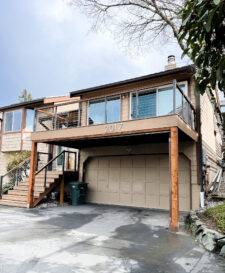
Why Conway Decks Wear Differently
A deck built to a generic spec — the kind you'd see in a big-box how-to guide — is built for average conditions. Conway doesn't have average conditions. Three things drive most of the repair calls we get in this area:
Salt Air
Airborne salt off the bay accelerates corrosion on fasteners, joist hangers, and any exposed metal connector. Once a nail or screw starts rusting, it swells slightly in the wood, which cracks the surrounding fibers and lets in more water — a cycle that speeds up over time rather than staying steady.
Driving Rain
Rain in this part of Skagit County rarely falls straight down. Wind off the delta pushes it sideways, which means it gets up under flashing, behind ledger boards, and into end-grain cuts that a vertical-rain climate would mostly spare. End grain is the fastest path for a board to absorb water, and it's usually the first place we find rot.
A Long Moss Season
Low light, high humidity, and shaded yard trees give moss and algae a long growing window here — often most of the year on the north and east sides of a deck. Moss holds moisture against the wood surface, keeps boards from drying between rain events, and makes the walking surface slick, which is a safety issue as much as a maintenance one.
Common Deck Problems We Find in Conway Homes
Ledger Board Rot
The ledger board — where the deck attaches to the house — is the single most important structural piece on most decks, and it's also the one most likely to trap water if the flashing was installed wrong or has failed over the years. We check this first on every repair call, because a rotted ledger is a safety issue, not a cosmetic one.
Post Base and Footing Deterioration
Posts that sit in or near standing water — common on lower lots in this part of the delta — rot from the bottom up. By the time you see soft wood above grade, the damage below is often further along than it looks.
Corroded Fasteners and Hardware
Older decks, especially those built before coastal-rated hardware was standard practice, often have joist hangers, bolts, and nails that have corroded well ahead of the wood around them. Corroded hardware is a common reason a deck that "looks fine" is actually not safe to load heavily.
Cupped, Split, or Soft Decking Boards
Repeated wet-dry cycling causes boards to cup, crack along the grain, or go soft and spongy. This is usually the most visible problem and the easiest one for a homeowner to spot, even if it isn't always the most serious.
Moss and Algae Buildup
Beyond the slip hazard, a moss layer left in place traps moisture against the board surface year-round, which shortens the life of even good-quality decking.
Repair vs. Replace: How We Decide
Not every deck problem calls for a full rebuild, and we won't sell you one if a targeted repair will hold up. The honest answer usually comes down to how much of the structure — versus just the surface — is affected.
| Sign | Usually Repairable | Usually Needs Replacement |
|---|---|---|
| Decking boards | A few cupped, cracked, or soft boards scattered across the deck | Most boards soft or cracked, especially near the perimeter |
| Ledger board | Flashing failure caught early, wood still solid | Soft or rotted wood at the house connection |
| Posts and framing | One or two posts showing surface rot | Multiple posts soft at the base, or joists sagging |
| Hardware | Isolated corroded fasteners | Widespread rust on hangers and structural bolts |
| Railings | Loose balusters or a single damaged section | Railing posts pulling away from the frame |
We'll always tell you which category your deck falls into and why, in plain terms — not a scare tactic, just what we found and what it means for safety and cost.
What a Correct Repair Actually Involves
A repair that just swaps a bad board for a new one without addressing why it failed usually buys you a year or two, not a lasting fix. A correct repair in a climate like Conway's means:
- Tracing water damage back to its source — flashing, a gap in caulking, poor drainage — not just replacing the board that shows the damage
- Checking hardware condition wherever boards are pulled, not just where the visible problem is
- Confirming the ledger connection and flashing are sound before doing any surface-level work
- Using fasteners and hardware rated for coastal or high-moisture exposure, even if the original hardware wasn't
- Sealing cut ends and exposed fastener holes, since factory-treated lumber loses its protection wherever it's cut on site
Our Deck Repair Process
- Full deck assessment — we check decking, framing, posts, ledger, flashing, and hardware, not just the area you called about
- Honest repair-or-replace recommendation — with the reasoning explained, in writing
- Address the water source first — flashing, drainage, or grading issues get fixed before cosmetic repairs, or they'll just recur
- Replace damaged structural and surface components — using coastal-rated fasteners and hardware appropriate for this area
- Final check and walk-through — we point out anything worth keeping an eye on going forward
Materials We Use and Why
Material choice matters more here than in a drier climate, because the margin for error with moisture is smaller. We work with both wood and composite decking, and we'll talk through the honest trade-offs of each rather than push one option:
| Material | Strengths in This Climate | Trade-offs |
|---|---|---|
| Pressure-treated wood | Lower upfront cost, easy to spot-repair board by board | Needs regular sealing/staining to hold up against driving rain and salt air |
| Cedar | Naturally moisture- and rot-resistant, ages well visually | Softer surface, still benefits from periodic sealing |
| Composite decking | Doesn't absorb water like wood, resists moss staining better on the surface | Higher upfront cost; substructure underneath still needs to be wood-rated hardware and properly flashed |
Whatever the decking material, we don't cut corners on what's underneath it — the framing, flashing, and fasteners are what actually determine how long a repair lasts in this environment.
Maintenance Checklist for Conway Homeowners
Between our visits, a few habits go a long way toward stretching the life of a deck repair in this climate:
- Sweep leaves and debris off the deck surface regularly, especially in fall — trapped debris holds moisture against boards
- Rinse or scrub moss and algae off the surface before it builds up a thick layer, particularly on shaded sides
- Check that gutters and downspouts near the deck aren't dumping extra water onto or under it
- Look underneath the deck once or twice a year for standing water or soft soil around posts
- Re-seal or re-stain wood decking on the manufacturer's recommended schedule, not just when it looks faded
- Address small issues — a loose board, a cracked baluster — before winter rather than after
Why Hire a Crew That Already Works in Conway
Deck repair advice that's accurate for a dry inland climate can be the wrong advice here. A crew that already works throughout Skagit County knows which side of a deck takes the worst of the driving rain, how fast moss comes back on a shaded section near the delta, and which hardware actually holds up against salt air over years, not just on paper. That local experience shows up in fewer callbacks and repairs that are sized correctly to the actual conditions your deck faces, rather than a generic fix that has to be redone in a season or two.
If you're dealing with a soft board, a slick moss-covered surface, or you just want an honest opinion on whether your deck needs a repair or something more, we're happy to take a look. Request a free, no-pressure estimate using the form below.