 Skagit County
 Why Siding Wears Out Faster Around Clear Lake
Clear Lake sits in a part of Skagit County where the weather never really lets a house dry out completely. Marine air drifts in off the Puget Sound region for much of the year, driving rain comes through sideways during fall and winter storms, and the tree cover that makes this area attractive also means a lot of shade sitting on exterior walls. That combination — persistent moisture, salt-tinged air, and low sun exposure — is exactly what breaks down siding materials that weren't built for it.
Most siding doesn't fail all at once. It fails in slow motion: paint that used to last eight years starts peeling in five, caulked seams open up a hairline at a time, and moss finds a foothold in the grain of the material and never really leaves. By the time a homeowner notices soft spots or visible rot, the damage has usually been building for a couple of seasons already. Understanding what the local climate actually does to siding is the first step in choosing a replacement that won't repeat the same cycle.
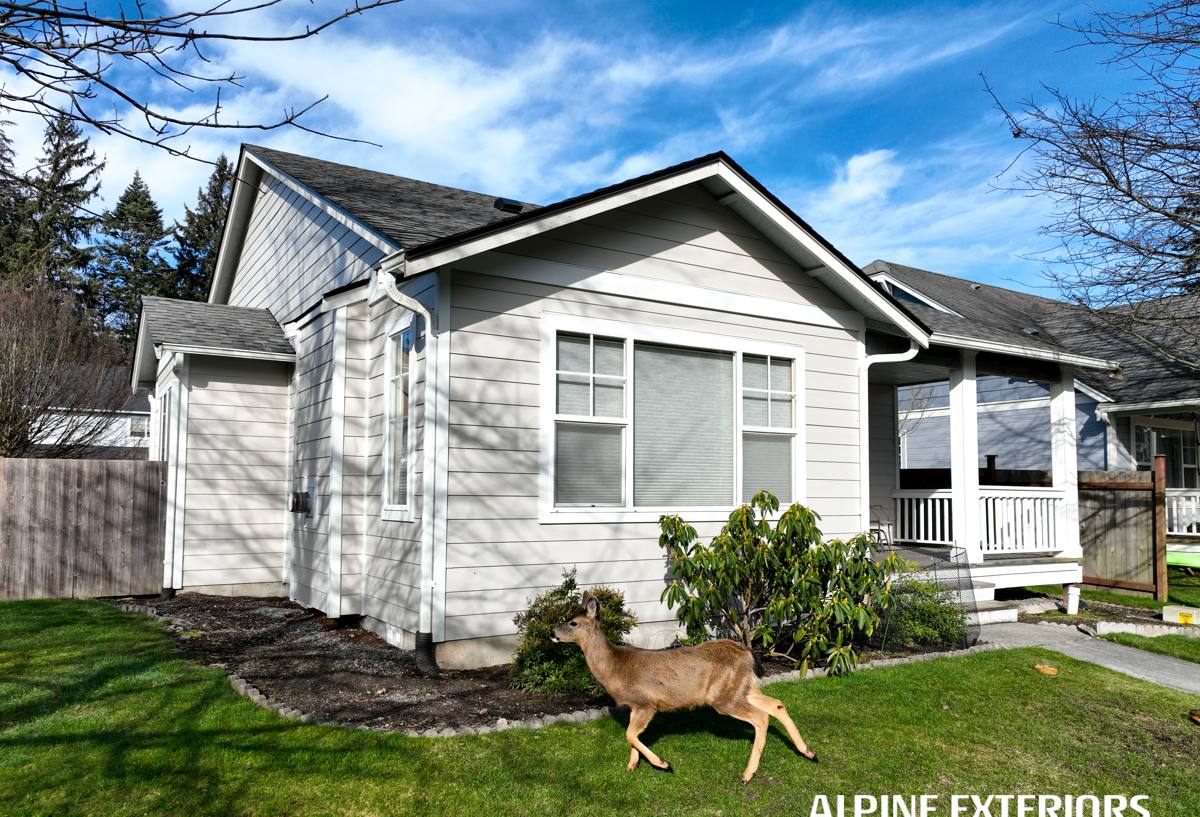
Signs a Clear Lake Home Needs Siding Replacement, Not Just Repair
Not every siding problem calls for a full tear-off. But there's a point where patching becomes a waste of money, and it's worth knowing where that line is before you spend on repairs that won't hold.
- Moss or algae that regrows within weeks of being cleaned off, especially on north-facing or shaded walls
- Paint that's bubbling, cracking, or peeling in sheets rather than just fading
- Boards that feel soft, spongy, or crumble at the edges when pressed
- Visible warping, cupping, or gaps opening between boards or at seams
- Rising energy bills with no other explanation — a sign the wall assembly behind the siding is no longer doing its job
- Interior staining, musty smells, or drywall softness near exterior walls
- Siding that's original to a home more than 25-30 years old, regardless of how it looks from the street
If two or three of these are present at once, that's usually a sign the underlying moisture barrier has been compromised, not just the visible surface.
What a Correct Siding Replacement Actually Involves
Siding replacement done right is mostly about what happens before the new boards ever go up. Skipping steps here is exactly how a house ends up with the same rot and moss problems five years later, just under a fresh coat of paint.
Full Tear-Off and Sheathing Inspection
Every piece of old siding comes off so the sheathing underneath can actually be inspected, not just glanced at through a gap. In a climate like Skagit County's, it's common to find soft or delaminated sheathing behind siding that looked fine from outside. Any damaged sheathing gets replaced before anything else happens — building over rot just hides the problem for another owner to find later.
Weather-Resistive Barrier and Flashing
A new weather-resistive barrier goes on correctly lapped, with flashing integrated at every window, door, and roof intersection — the places where driving rain actually gets pushed into a wall assembly. This is the part of the job that's invisible once the siding goes back on, and it's also the part that determines whether the house stays dry for the next 30 years or the next five.
Fastening and Fit
Fiber cement siding has specific fastening patterns, clearances, and gapping requirements that vary by product line. Getting this wrong doesn't show up immediately — it shows up as cracking, water intrusion at seams, or finish failure a couple of years down the road, usually after the installer is long gone.
Why We Only Install James Hardie Fiber Cement
We made a deliberate call not to install vinyl, LP SmartSide, cedar, primed spruce, Cemplank, or Allura. Each of those has a place in the market and each has real strengths, but none of them holds up the way we want a Skagit County home to hold up through decades of rain and moss season. Vinyl can warp and doesn't stop moisture the way fiber cement does. Wood products need ongoing maintenance to fight the rot this climate practically guarantees if a homeowner falls behind. Other fiber cement brands exist, but James Hardie is the one we trust for consistency, factory-cured finish quality, and warranty backing after installation.
James Hardie fiber cement is non-combustible, dimensionally stable, and engineered specifically for regions like ours. It doesn't feed moss the way wood fiber can, and it doesn't degrade under sustained moisture exposure the way some engineered wood products do over time. That's not a marketing claim — it's the reason we standardized on one product line instead of offering several and letting price decide the outcome.
Choosing the Right Hardie Line for This Climate
James Hardie builds its products for specific climate zones, which matters more in a place like Clear Lake than in drier parts of the country.
HZ5 Engineering
Homes in this region call for Hardie's HZ5 formulation, engineered for climates with sustained moisture and freeze-thaw cycles rather than the HZ10 formulation built for hot, humid regions. Using the correct HZ designation isn't a minor spec detail — it affects how the board handles moisture absorption and expansion over the life of the siding.
ColorPlus Factory Finish
ColorPlus finish is baked on at the factory under controlled conditions, rather than field-painted on site. It resists fading and holds up to UV and moisture exposure significantly better than a job-site paint job, and it carries its own finish warranty separate from the product warranty. For a home that's going to sit under tree cover and damp air for most of the year, that finish durability is one of the biggest practical differences between a Hardie install and a repainted wood or vinyl job.
Profile Choice
HardiePlank lap siding is the most common choice for Clear Lake homes, available in several exposure widths and a smooth or cedar-textured finish. HardiePanel vertical siding and HardieShingle panels are used for accent areas, gables, or a specific architectural look, but the lap profile is what handles the bulk of wall coverage and weather exposure on most houses in this area.
Our Siding Replacement Process
- On-site assessment — we walk the exterior, check for soft spots and moisture damage, and give an honest read on what's actually needed versus what's optional
- Written estimate — a clear scope covering tear-off, sheathing repair contingencies, materials, and timeline, with no vague allowances
- Material selection — choosing the right HardiePlank profile, exposure, and ColorPlus color for the home
- Tear-off and inspection — full removal of old siding and a real look at the sheathing underneath before anything new goes on
- Sheathing and framing repair — any rot or damage found gets fixed and documented, not covered over
- Weather barrier and flashing installation — the part of the job that actually keeps water out for decades
- Hardie installation to manufacturer spec — correct fastening, clearances, and joint treatment
- Final walkthrough — going over the finished job and the warranty paperwork together, in person
What Siding Replacement Costs in Clear Lake
Every house is different, so a real number only comes from a walk-through, but the factors that move the price are consistent across projects in this area.
| Cost Factor | Why It Matters Here | Effect on Project |
|---|---|---|
| Sheathing condition | Long-term moisture exposure is common under old siding in this climate | Hidden rot repair can add materials and labor once tear-off begins |
| Home size and wall complexity | Gables, dormers, and cut-up wall lines take more time regardless of siding brand | More trim, cuts, and flashing detail work |
| Siding profile and exposure | Wider-exposure lap boards cover more wall per piece than narrow profiles | Affects material count and install time |
| Trim and accent work | Homes with shingle-style gables or vertical panel accents need extra detailing | Adds labor beyond straight lap replacement |
| Access and site conditions | Sloped lots, tree cover, and tight setbacks are common around Clear Lake | Can affect scaffolding, staging, and timeline |
As a general rule, full siding replacement is a multi-week project once tear-off, any structural repair, and proper weather barrier installation are accounted for — rushing any of those steps is usually how a "cheap" job ends up costing more later.
Why Hiring a Crew That Already Works in Clear Lake Matters
A crew that's worked houses throughout Skagit County knows what to expect before they pull the first board. They know which wall orientations tend to hide sheathing damage in this climate, how much moss buildup is normal versus a sign of a bigger moisture problem, and how the driving rain patterns here actually move water into a wall assembly at flashing points. That local pattern recognition is the difference between a crew that follows a generic checklist and one that catches problems before they become expensive.
It also matters for accountability. A contractor with an ongoing presence in the area has a reputation to protect on every job, not just the one in front of them, and stands behind the warranty paperwork long after the last board is nailed on.
Keeping Moss and Moisture From Coming Back
New siding doesn't mean maintenance disappears — it means the maintenance burden drops significantly. Fiber cement doesn't feed moss growth the way wood fiber can, but moss can still take hold on the surface in shaded, damp areas if gutters overflow or vegetation crowds a wall. Keeping gutters clear, trimming back plantings that trap moisture against the house, and doing an occasional gentle rinse of shaded walls goes a long way toward keeping a correctly installed Hardie exterior looking the way it did on day one.
If your Clear Lake home is showing any of the signs above, or you're just planning ahead before winter's driving rain sets in, we're happy to take a look and give you a straight answer — no pressure, no inflated scope. Fill out the form below for a free estimate.