 Skagit County
 Why Cedardale Windows Need to Work Harder Than the National Average
Cedardale sits close enough to the water that salt air is a real factor in how exterior materials age, and far enough into Skagit County's marine weather pattern that driving rain and a long moss season are just part of the calendar. Windows here aren't just letting light in and keeping heat inside — they're a barrier that has to hold up against wind-driven rain hitting the glass at an angle, salt-laden moisture working on hardware and finishes, and months of damp, shaded conditions that let moss and algae get a foothold on sills, tracks, and trim. A window that's rated fine for a dry inland climate can still underperform here if it wasn't chosen or installed with these specific conditions in mind.
That's the lens we use on every window project in this area: not just "is this energy efficient on paper," but "will this specific window, in this specific install, actually stay tight and efficient five and ten years from now in Skagit County weather."
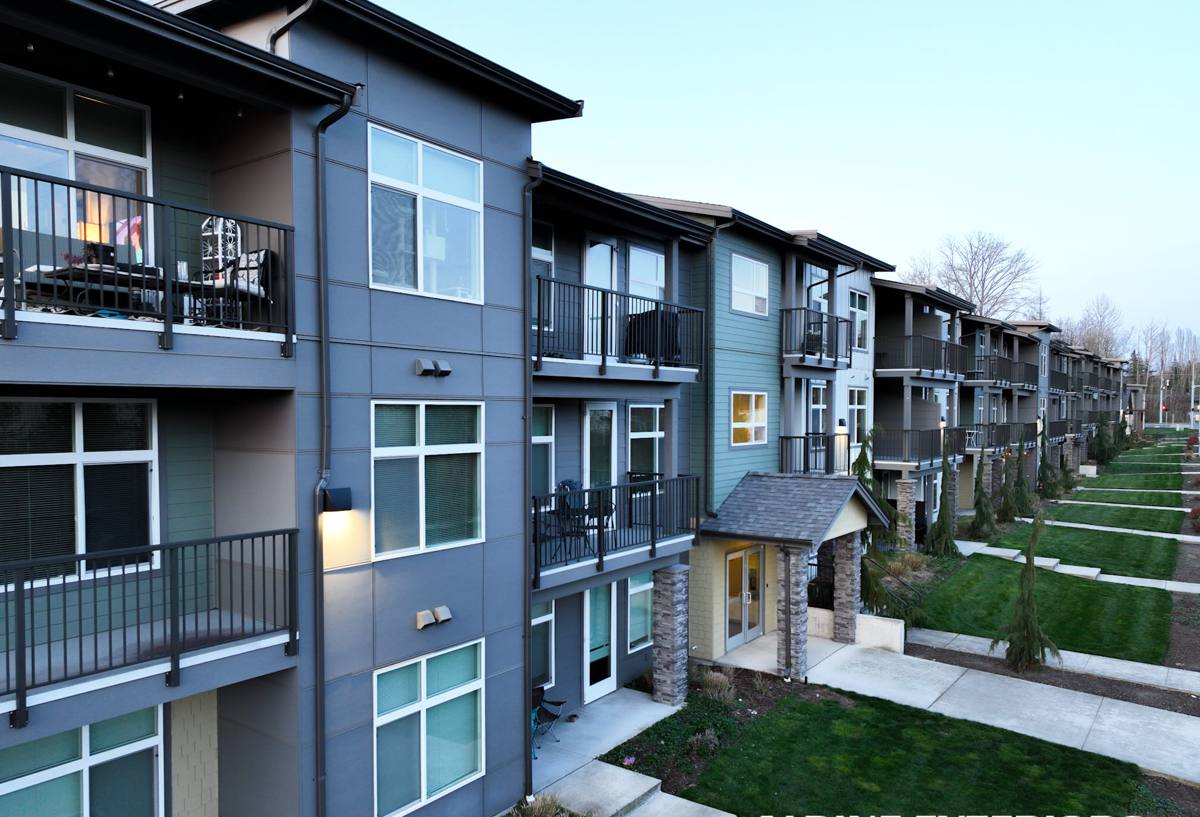
What "Energy-Efficient" Actually Means for a Window
The term gets used loosely, so it's worth being specific. Three numbers do most of the work:
- U-factor — how well the window resists heat loss. Lower is better. This is the number that matters most for our winters.
- Solar Heat Gain Coefficient (SHGC) — how much solar heat passes through the glass. In a climate as overcast as ours, this trades off differently than it would in a sunny, hot-summer region.
- Air leakage rating — how much air moves through the assembly when it's closed. This one is directly tied to installation quality, not just the window unit itself.
Low-E coatings and argon or krypton gas fills between panes are what actually move those numbers in a good direction. A window can carry an ENERGY STAR label and still be a mediocre fit if the coating package and gas fill were picked for a different climate zone than the Pacific Northwest.
Reading the Label Instead of Trusting the Sticker
Every legitimate window comes with an NFRC (National Fenestration Rating Council) label listing U-factor, SHGC, visible transmittance, and air leakage as tested numbers, not marketing claims. We walk homeowners through that label on the actual product being quoted, not a generic brochure number, because the same window line can be built with different glass packages depending on what's ordered.
Frame Materials: What Actually Holds Up in This Climate
Frame material affects energy performance, but out here it also determines how the window ages under salt air and constant moisture cycling. None of these are inherently "bad" — each is a trade-off, and the right call depends on the home, the exposure, and the budget.
| Frame Material | Energy Performance | Moisture / Salt Air Behavior | Maintenance |
|---|---|---|---|
| Vinyl | Good; multi-chamber designs insulate well | Doesn't corrode or rot; seams and welds matter | Low — occasional cleaning |
| Fiberglass | Very good; low expansion/contraction keeps seals tight | Excellent resistance to salt air and moisture cycling | Low |
| Wood-clad | Very good, warm interior feel | Cladding protects exterior, but any breach exposes wood core to rot | Higher — cladding and seams need periodic inspection |
| Aluminum | Weakest without a thermal break | Prone to corrosion in salt air unless properly finished | Moderate |
For most Cedardale homes we lean toward vinyl or fiberglass for the energy performance and the fact that neither one gives salt air or driving rain a foothold. Wood-clad still has a place where the look matters and the owner understands the added upkeep. We generally steer away from bare or poorly finished aluminum in this environment — not because it can't perform, but because keeping it performing here means staying ahead of corrosion at every joint, which is a maintenance burden most owners don't want to sign up for.
Window Styles and Wind-Driven Rain
How a window operates changes how well it sheds wind-driven rain, which is a bigger factor here than in drier climates.
- Casement windows seal by compressing against the frame when cranked shut, which generally gives the tightest seal against driving rain and wind — a real advantage on exposures that catch weather off the water.
- Single-hung and double-hung windows rely on sash-to-frame friction and weatherstripping rather than compression. Quality units still perform well, but the seal is more dependent on precise installation and ongoing hardware condition.
- Sliders are a good fit for wide openings and are generally low-maintenance, though their horizontal track can collect grit and moss debris over a long wet season if it isn't cleared periodically.
We don't push one style as universally "correct." A shaded, weather-exposed wall facing prevailing storms is a different conversation than a covered porch elevation, and we'll say so plainly during the estimate rather than upselling a style the house doesn't need.
The Installation Details That Actually Prevent Problems
Most window failures we get called out to inspect in this region aren't the window unit's fault — they're an installation gap that let moisture get behind the frame or into the wall assembly. In a climate with this much sustained rain, that's the part that matters most.
What a Correct Install Includes
- A sloped sill pan under the window opening so any water that does get past the exterior sheds outward, not down into the wall.
- Proper flashing integration with the house wrap or weather-resistive barrier — flashing tucked in the correct shingle-lap order, not just caulked over the top.
- Backer rod and the right sealant at the exterior perimeter, sized and applied so it can flex with seasonal movement instead of cracking.
- Correct shimming and squaring so the sash operates properly and the weatherstripping seals evenly all the way around — a slightly racked frame will leak air and water at the gap even if the window itself is a good one.
- Interior air sealing with low-expansion foam or backer rod, not just fiberglass batting stuffed into the gap.
When we're also handling siding on the same wall, that's actually an advantage — we can verify the moisture barrier and flashing are continuous from siding into window opening and back out, instead of two separate trades each assuming the other one handled it.
Our Process for a Cedardale Window Project
- On-site assessment. We look at the actual exposures on your home — which walls take the worst of the driving rain, where moss or staining is already showing, and the condition of existing trim and sheathing before recommending anything.
- Product selection. We walk through frame material, glass package, and style trade-offs for your specific budget and exposure, using the real NFRC numbers, not generic marketing figures.
- Tear-out and inspection. Old windows come out carefully so we can check the framing and sheathing underneath for hidden rot or old flashing mistakes before anything new goes in.
- Installation. Sill pan, flashing, shimming, and sealing done in the correct order, every time — this is the step that determines whether the window still performs in ten years.
- Interior and exterior finish. Trim, caulking, and paint or stain matched to the rest of the house.
- Final walkthrough. We operate every window with you, confirm the seals, and go over any care items specific to the product installed.
What Drives the Cost
We don't publish blanket per-window pricing because the honest answer is "it depends," but these are the real variables that move a quote up or down:
| Factor | Why It Matters |
|---|---|
| Frame material | Vinyl is typically the most affordable; fiberglass and wood-clad cost more upfront |
| Glass package | Triple-pane, upgraded Low-E coatings, and gas fills add cost but also add performance |
| Window size and style | Casements and larger custom sizes generally cost more than standard single/double-hung |
| Condition behind the old window | Hidden rot or old flashing failures found during tear-out add repair scope |
| Number of openings | Whole-home replacements typically bring a better per-window rate than one-off swaps |
| Trim and siding tie-in | Matching existing trim or coordinating with a siding project affects labor and materials |
We give a written, itemized estimate before any work starts, so you're seeing the actual factors driving your number rather than a vague lump sum.
Living With Windows in a Moss-and-Salt-Air Climate
Even a well-installed, energy-efficient window needs a little seasonal attention out here. This is the short list we give every Cedardale customer after installation:
- Clear debris and moss buildup from tracks and weep holes at least once a season so water can drain properly.
- Wipe down hardware periodically — hinges, cranks, and locks are the first parts to show salt-air wear, and a dry cloth or light lubrication goes a long way.
- Check exterior caulking lines annually for cracking or gaps, especially after a hard winter storm season.
- Keep gutters and downspouts clear so overflow isn't running directly down onto window heads.
- Watch for moss or algae staining on sills and trim, and clean it before it holds moisture against the frame long-term.
Why a Crew That Already Works in Cedardale Matters
Window performance in this climate isn't just about the product spec sheet — it's about knowing which walls in a Cedardale home are going to take the brunt of driving rain off the water, which older homes in the area are more likely to have outdated or failed flashing behind the siding, and how to sequence a project around Skagit County's wet season instead of fighting it. A crew that works this specific area regularly has already seen how these homes age under this exact weather pattern, and that experience shows up in fewer surprises once the old windows come out.
If you're weighing options for your Cedardale home, we're glad to walk the property, look at your actual exposures, and put together a straightforward, no-pressure estimate — just fill out the form below to get started.