 Skagit County
 Roof Replacement in Burlington, Skagit County
Burlington sits where the Skagit Valley opens up toward the water, and that location cuts both ways. Homes here get some of the county's best growing weather, but a roof over a Burlington house is working against the same conditions that make the fields so green: salt-laden air moving in off the Sound, long stretches of driving rain, and short winter days that leave shaded roof slopes damp for weeks at a time. A roof replacement done right in this area isn't just about swapping old shingles for new ones — it's about building a roof system that can shed water fast, resist moss colonization, and hold up to airborne salt without corroding fasteners or flashing ahead of schedule.
We've worked on roofs throughout Burlington and the surrounding Skagit County towns long enough to know which failure patterns show up here again and again, and which shortcuts cause them. This page covers what a correct roof replacement looks like for this specific climate, what our process involves, and what to ask any contractor you're considering.
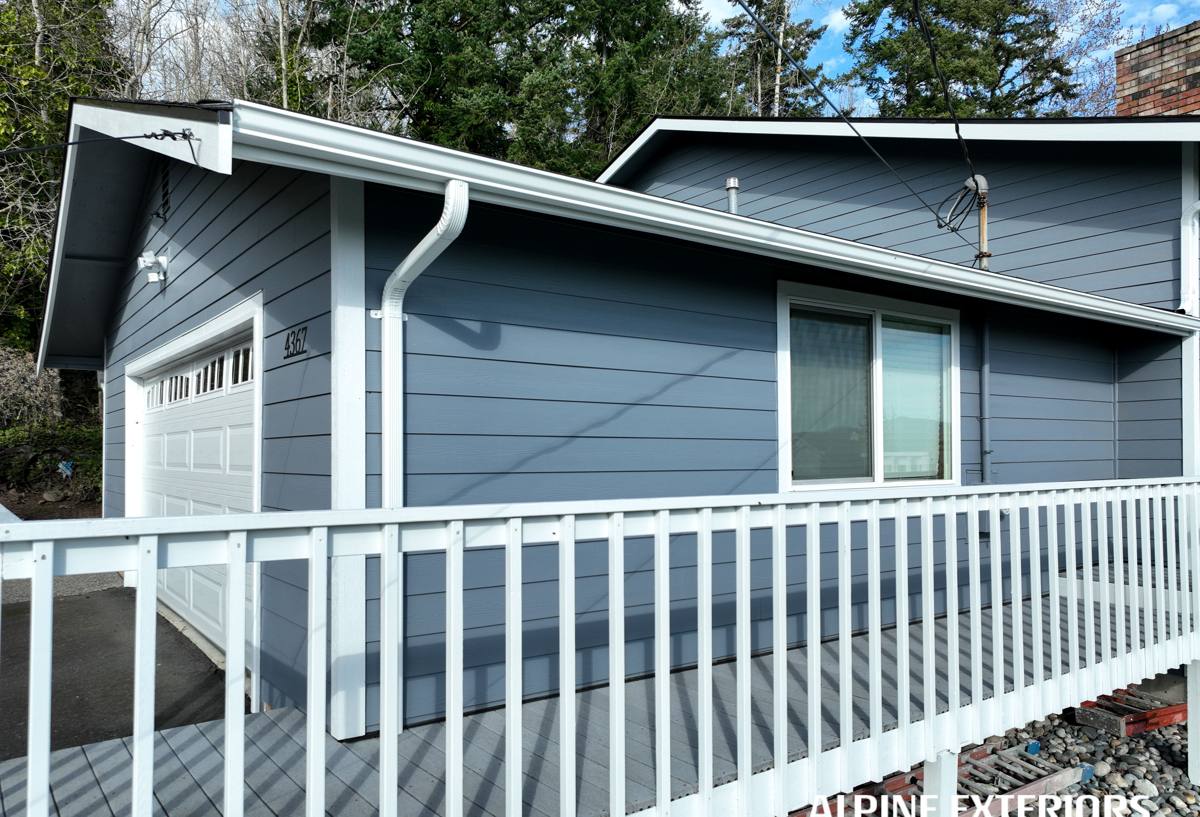
What Skagit County Weather Does to a Roof
Three regional factors drive almost every roof problem we see in Burlington:
Salt Air
Burlington isn't right on the coast, but it's close enough that salt-bearing moisture rides in on marine air, especially during winter storms. Over years, that salt accelerates corrosion on unprotected metal — nails, flashing edges, and fastener heads that aren't rated for coastal exposure. A roof that would last two decades inland can develop metal fatigue and rust streaking noticeably sooner here if the wrong hardware went in.
Driving Rain
Skagit County doesn't just get a lot of rain — it gets a lot of wind-driven rain, which behaves differently than a straight-down downpour. Wind-driven water finds its way under shingle tabs, up under flashing laps, and into any gap that a fair-weather installation might have gotten away with. Underlayment quality and flashing detail matter more here than in drier climates, because the roof has to handle water moving sideways and even slightly uphill under wind pressure, not just water falling straight onto the surface.
Moss Season
Between the moisture and the shaded, tree-lined lots common around Burlington, moss season runs long — often most of the year on north-facing slopes and anywhere overhung by conifers. Moss isn't just cosmetic. It holds moisture against the roofing material, lifts shingle edges as it grows, and works its way into seams over time. Left unmanaged, it shortens the life of even a well-installed roof.
Signs a Burlington Roof Needs Replacing, Not Patching
- Granule loss heavy enough that you're finding grit in gutters every season, not just after a new roof settles
- Shingles that are cupping, curling, or cracking, especially on south- and west-facing slopes that see the most sun and thermal cycling
- Moss growth that comes back within months of cleaning, or that's visibly lifting shingle tabs
- Flashing around chimneys, vents, or valleys that's rusted, separated, or was never properly stepped and counter-flashed
- Daylight visible through the roof deck from the attic, or damp insulation after a windy rainstorm
- A roof approaching or past its material's expected service life, especially if the original installation predates current underlayment standards
- Repeated patch repairs on the same section of roof within a few years
Any one of these can sometimes be handled with a repair. Several together, or a roof already past 20 years old, usually means a replacement will cost less over time than continuing to chase leaks.
What a Correct Roof Replacement Includes Here
A roof replacement built for this climate isn't just the visible shingle layer. The parts underneath are what actually determine whether the roof performs through a Skagit County winter.
Tear-Off and Deck Inspection
We remove the existing roofing down to the deck rather than layering over it. That lets us find soft spots, rot, or delamination in the sheathing before they're sealed under a new roof — a step that matters more here than in drier regions, since a compromised deck under Skagit County rainfall deteriorates faster once it's exposed.
Underlayment Built for Wind-Driven Rain
Given how often rain here arrives sideways, we install underlayment and ice-and-water membrane at valleys, eaves, and vulnerable transitions with enough coverage to handle water that isn't just falling straight down. This is one of the most common places we find a prior roof cut corners, because it's invisible once the shingles go on.
Corrosion-Resistant Flashing and Fasteners
Because of the salt air moving through this part of the county, we use flashing and fastener materials chosen for coastal-adjacent exposure rather than standard inland-grade hardware. It costs a little more upfront and saves you a premature flashing failure a decade in.
Ventilation Balanced for a Wet Climate
Proper intake and exhaust ventilation keeps moisture from condensing inside the attic, which matters in a region where the air itself carries so much humidity for so much of the year. Poor ventilation is a quiet cause of roof deck rot that has nothing to do with the roofing material itself.
Moss-Resistant Details
Where the roof design allows, we can incorporate zinc or copper strips near ridges, which release trace metal ions in rainwater that discourage moss regrowth on the slopes below. It's not a substitute for periodic cleaning, but it meaningfully extends the time between moss treatments on shaded roofs.
Material Options for Burlington Homes
There's no single "best" roofing material for every house — it depends on your roof's pitch, sun exposure, tree cover, and budget. Here's how the common options weigh out for this climate specifically.
| Material | Performance in Skagit County Conditions | Trade-Offs |
|---|---|---|
| Architectural asphalt shingles | Good rain and wind performance with proper underlayment; wide color range; moderate moss resistance | Needs periodic moss treatment on shaded slopes; mid-range lifespan |
| Metal roofing (standing seam) | Excellent water shedding on steep or wind-exposed slopes; sheds moss more readily than shingles | Higher upfront cost; requires coastal-grade fasteners and coatings to avoid corrosion near salt air |
| Composite/synthetic shingles | Strong impact and moisture resistance; consistent performance in wet climates | Higher material cost than standard asphalt; fewer local installers familiar with the product |
| Cedar shake | Traditional look that fits some older Skagit Valley homes | High maintenance burden in a moss-prone, high-moisture climate; we're upfront that this is often the wrong call for shaded lots here |
For most Burlington homes with typical tree cover, we steer people toward architectural asphalt with upgraded underlayment and flashing, or metal for steeper roofs and homes closer to the water. Cedar shake can still make sense on an open, sunny, well-ventilated roof, but we'll tell you honestly if your lot's shade and moisture load make it a poor long-term fit — the maintenance commitment is real, not a knock on the material itself.
Our Process for a Burlington Roof Replacement
- On-site inspection and estimate. We walk the roof, check the attic for ventilation and moisture issues, and give you a written estimate with no pressure to sign on the spot.
- Material selection. We go over the options above against your roof's specific pitch, tree exposure, and budget, and recommend what actually fits rather than upselling the highest-margin product.
- Scheduling around Skagit County weather. We plan tear-off and installation for weather windows that let us keep the deck dry and get underlayment down before rain moves back in.
- Tear-off, deck repair, and installation. Full removal, deck inspection with repairs as needed, wind-rated underlayment, corrosion-resistant flashing, and balanced ventilation, installed to manufacturer spec.
- Final walkthrough. We review the finished roof with you, including any moss-prevention details installed, before we consider the job done.
Why Local Experience in Burlington Matters
A roofing crew that mostly works drier inland regions can install a technically fine roof and still miss the details that matter specifically here — the extra underlayment coverage for wind-driven rain, the fastener grade that holds up against salt air, the flashing detail that keeps a shaded valley from becoming a moss trap. We work Burlington and the rest of Skagit County regularly enough to know which roof sections on which house orientations tend to fail first, and we build around that from the start rather than learning it from a callback.
Local presence also means we're not disappearing after the invoice clears. If a flashing detail needs a look after the first hard windstorm of the season, we're a short drive away, not a company that worked the area for one season and moved on.
What to Ask Before Hiring a Roofing Contractor
- Are you licensed and insured to work in Washington State, and can you provide proof?
- What underlayment and ice-and-water shield do you use at valleys and eaves, and why?
- What fastener and flashing materials do you use, and are they rated for coastal-adjacent salt exposure?
- Do you tear off down to the deck, or do you ever install over existing layers?
- What's your plan for roof ventilation, not just the shingle layer?
- Can you walk me through the manufacturer's warranty terms in plain language, including what voids it?
A contractor who answers these clearly and specifically, without dodging into generalities, is one worth trusting with a job this size.
Get a Free Estimate
If your Burlington roof is showing granule loss, persistent moss, or flashing that's seen better days, it's worth a straightforward look before you decide between another round of repairs and a full replacement. We'll walk the roof, tell you honestly what condition it's in, and put together a no-pressure estimate using materials and details built for Skagit County's climate. Fill out the form below to get started.