 Skagit County
 Why Burlington Siding Has to Work Harder Than the Catalog Photo Suggests
Burlington sits in the Skagit Valley, close enough to Padilla Bay and the greater Puget Sound that homes here deal with a mix most siding products were never engineered for: a steady dose of salt-tinged air, long stretches of driving rain pushed in off the water, and a wet season that runs far longer than a typical siding warranty assumes. Add the shade and moisture that low-lying valley lots and mature tree cover create, and you get a near-permanent moss and algae season on north- and west-facing walls. None of this is exotic — it's just relentless. Siding in Burlington doesn't fail because of one bad storm; it fails because of thousands of ordinary wet days stacked on top of each other, year after year.
That's the lens we use on every siding job in this area. We're not asking "will this look good on install day." We're asking "what does this wall look like in year twelve, after twelve moss seasons and twelve winters of wind-driven rain finding every seam." That question is the entire reason this company installs James Hardie fiber cement exclusively, and it's the reason a Burlington-specific approach to installation matters as much as the material itself.
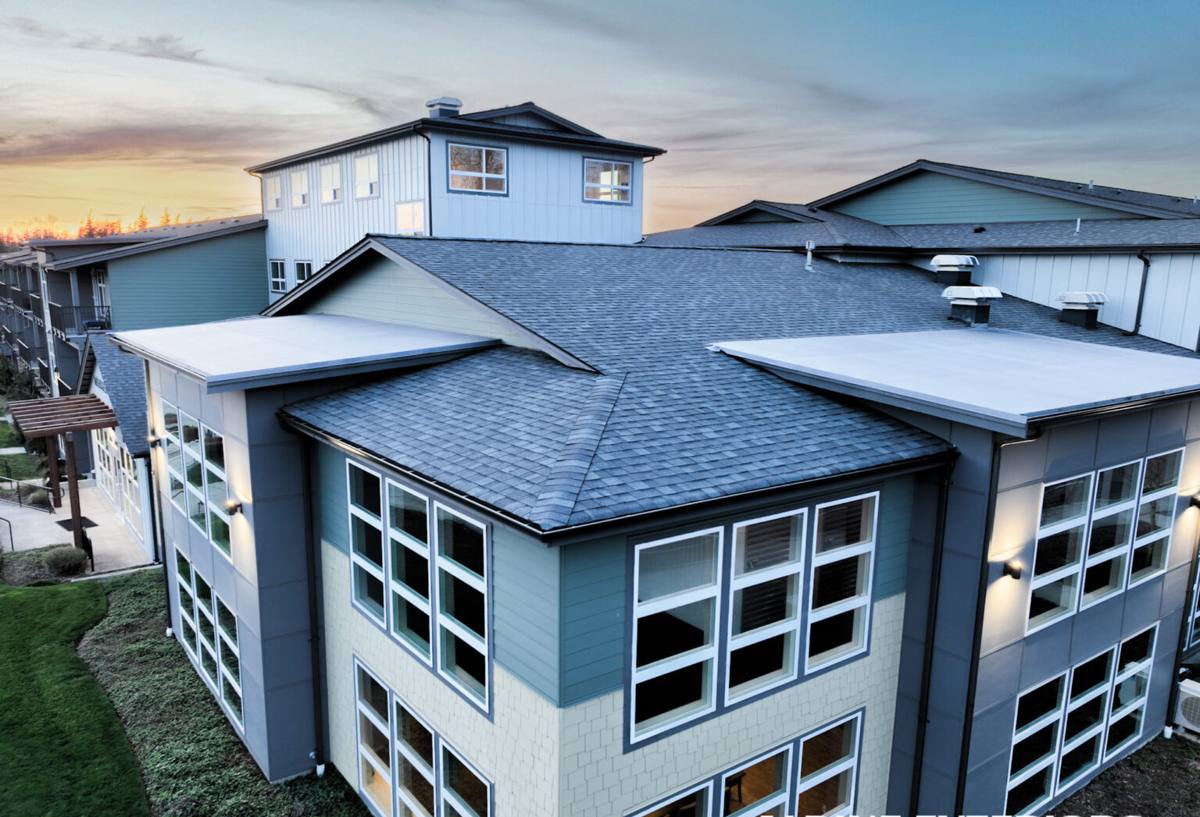
What Skagit County's Climate Actually Does to Siding
Salt air and coastal moisture
Burlington isn't oceanfront, but it's close enough to tidal water that airborne salt and moisture reach exterior walls, especially on the sides of a home that face open exposure. Salt-laden moisture accelerates corrosion on fasteners and metal flashing, and it keeps wood-based products damp longer than inland homes ever experience. Fiber cement doesn't corrode and doesn't feed on that moisture the way wood fiber does, which is a big part of why it holds up here.
Driving rain, not just rain
Skagit Valley storms frequently come with real wind behind them, which means rain doesn't just fall on a wall — it's driven sideways into laps, seams, and trim joints. A siding job that looks fine in dry weather can still leak if the flashing details and lap gaps weren't built for wind-driven water. This is a workmanship issue as much as a material issue, and it's where a lot of otherwise-decent siding jobs quietly fail over the first few winters.
The long moss and algae season
Shade, moisture, and mild temperatures are exactly what moss and algae need, and Burlington offers all three for a big chunk of the year. Untreated wood siding and some engineered wood products can develop surface growth and soft spots in these conditions faster than homeowners expect. Fiber cement with a factory-applied finish resists that growth far better, and the finish itself doesn't need to be re-sealed or re-primed on a cycle to keep working.
Why We Only Install James Hardie Fiber Cement
We don't install LP SmartSide, vinyl, Cemplank, Allura, primed spruce, or cedar. That's not a marketing position — it's a standard we hold because of what we've seen these products do (and not do) in exactly the conditions Burlington delivers every year. Engineered wood products can perform well in drier climates, but they rely on an intact factory coating and careful field sealing at every cut edge; in a valley with this much sustained moisture, that margin for error shrinks fast. Vinyl handles moisture fine but moves with temperature, which stresses fastening and trim details over time, and it doesn't offer the fire resistance homeowners increasingly want. Untreated or minimally treated wood products need real maintenance discipline to survive a moss season without soft spots.
James Hardie fiber cement is non-combustible, dimensionally stable in wet-dry cycling, and available in HardieZone HZ5 formulations engineered specifically for the wetter, harsher climate zones the Pacific Northwest falls into. The ColorPlus factory finish is baked on under controlled conditions — not painted or sprayed on-site — and it's backed by a real transferable warranty. For a Burlington home, that combination of moisture resistance, fire resistance, and finish durability lines up with what the climate actually asks of a wall.
What a Correct Fiber Cement Install Actually Involves
The material only performs to spec if the installation does too. In a climate like this, a handful of details separate siding that lasts thirty years from siding that starts showing problems in five.
- Proper drainage plane and weather-resistive barrier — a continuous water-resistive barrier behind the siding gives any moisture that does get past the cladding a path to drain out, instead of sitting against the sheathing.
- Correct fastening pattern — Hardie panels and lap siding have specific nailing schedules; under- or over-driven fasteners compromise both the weather seal and the manufacturer warranty.
- Flashing at every penetration — windows, doors, hose bibs, light fixtures, and any other wall penetration need proper flashing and sealant, not just caulk smeared over a gap.
- Minimum ground clearance — siding installed too close to grade, decks, or roof lines wicks moisture and stays wet longer, which matters more here than in a drier climate.
- Correct lap and gap spacing — laps need enough exposure and gap tolerance to shed wind-driven rain instead of channeling it inward.
- Factory-cut edges sealed where field-cut — any cut edge that isn't factory-finished needs to be sealed per manufacturer spec, or it becomes a moisture entry point.
Skip any one of these and you can still end up with a wall that looks right for a year or two before the Skagit Valley's weather finds the gap.
Our Process on a Burlington Job
1. On-site assessment
We walk the exterior, check existing siding and sheathing condition, look at moisture exposure by elevation, and flag any rot, soft sheathing, or existing moisture damage before quoting the job — not after tear-off starts.
2. Tear-off and substrate check
Old siding comes off and we inspect what's underneath. Any compromised sheathing or framing gets addressed before new siding goes on; covering a wet or damaged wall with new siding just hides the problem.
3. Weather barrier and flashing
We install a continuous water-resistive barrier and flash every window, door, and penetration correctly the first time, matched to how much wind-driven rain that elevation actually sees.
4. Hardie installation to spec
Panels and lap siding go up following James Hardie's fastening, clearance, and gap specifications, so the finished wall performs the way the product is engineered to and the warranty stays intact.
5. Final walkthrough
We inspect trim, caulking, and finish work with the homeowner before calling the job done.
Fiber Cement vs. the Alternatives, for This Climate
| Factor | James Hardie Fiber Cement | Vinyl Siding | Untreated Wood / LP SmartSide |
|---|---|---|---|
| Moisture resistance in driving rain | High — non-organic, engineered core | High but relies on loose-fit drainage behind panels | Moderate — depends on intact coating and sealed edges |
| Moss/algae resistance | High — factory finish resists growth | Moderate — grows on surface, needs washing | Lower — susceptible to soft spots if growth sets in |
| Fire resistance | Non-combustible | Combustible | Combustible |
| Salt air / coastal durability | High — no corrosion, stable material | Moderate — fasteners and trim can degrade | Lower — moisture uptake accelerates wear |
| Finish maintenance cycle | Factory finish, long repaint interval | No painting needed but fades/chalks over time | Regular re-sealing or repainting required |
Cost Factors for a Burlington Fiber Cement Job
| Factor | How It Affects Cost |
|---|---|
| Existing siding removal | Tear-off and disposal of old material adds labor and dump costs |
| Substrate repair | Any rotted sheathing or framing found during tear-off needs repair before new siding goes on |
| Home size and wall complexity | More corners, gables, and trim detail means more cutting and labor |
| Panel vs. lap siding profile | Different Hardie profiles carry different material and install costs |
| Color and finish selection | ColorPlus factory finishes vs. field-painted options affect material pricing |
| Access and site conditions | Steep lots, limited access, or extensive landscaping can add labor time |
We give homeowners a real, itemized number after the on-site assessment rather than a rough phone estimate — the substrate condition alone can shift a job's scope significantly.
What Homeowners Can Check Between Now and a New Install
- Look for visible moss or algae buildup on north- and west-facing walls, a sign those elevations hold moisture longest.
- Check for soft spots, especially near ground level, under windows, and around any roof-wall intersections.
- Note any caulking that's cracked, shrunk, or pulled away from trim — a common early leak point.
- Look at paint or finish condition; chalking, peeling, or uneven color often signals the finish is past its service life.
- Check ground clearance where siding meets grade, decks, or patios — too little clearance accelerates wear.
Warranty and What It Actually Covers
James Hardie's product warranty covers the fiber cement material itself, and ColorPlus finishes carry their own finish warranty separate from the substrate warranty — both are transferable to a new owner if the home sells, which matters for resale in a market like this. Warranty coverage assumes installation followed manufacturer specifications, which is another reason correct installation isn't optional — a wall installed out of spec can void the very warranty homeowners are counting on.
Why a Local Crew Matters for This Job
Fiber cement siding installed to spec in a dry inland climate and fiber cement siding installed to spec for Skagit County aren't quite the same job — the flashing details, gap tolerances, and drainage planning all get more conservative when the wall is going to face driving rain and a long moss season every year. A crew that already works Burlington and the surrounding Skagit County area knows which elevations take the worst of the weather, understands local permitting, and has already seen how the valley's climate treats different siding details over time. That local pattern-recognition is hard to replicate from a general contractor working the region for the first time.
If you're weighing a siding replacement or new construction siding for a Burlington property, we're happy to walk the exterior with you, look at what your walls are actually dealing with, and put together a straightforward, no-pressure estimate using the form below.