 Skagit County
 New-Construction Windows for Big Lake Homes
Building new near Big Lake means you get one real shot at doing the windows right. Once the siding and trim close up around them, the flashing details and the way the window ties into the wall assembly are hidden for good. Any mistake made at the rough-opening stage doesn't show up as a leak on day one — it shows up two, five, or ten winters later, after Skagit County's wet season has had time to find every weak point. We install new-construction windows on builds in and around Big Lake with that timeline in mind: the work has to hold up long after the punch-list is signed off.
This page covers what a correct new-construction window install actually involves in this part of Skagit County, how we approach the work, and why the details matter more here than in a drier climate.
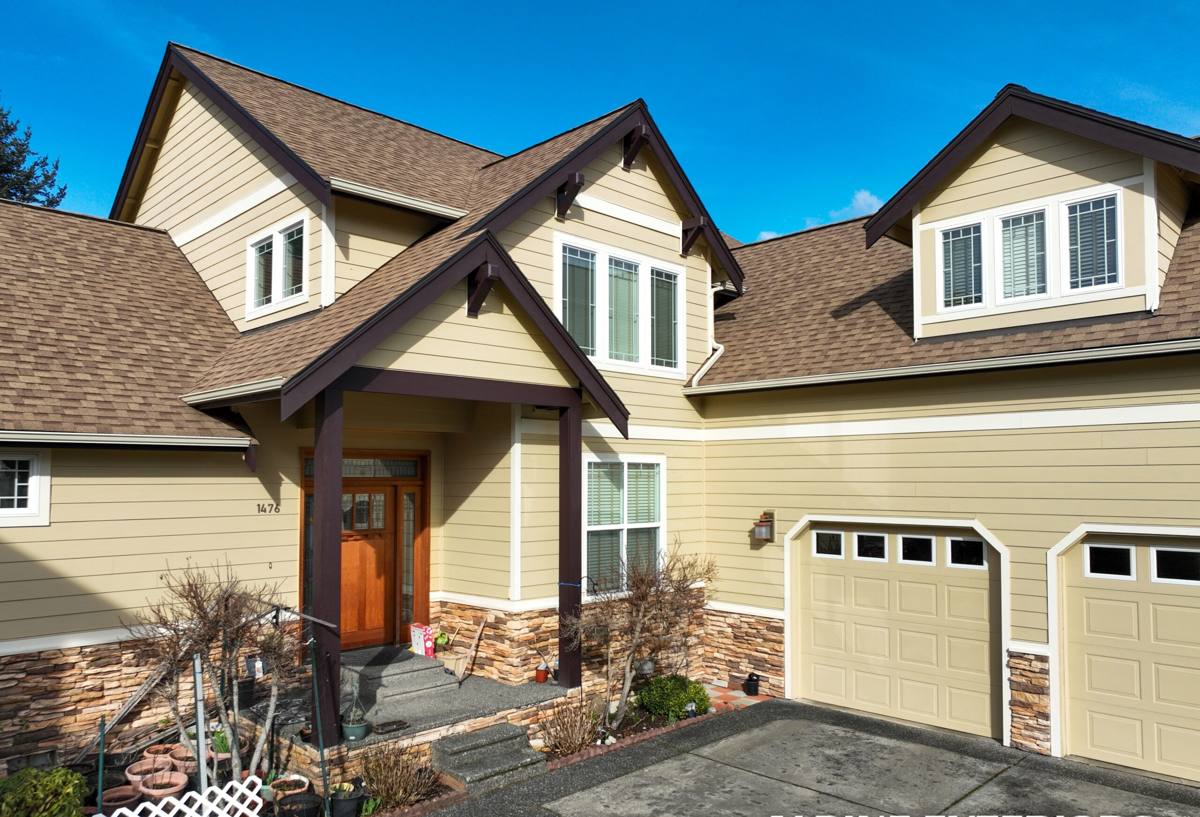
What Skagit County's Climate Asks of a New Window Install
Driving rain and wind-driven moisture
Storms in this part of Washington don't just fall straight down — wind pushes rain sideways into wall assemblies, and it finds any gap in the flashing sequence around a window opening. New construction gives us the advantage of building the water management into the wall from scratch, but only if the flashing is layered correctly with the weather-resistive barrier (WRB) before the siding ever goes on. Get the shingle-lap order wrong — even by a small margin — and water gets directed behind the cladding instead of off it.
A long moss and mildew season
Skagit County stays damp for a good stretch of the year, and anything that holds moisture against wood or masonry — siding, trim, sills — will grow moss or mildew given enough time. Window sills and the trim details around them are a common spot for this because they're horizontal or near-horizontal surfaces that collect standing water and debris. Sill pan flashing, proper slope away from the frame, and drip-cap details all matter more here than they would in a dry region.
Salt air and coastal exposure
Properties closer to the water in Skagit County deal with salt-laden air that accelerates corrosion on fasteners, hardware, and unprotected metal flashing. Even for inland builds, it's worth specifying corrosion-resistant fasteners and flashing metals as standard practice rather than only on waterfront lots — the marine air moves further inland than people expect on breezy days.
Temperature swings and condensation
Skagit County isn't extreme in either direction, but the swing between a cold, damp morning and a warmer afternoon is enough to cause condensation on window glass and frames if the unit isn't performing well thermally. New-construction framing lets us select glass packages and frame materials matched to this climate rather than working around whatever was installed years ago.
New Construction vs. Replacement — Why the Job Is Different
A lot of homeowners assume a window install is a window install, but new-construction and replacement work are genuinely different trades with different failure points.
- Replacement windows go into an existing, already-flashed opening — the surrounding siding and weather barrier usually stay in place, and the window itself is sized to fit the old frame.
- New-construction windows have a nailing fin and go into a bare, framed rough opening before siding exists. The entire flashing and water-management sequence is built from the wall out, which means more of the long-term performance depends on how the crew handles the WRB, flashing tape, and sill pan — not on the window unit alone.
On a new build near Big Lake, this is actually the better scenario to be in, because it means the wall assembly can be built correctly the first time instead of retrofitted around old mistakes. But it also means there's more sequencing to get right, and more trades (framer, window crew, siding crew) whose work has to line up cleanly.
What a Correct New-Construction Install Involves
The window unit itself is a small part of the overall job. Most of what determines whether a new-construction window performs for the next 20-plus years happens in a handful of steps most homeowners never see once the siding is on.
The sequence, roughly, looks like this
- Rough opening is checked for square, level, and correct dimensions before the window ever shows up on site.
- A sloped sill pan is built or installed at the bottom of the opening so any water that gets past the window has somewhere to drain — out, not into the wall.
- The weather-resistive barrier is cut and prepped around the opening in the correct order so later flashing layers over it correctly (shingle-lap, top to bottom).
- The window is set, shimmed level and plumb, and fastened per the manufacturer's nailing-fin schedule — not just "close enough."
- Flashing tape goes over the nailing fin at the sides, then the head flashing goes over that, integrating with the WRB above the opening.
- Gaps between the frame and rough opening are insulated (typically low-expansion foam) without over-filling, which can bow the frame.
- Interior and exterior sealant beads are applied at the correct joints — not everywhere, since over-sealing can trap moisture instead of releasing it.
Skip or rush any one of these and the window itself can be a premium product and still leak. This is the part of the job that separates a correct install from one that just "looks finished."
A quick checklist for homeowners walking a new-construction window job
- Is there a visible sill pan or sloped sill detail at the bottom of each opening?
- Does the flashing tape overlap in the right order — sides before top, top over the WRB?
- Are fasteners corrosion-resistant, especially on openings facing weather or closer to water?
- Is the window shimmed and square, not just nailed in wherever the opening happened to be framed?
- Is insulation around the frame filled evenly without bulging the jambs?
Choosing a Window Product for a Big Lake New Build
Frame material matters more in this climate than in a lot of the country, mostly because of sustained moisture exposure and the moss/mildew season. Here's how the common options generally compare for a new build in Skagit County conditions:
| Frame Material | Moisture Behavior | Maintenance | Typical Fit for This Area |
|---|---|---|---|
| Vinyl | Won't rot; seams and welds need to be well-made to stay tight over time | Low — occasional cleaning | Solid, budget-friendly default for most new builds |
| Fiberglass | Very stable in moisture and temperature swings; minimal expansion/contraction | Low | Strong long-term option, especially for larger openings or higher-exposure walls |
| Wood-clad | Good performance if the cladding stays intact, but any breach exposes wood to a long wet season | Higher — cladding and seals need monitoring | Best reserved for buyers who want the wood interior look and are prepared for upkeep |
| Aluminum | Conducts cold and can condensate more; thermally broken versions perform better | Moderate — watch for corrosion near salt air | Less common for residential new builds here outside specific design goals |
We don't push one brand or material as the only right answer — the right call depends on the home's exposure, budget, and how much upkeep the owner wants to take on. What we do insist on is that whatever product goes in gets installed to the sequence above, because even the best-rated window on paper will underperform if the flashing behind it is wrong.
Our Process for New-Construction Window Installs Near Big Lake
We work new-construction window installs as part of the exterior sequence, coordinating with the framing and siding timeline rather than treating windows as an isolated task:
- Rough-opening check — we verify dimensions, square, and flashing plan before the windows arrive, so nothing gets forced into an opening that's off.
- Sill pan and flashing install — done to the shingle-lap sequence, using flashing tape and materials suited to sustained Skagit County moisture.
- Window setting — leveled, shimmed, and fastened to spec, then checked for square and smooth operation before moving on.
- Integration with the WRB and siding crew — so the window flashing hands off cleanly to whatever siding or trim goes on next, with no gaps in the water path.
- Final check — operation, seals, and visible flashing details reviewed before we call it done.
Because we work other exterior trades in Skagit County too, we're used to sequencing window installs around framers, siding crews, and general contractors without becoming the bottleneck on a build schedule.
Why a Local Big Lake Crew Matters Here
Window installation isn't regionally exotic — the physics of flashing a window are the same everywhere. What's regional is knowing how much margin to build in. A crew that mostly works drier climates can install a technically-correct window and still under-detail it for a place where the wall assembly stays damp for months at a stretch. Working Big Lake and the surrounding Skagit County area regularly means we're not guessing at how much moss and driving rain a wall detail needs to shrug off — we're building to what actually shows up here, and we're around after the build is finished if a question comes up.
What New-Construction Windows Typically Cost — Factors That Move the Number
We won't quote a number without seeing the plans, but here's what actually drives the cost on a new-construction window package:
| Factor | Why It Matters |
|---|---|
| Number and size of openings | More openings and larger units mean more material and labor hours |
| Frame material | Vinyl, fiberglass, and wood-clad sit at different price tiers, as shown above |
| Glass package | Low-E coatings, gas fills, and impact considerations add cost but also performance |
| Opening style | Casement, double-hung, sliders, and large fixed units all install differently |
| Site access and build stage | Coordinating around scaffolding, other trades, or tight schedules can affect labor time |
If you're budgeting a new build near Big Lake, it's worth getting the window package priced alongside your siding plan, since flashing and trim details are shared work between the two.
If you're planning a new build near Big Lake and want the window package priced and detailed correctly from the rough-opening stage on, we're glad to take a look and put together a free, no-pressure estimate — just fill out the form below.