 Skagit County
 Why Anacortes Siding Wears Differently Than Inland Skagit County
Anacortes sits out on Fidalgo Island, surrounded by saltwater on three sides, and that changes what siding has to survive compared to a home twenty minutes inland in Mount Vernon or Sedro-Woolley. Salt-laden air corrodes exposed fasteners and metal trim faster, wind-driven rain off Rosario Strait and Guemes Channel pushes moisture into joints and laps that would stay dry in a more sheltered spot, and the deep shade under Douglas fir and cedar canopy on many lots keeps north- and west-facing walls damp long after a storm has passed. That dampness is what feeds Skagit County's long moss season, which here can run from early fall through late spring some years.
None of that means Anacortes siding is doomed — it means repairs done here need to account for conditions that a generic siding crew working out of a different climate zone might not think twice about. A patch that holds up fine in a dry inland neighborhood can fail within a season or two on a marine-exposed wall if the underlying moisture path isn't addressed.
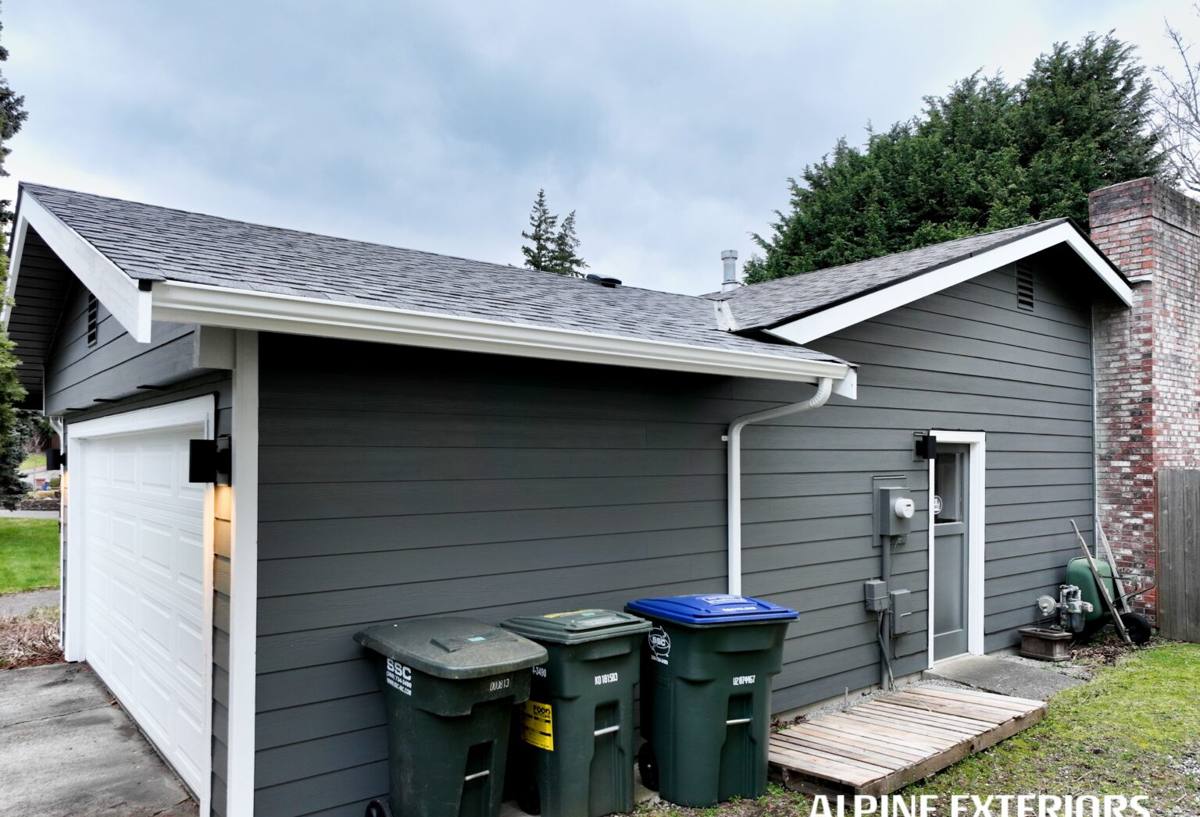
What Salt Air, Rain, and Moss Actually Do to Siding
Salt Air and Fasteners
Airborne salt accelerates corrosion on nails, screws, and any exposed metal trim or flashing. Corroding fasteners lose their grip, siding boards start to work loose, and once a board is loose it flexes in the wind — which opens gaps at the laps and butt joints that water then finds. This is a slow process, so it's often invisible until a board is already loose enough to move by hand.
Driving Rain and Water Intrusion
Anacortes gets a fair amount of wind-driven rain off the water, and wind-driven rain behaves differently than a straight-down downpour — it gets pushed sideways and upward into laps, seams, and anywhere caulk or flashing has failed. Once water gets behind the siding, the sheathing and framing underneath can stay wet for days in our cool, humid climate, which is how a small leak turns into rot.
Moss, Algae, and Trapped Moisture
Shaded, north-facing walls near mature trees hold moisture far longer than sun-exposed walls. Moss and algae growth on siding isn't just cosmetic — moss holds water directly against the surface and, over time, that constant dampness breaks down caulking, degrades paint film, and on wood-based products can start softening the material itself. On fiber cement, moss is mostly a maintenance and appearance issue rather than a structural one, which is one of the practical reasons it holds up better here than wood-based siding does.
Signs an Anacortes Home Needs Siding Repair
- Boards that flex, feel loose, or have visibly pulled away from the wall at seams or corners
- Soft or spongy spots when you press on siding near the bottom of walls or under windows
- Persistent moss or dark streaking that comes back quickly after cleaning
- Peeling or bubbling paint, especially on wood or wood-composite siding
- Visible gaps, cracks, or separation at butt joints and around window and door trim
- Rust staining bleeding down from fasteners or metal flashing
- Interior clues — a musty smell, discolored drywall, or soft trim near an exterior wall
- Warping or cupping boards, particularly on walls that face prevailing wind and rain
Any one of these on its own might be minor. Several together, especially on a wall that faces the water or sits in heavy shade, usually means water has been getting behind the siding for a while.
What a Correct Repair Actually Involves
A siding repair that only addresses the visible board is treating a symptom, not the cause. On a marine-exposed home, that approach tends to fail again within a year or two. A repair worth paying for should include:
1. Finding the Real Source
Before any board comes off, we trace where water is actually getting in — a failed caulk joint, a flashing gap above a window, a fastener that's backed out, or a butt joint that was never properly sealed. Replacing a damaged board without fixing the entry point just delays the next repair.
2. Checking What's Behind the Siding
Once boards are pulled, we look at the house wrap or building paper and the sheathing underneath. If the water barrier is torn, sagging, or missing, patching siding over it is a waste of the repair. Soft or delaminated sheathing needs to be cut out and replaced before new siding goes back on — skipping this step is the single most common reason a "fixed" wall rots again.
3. Matching Materials and Fasteners Correctly
Repairs should use corrosion-resistant fasteners appropriate for a coastal environment, not whatever was on hand. Where we're patching into existing James Hardie fiber cement, we match the profile, exposure, and ColorPlus finish so the repair doesn't stand out as an obvious patch job.
4. Re-Sealing and Re-Flashing Properly
Caulking alone isn't a substitute for correct flashing at windows, doors, and butt joints. We flash first, then seal — caulk is the backup line of defense, not the primary one.
Repair vs. Replace: How We Make the Call
| Situation | Usually Repairable | Usually Replace |
|---|---|---|
| Damage limited to a few boards or one wall section | Yes | |
| Rot or water damage found on multiple walls | Yes | |
| Original siding is wood, LP-style OSB composite, or old vinyl nearing end of life | Sometimes, short-term | Often the better long-term value |
| Sheathing underneath is sound | Yes | |
| Sheathing is soft, delaminated, or rotted in several spots | Yes | |
| Home is under 10 years old with isolated fastener or caulk failure | Yes | |
| Recurring moss, staining, and paint failure across most of the exterior | Yes |
We'll give you a straight answer either way. If a targeted repair will genuinely hold up in Anacortes conditions, that's what we recommend and price. If the damage is widespread enough that a repair is just a stopgap, we'll say so rather than sell you a patch job that fails again in a couple of winters.
Why It Matters That We Already Work in Anacortes
A crew that mostly works drier, inland areas can still do competent general carpentry, but they won't necessarily think to check for salt-accelerated fastener corrosion, or know which walls in this town take the worst of the wind off the water, or budget extra time for moss removal before a proper inspection can even happen. Working Skagit County's coastal areas regularly means we've seen the failure patterns specific to Fidalgo Island homes — where water tends to get in, which original siding materials hold up and which don't, and what repair details actually last through a few winters here instead of just looking fine on install day.
That local pattern recognition is part of what you're paying for with a repair. It's the difference between a fix that addresses this year's leak and one that also accounts for the fact that this wall is going to face the same salt air and rain next year, and the year after that.
Why We Repair Into (and Recommend) James Hardie Fiber Cement
This company installs and repairs with James Hardie fiber cement exclusively — we don't install LP SmartSide, vinyl, Cemplank, Allura, primed spruce, or cedar. That's a deliberate standard, not a limitation on what we're capable of installing. In a marine climate like Anacortes, fiber cement's advantages show up directly in how well repairs hold:
- It's non-combustible, which matters more each year as wildfire smoke and ember exposure become a bigger consideration even in Western Washington
- It doesn't absorb and swell with moisture the way wood-based and OSB-core products can, so isolated water exposure is less likely to spread into structural damage
- The ColorPlus factory finish resists the fading and peeling that repeated damp/dry cycling causes on field-painted wood siding, so patched sections blend in better and stay looking right longer
- James Hardie's HZ5 product line is engineered for cold, wet climates like ours, which is a meaningful difference from siding designed for a national average climate
- It carries a strong transferable warranty when installed to spec — which is also why installation quality on repairs matters as much as it does on a full replacement
When we're repairing an older wall that isn't fiber cement, we'll tell you honestly what a patch can and can't accomplish on that material, and where a future replacement in James Hardie would eliminate the recurring problem instead of just managing it.
What to Expect From Our Repair Process
- An on-site inspection where we identify the actual water entry point, not just the visible damage
- An honest assessment of whether repair or replacement is the better call for that section of wall
- A written estimate that explains what we found and what the work involves
- Removal of damaged siding and inspection of the house wrap and sheathing underneath
- Repair or replacement of any compromised sheathing before new siding goes back on
- Correct flashing and sealing at every joint, not just cosmetic caulking
- Matched James Hardie material and finish where we're patching into existing fiber cement siding
We don't push replacement when a repair will genuinely do the job, and we don't sell a quick patch when the underlying damage is bigger than what's visible from the outside.
Maintaining Repaired Siding in a Marine Climate
Once a repair is done right, a little seasonal upkeep goes a long way in Anacortes conditions:
- Rinse moss and algae off shaded walls before it has a chance to establish, rather than after it's thick
- Keep gutters clear so overflow isn't running down the siding face
- Trim back vegetation that keeps a wall shaded and damp
- Do a visual check after major windstorms for loosened boards or trim
- Re-caulk high-movement joints (around windows and doors) every few years even if they look fine
If you're seeing loose boards, moss that won't quit, or soft spots on your Anacortes home's siding, we're happy to come take a look. The estimate is free, there's no pressure to sign anything on the spot, and you'll get a straight answer about whether you need a repair or something more.