 Skagit County
 Why Anacortes Siding Has to Work Harder Than Most
Anacortes sits right where Skagit County meets the Salish Sea, and that location shapes everything about how siding ages here. Salt-laden air off Fidalgo Bay and the surrounding waterways settles on exterior walls year-round, wind-driven rain comes in sideways off the water during winter storms, and the shaded, damp conditions common on north- and west-facing walls give moss and algae a long growing season with few interruptions. Any siding product installed on an Anacortes home is going to be tested constantly by moisture, salt, and organic growth — not occasionally, but as a baseline condition of living here.
That combination is harder on a home's exterior than inland Skagit Valley weather. Salt air accelerates corrosion on fasteners and trim hardware that aren't rated for it. Driving rain finds every gap in flashing, caulking, and butt joints. And moss doesn't just sit on the surface — given enough time, it holds moisture against the wall assembly and works into any seam that wasn't sealed correctly the first time. A siding job that would hold up fine in a drier part of the state can fail years early on a home a few blocks from the water in Anacortes.
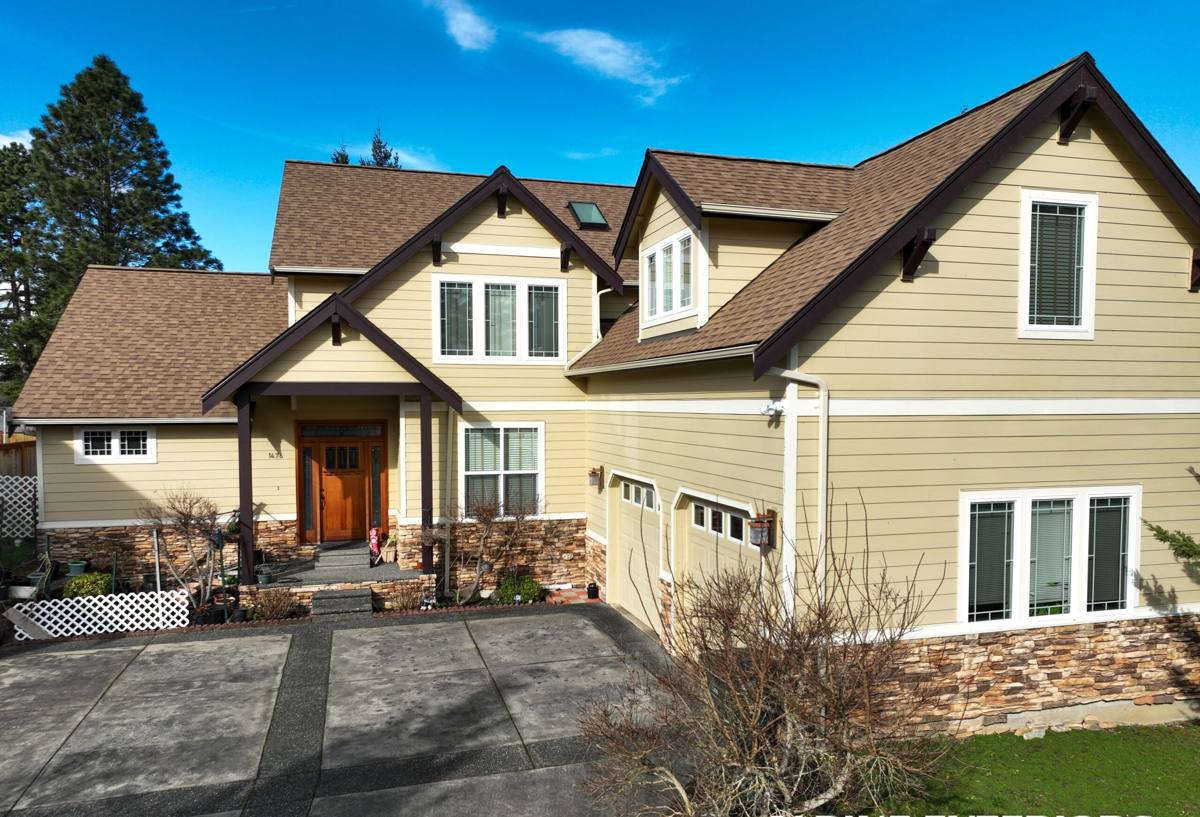
Why We Only Install James Hardie Here
We install James Hardie fiber cement siding exclusively — not vinyl, not LP SmartSide, not cedar, not any of the other fiber cement brands on the market. That's not a marketing position, it's a standard we hold because of what we've seen happen to other products in exactly this climate. Fiber cement as a category resists moisture, rot, and insect damage far better than wood-based products, and it doesn't soften, warp, or become brittle the way vinyl can under UV exposure and temperature swings. James Hardie specifically backs that up with a factory-applied ColorPlus finish that's baked on and warranted separately from the substrate, plus product lines engineered for specific climate zones rather than a one-size-fits-all approach.
For a marine environment like Anacortes, that climate-zone engineering matters more than most homeowners realize. It's the difference between a product that was designed with salt air and sustained moisture in mind and one that simply happens to hold up "well enough" in milder conditions.
The HZ5 Line and What It's Built For
James Hardie's HZ5 product line is engineered for regions with wetter, harsher weather patterns — which describes western Washington's marine climate well. The formulation and finish are built to resist moisture absorption and hold color and integrity through repeated wet-dry cycles, which is exactly what siding on an Anacortes home goes through dozens of times a season. Using a climate-matched product line isn't an upsell; it's the baseline for doing the job right in this location.
What Correct Installation Actually Involves
Fiber cement siding is only as good as the installation behind it. James Hardie's own installation guidelines are specific for a reason — skipping steps or using generic techniques is where most premature failures start, especially in a wet climate. On an Anacortes home, we pay particular attention to:
- Proper clearance between siding and grade, decks, patios, and roof lines so water can't wick into the bottom edge of the boards
- Correct fastener spacing and depth — over-driven or under-driven nails create gaps where moisture gets behind the siding
- Weather-resistant barrier and flashing details at every window, door, and penetration, installed to shed water downward and outward
- Butt joints and seams treated with the caulking or flashing method the product line calls for, not just caulked over and left
- Rain screen or proper drainage plane where the wall assembly calls for it, so trapped moisture has somewhere to go
- Corrosion-resistant fasteners and trim hardware rated for coastal/salt-air exposure
Every one of those details is invisible once the job is finished and the home looks good from the curb. That's exactly why they matter — a poorly flashed window or the wrong fastener won't show up as a problem for a year or two, and by the time it does, the fix usually costs more than doing it correctly would have the first time.
Where We See Siding Fail on Anacortes Homes
Most of the siding problems we get called out to look at in Anacortes trace back to a handful of recurring issues, and they're almost always installation issues rather than product issues:
Moss and Algae Buildup on Shaded Walls
North-facing and tree-shaded walls stay damp longer after every rain, and Anacortes gets a lot of rain events strung together in fall and winter. Moss growth itself isn't usually structural, but when it's allowed to sit against poorly sealed seams or gaps, it holds moisture in place and speeds up any underlying problem.
Caulk and Sealant Failure at Joints
Caulk is a maintenance item, not a permanent seal, and in a climate with this much sustained moisture and UV cycling, sealant at butt joints and trim breaks down faster than homeowners expect. When it's the only thing keeping water out of a joint, its failure becomes the siding's failure.
Corroded Fasteners and Trim Hardware
Salt air is genuinely corrosive to standard fasteners over time. We've seen trim and hardware that wasn't rated for coastal exposure show rust staining and weakening well before the siding itself showed any wear.
Water Intrusion at Windows and Penetrations
This is the most consequential failure point because it's hidden behind the siding. Flashing that wasn't lapped correctly, or a window that was sided around instead of properly flashed, lets water into the wall assembly where it can cause rot and damage long before it's visible from outside.
How Our Process Works
We start every Anacortes project with a walk-around assessment of the home's specific exposure — which walls take the most wind-driven rain, which stay shaded and damp longest, where the existing siding or trim shows early wear. That assessment shapes decisions on flashing details, fastener selection, and where extra attention to drainage is warranted, rather than treating every wall of the house the same way.
From there, the sequence is straightforward: remove and dispose of the old siding, inspect and repair any sheathing or framing damage we uncover (this is common on older homes and something a full siding job is the right time to address), install or upgrade the weather-resistant barrier, install flashing at every window, door, and penetration, then install the James Hardie panels or planks to spec with the fastening and joint treatment appropriate to the product line and this climate. Trim, caulking, and touch-up finishing come last, followed by a final walk-through with the homeowner.
We don't shortcut the sheathing inspection step. On a home that's had moisture intrusion for years without visible symptoms, that's often where we find problems that need to be fixed before new siding goes up — and it's much cheaper to address them during a siding replacement than to open the wall back up later.
James Hardie Compared to Other Common Siding Choices
Homeowners researching siding options in Skagit County usually come across the same handful of alternatives. Here's how they compare for a marine-climate location like Anacortes specifically:
| Material | Moisture/Salt-Air Performance | Maintenance Burden | Longevity Here |
|---|---|---|---|
| James Hardie fiber cement | Engineered resistance to moisture, rot, and combustion; HZ5 line built for wetter climates | Periodic cleaning and caulk checks; factory finish reduces repainting | Long service life when installed to spec |
| Vinyl siding | Doesn't rot, but can warp or become brittle with UV and temperature cycling; seams can trap moisture | Low, but damage often means full panel replacement | Shorter functional life in harsh coastal exposure |
| Cedar or primed wood | Naturally moisture-resistant when new, but ongoing exposure to salt air and rain accelerates rot without diligent upkeep | High — regular refinishing, caulking, and inspection required | Shortest life span without consistent maintenance investment |
| LP SmartSide and similar engineered wood | Treated to resist moisture but still wood-based; edge and seam sealing is critical and installation-sensitive | Moderate to high, dependent on installation quality | Variable — heavily dependent on correct installation and sealed edges |
This is why we standardized on James Hardie rather than offering a menu of products: in a climate this consistently wet and salty, the product that's engineered for it and installed correctly is the one that keeps a homeowner from redoing the job in fifteen years instead of thirty or forty.
What Anacortes Homeowners Can Do Between Service Visits
Even with the right product and a correct installation, siding in this climate benefits from some basic homeowner attention:
- Rinse off visible moss or algae buildup on shaded walls once or twice a year before it spreads
- Walk the exterior after major winter storms and note any new staining, gaps, or loose trim
- Keep gutters clear so overflow isn't running directly down exterior walls
- Trim back vegetation and tree cover that keeps specific wall sections shaded and damp longer than the rest of the house
- Have caulked joints and seams checked every few years rather than waiting for a visible gap
- Flag any soft spots, discoloration, or bubbling paint near windows early — these are often the first visible sign of a flashing issue behind the siding
Why It Matters That We Work Anacortes Regularly
A crew that installs siding across a lot of different climates tends to use the same generic approach everywhere. A crew that works Anacortes and the rest of Skagit County regularly knows which walls on a typical home here take the worst weather, where moss problems tend to start, and which flashing and fastener choices actually hold up against sustained salt air and rain rather than just looking right on installation day. That local pattern recognition is part of what a correct James Hardie installation depends on — the product is engineered for this kind of climate, but it still needs a crew that installs it with this climate specifically in mind.
If you're weighing a siding replacement or repair on an Anacortes home, we're happy to take a look and walk you through what your home's exposure calls for. Reach out for a free, no-pressure estimate using the form below.