 Skagit County
 Board & Batten Siding on Anacortes Homes
Board and batten is one of the most recognizable siding profiles in the Pacific Northwest, and it shows up on a lot of Anacortes homes for good reason. The vertical lines suit the area's mix of craftsman cottages, farmhouse-style builds, and newer construction near the water. But the look is only half the story. On Anacortes homes, board and batten has to survive salt-laden air off the Sound, long stretches of driving rain, and a moss season that can run most of the year on shaded or north-facing walls. A profile that looks right but isn't built for that combination will show problems faster here than it would twenty miles inland.
This page covers what board and batten siding needs to hold up in Anacortes specifically, what a correct installation actually involves, and why we install it in James Hardie fiber cement only.
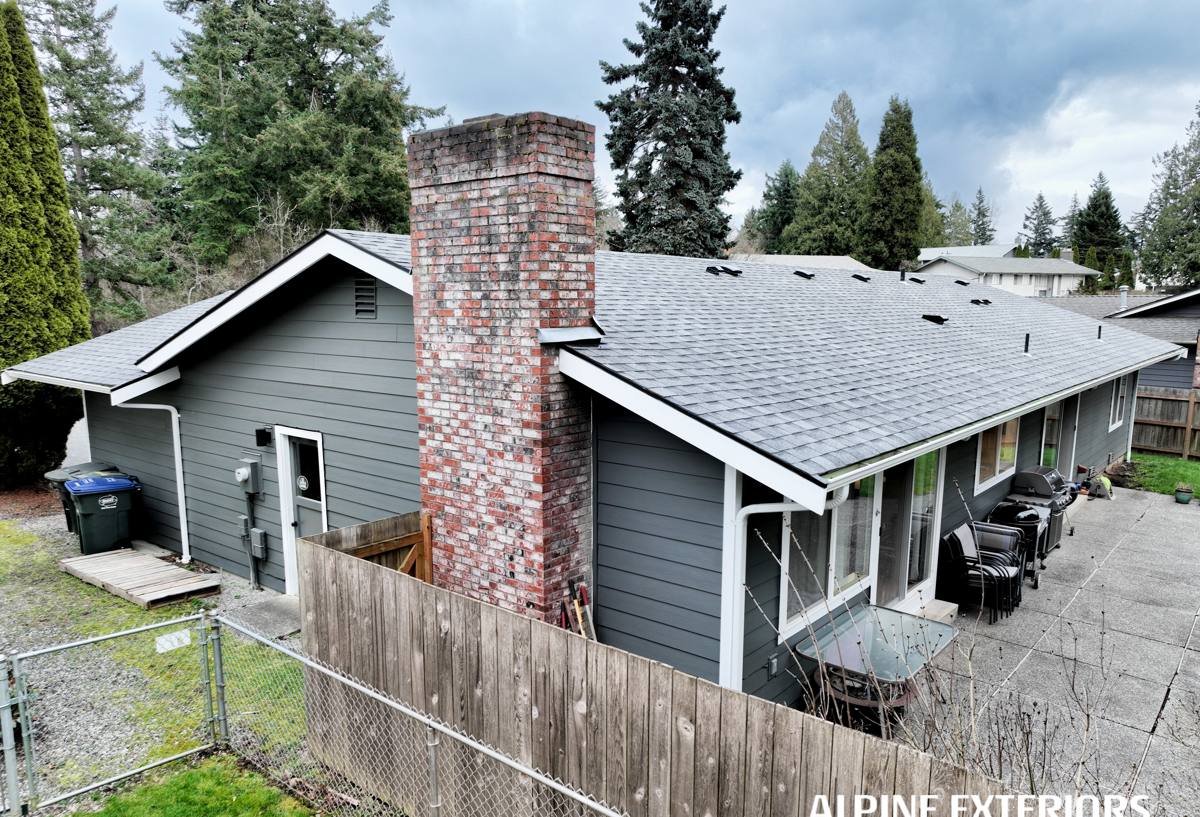
What Anacortes' Climate Does to Board & Batten Siding
Salt Air
Anacortes sits close enough to saltwater that airborne salt is a real factor on siding, trim, and fasteners — not just on waterfront lots, but on homes set back several blocks too, depending on wind exposure. Salt accelerates corrosion on fasteners and metal flashing, and it can degrade paint films and some engineered wood products faster than a standard inland exposure would. Any board and batten installation here needs corrosion-resistant fasteners and flashing details that account for this, not generic hardware pulled off the shelf for a Seattle suburb job.
Driving Rain
Skagit County gets plenty of rain, but the issue for siding isn't total rainfall — it's wind-driven rain hitting walls at an angle, which is common on exposed Anacortes lots. Board and batten has more seams than lap siding: every batten strip creates a vertical joint, and every panel has a top and bottom edge. Each of those seams is a potential water entry point if it isn't flashed and sealed correctly. On a wall that only gets rain falling straight down, a mediocre seam might get away with it for years. On a wall that takes rain sideways off the water, it won't.
Moss and Prolonged Dampness
Shaded elevations, tree-covered lots, and north-facing walls around Anacortes stay damp longer between rain events than they would in a drier climate, and that's exactly the condition moss and mildew need to take hold. Moss holds moisture against the siding surface, which is a slow, chronic problem more than a dramatic one — it doesn't cause sudden failures, but it keeps wood-based and moisture-sensitive materials wetter than they should be, for longer than they should be, year after year.
Why the Material Choice Matters More on Board & Batten
Vertical board and batten has more linear seam length per square foot of wall than horizontal lap siding does. That means the material's ability to handle moisture at cut edges, panel joints, and fastener penetrations matters more here than on a simpler profile. This is the core reason we only install James Hardie fiber cement for board and batten work:
- Non-combustible core: fiber cement won't contribute fuel to a fire, which matters given wildfire smoke and ember exposure that reaches Western Washington in dry summer stretches.
- Dimensionally stable: Hardie panels don't swell, cup, or warp with moisture cycling the way wood-based products can, which keeps batten strips tight and seams consistent over time.
- Factory-applied ColorPlus finish: baked-on finish that resists fading and doesn't rely on a field-applied paint job to hold up against sun and salt air.
- Engineered for this climate: Hardie's HZ5 product line is formulated for wetter, harsher climate zones, which the Pacific Northwest coast qualifies as.
We don't install LP SmartSide, vinyl board and batten panels, Cemplank, Allura, or primed wood battens. That's a standard we hold across every job, not just this one — each of those products has legitimate uses, but none of them match fiber cement's combination of moisture stability, fire performance, and finish longevity for a coastal Skagit County installation.
What a Correct Board & Batten Installation Involves
Weather-Resistive Barrier and Drainage Plane
Behind every board and batten wall, there needs to be a continuous weather-resistive barrier and a drainage plane that lets any water that gets past the siding find its way back out instead of sitting against the sheathing. On a vertical profile with this many seams, the siding is a second line of defense — the barrier behind it is what actually keeps the wall assembly dry long-term.
Flashing at Every Penetration
Windows, doors, hose bibs, light fixtures, vents — every penetration through a board and batten wall needs proper flashing that directs water outward and downward, not just caulk covering a gap. Caulk fails; flashing built into the assembly doesn't rely on maintenance to keep working.
Fastening and Panel Layout
Fastener spacing, panel gaps, and batten placement all need to follow the manufacturer's installation instructions for the specific product line and climate zone. Board and batten installed too tight, with no room for expansion, or fastened incorrectly, is one of the more common ways this profile fails early — not because the material was wrong, but because the install was rushed.
Corrosion-Resistant Hardware
Given Anacortes' salt exposure, fasteners and any exposed metal flashing should be rated for coastal or marine-adjacent environments. This is a small line item that gets skipped on lower-bid jobs and shows up as rust streaks and loosening battens a few years later.
Board & Batten vs. Other Siding Profiles: What to Weigh
| Factor | Board & Batten | Horizontal Lap |
|---|---|---|
| Seam count per wall | Higher — vertical joints at every batten | Lower — fewer joints, simpler drainage path |
| Installation sensitivity | Higher — layout, flashing, and fastening precision matter more | Moderate — more forgiving, well-established technique |
| Best suited to | Farmhouse, craftsman, modern accent walls or full elevations | Traditional and transitional homes, most common Northwest style |
| Moisture management on Anacortes lots | Requires strict adherence to install spec, especially on rain-exposed walls | Slightly more forgiving of minor install variance |
| Maintenance in salt air | Depends heavily on fastener and flashing quality | Same materials concern, fewer joints to monitor |
Board and batten isn't a worse choice than lap siding for Anacortes — plenty of homes here carry it well. But it's a profile where installation quality has a bigger impact on long-term performance, which is why we're specific about how we detail it.
Our Process for Anacortes Board & Batten Jobs
- On-site assessment: we look at wind exposure, shade patterns, existing moisture or moss issues, and the condition of the current siding and sheathing before quoting anything.
- Product and layout plan: we select the appropriate Hardie panel and batten configuration for the home's style and the wall's exposure, with attention to elevations that take the most weather.
- Removal and inspection: old siding comes off and we check the sheathing and weather barrier underneath for hidden rot or prior water intrusion before closing the wall back up.
- Barrier and flashing installation: continuous weather-resistive barrier, correctly lapped, with flashing at every window, door, and penetration.
- Panel and batten installation: installed to Hardie's specifications for fastener type, spacing, and gapping, with corrosion-resistant hardware throughout.
- Final inspection: we walk the job checking seams, caulking, and flashing details before calling it done.
What to Check Before Hiring Anyone for This Work
- Do they install board and batten regularly, or is it an occasional request they'll figure out as they go?
- Will they specify corrosion-resistant fasteners given the coastal exposure?
- Do they inspect the sheathing before covering it back up, or just install over what's there?
- Can they explain their flashing plan for windows and penetrations, not just "we'll caulk it"?
- Are they licensed, insured, and willing to put the product line and warranty terms in writing?
Why a Crew That Already Works Anacortes Matters
Anacortes isn't a uniform climate zone — a wall facing the water takes different punishment than one tucked behind trees a few blocks inland, and a lot depends on which direction a given house faces and how exposed it is to wind off the Sound. A crew that works this area regularly has already seen how different exposures behave over time: which walls hold moss, which details fail first in salt air, which flashing approaches actually hold up through a wet Skagit County winter. That local pattern recognition is hard to substitute with a generic installation checklist, no matter how good the checklist is.
Get a Straight Answer for Your Home
If you're weighing board and batten for an Anacortes home, we're glad to take a look and give you a straightforward assessment — what your specific exposure calls for, what the job actually involves, and an honest cost range. Reach out for a free, no-pressure estimate using the form below.